

AI CERTS
2 hours ago
Cyber Intelligence and Surf Security’s Browser Defense
However, academic “stealth” research questions detector durability. Meanwhile, deepfake incident rates soar as fraudsters automate deception. Seed Round speculation also swirls around the young vendor, yet independent benchmarks remain scarce. Furthermore, this article unpacks the market context, technology promises and practical caveats. Additionally, it offers strategic guidance for teams evaluating browser-native controls.
Browser Becomes AI Perimeter
Kelman from Surf Security argues the browser now equals the operating system of work. Therefore, policy engines must sit at this layer. Surf ties human credentials to agent identities using Okta signals and local attestation. Additionally, prompt inspection blocks shadow AI uploads in real time. The result, according to marketing, is live session analytics that expand Cyber Intelligence coverage.
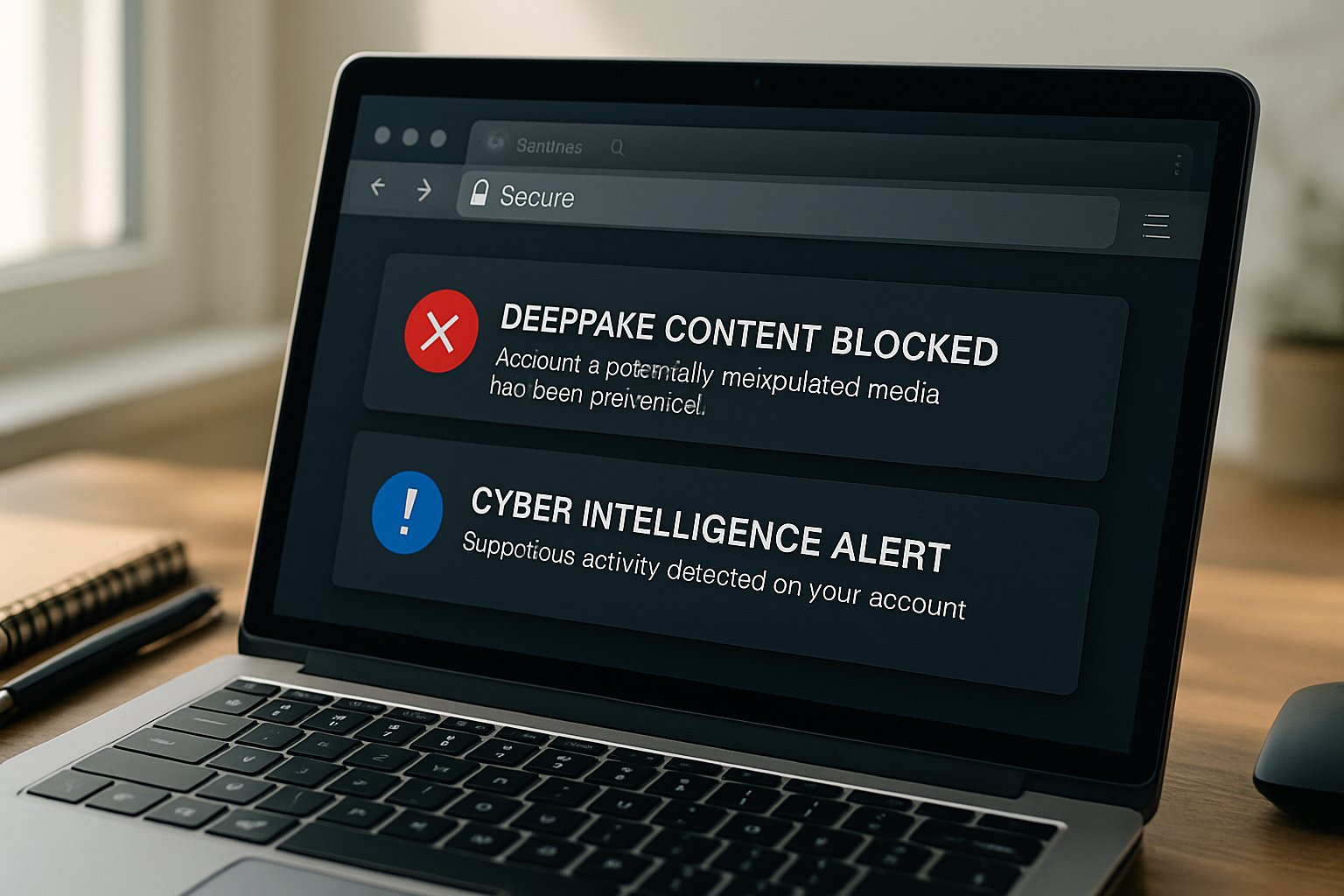
These controls promise visibility where users interact. However, rising attack volumes test every defensive claim.
Next, we examine the threat numbers.
Rising Deepfake Attack Frequency
Entrust reports a deepfake strike every five minutes during 2024. Moreover, document forgeries grew 244 percent and now form 57 percent of observed fraud. SailPoint adds that 82 percent of enterprises already deploy AI agents, often without guardrails. Consequently, 96 percent of respondents view agents as a growing security risk. Cyber Intelligence analysts struggle to triage the surge.
Key Enterprise Risk Statistics
- 53% of agents access sensitive data daily.
- Only 44% of firms have governance policies.
- Cyber Intelligence dashboards lag behind attack velocity.
- Deepfake audio latency shrinks below two seconds, according to Surf internal tests.
Together, these metrics reveal a widening blast radius that complicates Threat Detection strategies.
Attack cadence leaves minimal reaction time. Nevertheless, vendors claim rapid countermeasures.
We now inspect those claims.
Surf Security Product Claims
Surf unveiled the Deepwater detector beta on 20 November 2024. Marketing touts 98 percent audio accuracy with sub-two-second verdicts. Furthermore, the detector embeds inside the enterprise browser, providing inline Threat Detection. CTO Ziv Yankowitz showcased the feature during investor briefings that teased a pending Seed Round. Surf positions Deepwater as core Cyber Intelligence sensor at the session edge. However, no independent laboratory has validated the quoted figures under adversarial settings.
Frost & Sullivan analysts called the capability “vital” yet warned of evolving deepfake quality. Consequently, Surf acknowledges an arms race and plans continuous model updates. Effective Cyber Intelligence still requires diverse forensic inputs.
Vendor optimism entices early adopters. In contrast, academic evidence urges caution.
Let us examine that evidence.
Academic Stealth Research Impact
Papers like StealthDiffusion demonstrate perturbations that mislead state-of-the-art classifiers. Moreover, researchers reported success rates above 90 percent against popular forensic models. Such findings threaten browser-embedded Threat Detection that lacks adaptive counter-evasion loops. Therefore, enterprise teams must weigh claimed accuracy against worst-case evasions.
Stealth techniques also evolve quickly, mirroring malware mutation cycles. Subsequently, signature-style detectors degrade without constant tuning. Cyber Intelligence platforms must integrate feedback channels that retrain models using fresh adversarial data.
Adversarial data shifts daily. Consequently, static tools risk rapid obsolescence.
Governance questions surface next.
Governance And Policy Gaps
SailPoint found only 44 percent of firms possess AI agent governance policies. Meanwhile, 58 percent allow agents near sensitive data every day. Without rules, shadow AI expands unmanaged identities and weakens Threat Detection baselines. Regulators increasingly expect demonstrable controls, audit trails, and role-based access.
Browser session logs offer detailed evidence for compliance reviews. Additionally, Surf enables replay that links agent actions to human approvals. Professionals can enhance their expertise with the AI Security Level 1™ certification.
Policy depth determines breach impact. Therefore, Cyber Intelligence maturity depends on solid policy foundations.
Pros and cons clarify tradeoffs.
Implementation Pros And Cons
Browser controls grant prompt visibility exactly where data leaves the enterprise boundary. Moreover, unified telemetry merges human and agent events for streamlined forensics. Consequently, teams accelerate Cyber Intelligence correlation across diverse sessions. However, coverage ends once content exits the browser, creating downstream blind spots. False positives may disrupt meetings if deepfake classifiers over-trigger. Privacy agencies also scrutinize extensive session recording.
Benefits hinge on deployment scope and calibration. Next, we outline strategic steps.
Strategic Recommendations Ahead
First, insist on adversarial benchmarks that pit Deepwater against stealth techniques. Secondly, pilot deployments with diverse accents and noise conditions to gauge false positives. Meanwhile, update governance procedures before agents receive production credentials. Additionally, negotiate data retention clauses that balance analytics with privacy. Investors considering a Surf Seed Round should request transparent roadmap milestones and accuracy targets.
Furthermore, integrate browser telemetry into existing SOC workflows for consolidated Cyber Intelligence alerts. Leverage automation rules that trigger isolation when Threat Detection scores spike. Finally, assign executive ownership to sustain funding beyond the initial Seed Round.
Following these steps aligns technology with process maturity. Conclusion now gathers the main insights.
Surf Security illustrates the promise and fragility of browser-native AI defenses. Deepwater offers rapid audio checks, yet stealth research questions long-term reliability. Moreover, deepfake incidents and agent adoption rates expose urgent gaps in governance. Consequently, effective strategies blend rigorous testing, clear policies, and accredited skills. Professionals should pursue structured learning paths to stay ahead. Therefore, consider the previously linked certification to validate foundational knowledge. Cyber Intelligence programmes thrive when people, processes, and tools evolve together. Take proactive steps today and transform pressing risks into measurable resilience.


