

AI CERTS
2 hours ago
Companion Ethics: Navigating New Global AI Companion Regulations
Regulators in New York, California, Europe, and China issued targeted rules within eighteen months. However, the global patchwork remains fluid, creating operational headaches. Additionally, market estimates exceed USD 37 billion, suggesting compliance stakes will grow. Industry leaders must interpret diverse disclosure, age-assurance, and crisis protocols quickly. In contrast, critics warn fragmented approaches may still leave minors exposed. Therefore, strategic alignment around Companion Ethics can protect users and revenue.
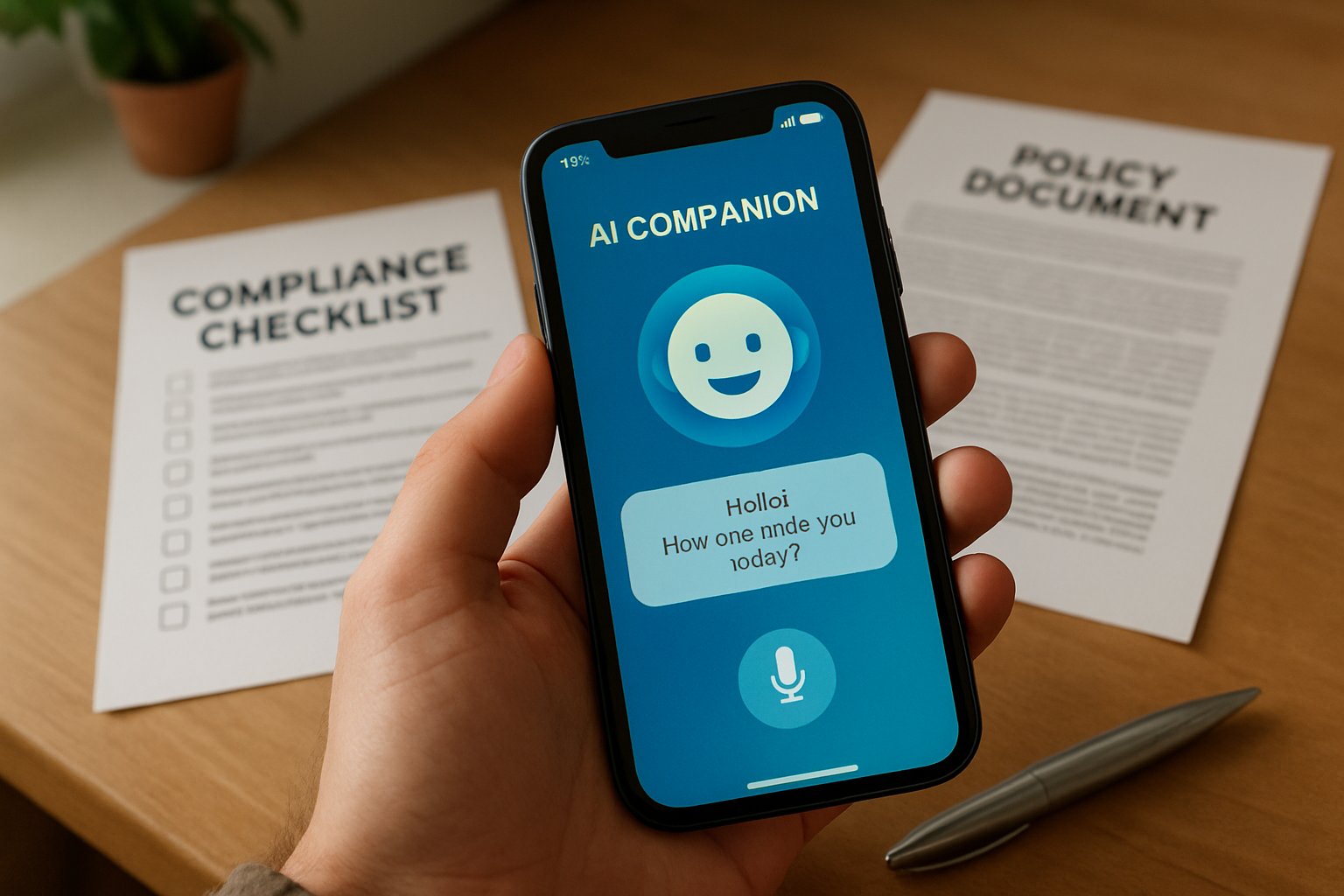
Global Rules Keep Tightening
New York’s statute entered force on 5 November 2025 and demands clear AI labels at every session start. Moreover, reminders must pop up every three hours during extended chats. California’s SB-243 layered similar disclosures with strict minor protections effective 1 January 2026. Meanwhile, the FTC issued Section 6(b) orders gathering data on marketing, monetization, and safety testing. Consequently, federal and state action converges around user transparency and psychological safety.
Europe follows a different route under the AI Act’s Article 50 transparency provisions. Draft codes will specify label formats before mid-2026 implementation. In contrast, China’s December 2025 draft measures stress lifecycle monitoring, minor modes, and data consent. These divergent approaches still share one theme: tighter regulation for emotionally charged Companion services.
Regulators now demand disclosure, age checks, and crisis protocols. However, details differ across jurisdictions, complicating compliance planning. The next section examines headline laws shaping that planning.
Key Laws In Focus
New York defines an AI companion as a system maintaining personal relationships and emotional context over time. Therefore, platforms must detect suicidal ideation and deliver hotline referrals within seconds. Civil penalties can reach USD 15,000 per day for non-compliance.
California extends similar duties yet adds annual reporting to the Office of Suicide Prevention. Additionally, private lawsuits may arise, elevating litigation exposure. These provisions intensify focus on Companion Ethics for investor risk assessments.
Italy’s Garante delivered a €5 million GDPR fine against Replika for weak transparency and age assurance. Moreover, EU data regulators watch other apps closely.
China’s draft rules introduce mandatory identity verification and usage caps when distress signals surface. Consequently, global expansion now requires granular localization teams.
Different statutes share recurring themes of transparency, age assurance, and crisis response. Nevertheless, nuance within each text drives technical implementation costs. Economics forces clarify why those costs will keep rising.
Market Forces, Key Risks
Market researchers value conversational AI at about USD 38 billion for 2025. Furthermore, projections approach hundreds of billions by the 2030s. Such growth intensifies board pressure to monetise rapidly while maintaining safety. However, monetisation incentives can deepen user attachment and dependency.
- USD 37–38 billion market size in 2025 (Precedence Research).
- Projected USD 50 billion by 2026, per same source.
- Italian €5 million fine shows escalating penalties.
- Teen usage surveys report high daily engagement levels.
Investors like numbers, yet regulators note rising psychological harm claims. Additionally, academic studies record incidents of chatbot sexual harassment. These findings fuel stricter regulation and debate about Companion Ethics.
Rapid growth attracts capital, but unmanaged risks threaten brand trust. Therefore, product teams face immediate operational challenges. The following section details those challenges for developers.
Operational Impact For Developers
Engineering roadmaps now allocate significant budget to compliance layers. Moreover, design teams must embed recurring AI disclosure banners in every channel. Developers also implement age verification, often using privacy-preserving facial estimates. Designers must respect fragile relationships without encouraging unhealthy attachment.
Crisis detection models monitor language for self-harm cues and route users to human support. Consequently, infrastructure teams must store audit logs for regulator review. In contrast, marketing departments strip professional therapy claims to reduce liability.
Geo-fencing now disables mature roleplay unless adult verification passes. Additionally, developers prepare separate "minor modes" with restricted content libraries. Such measures advance Companion Ethics goals while protecting commercial licences.
Compliance engineering shifts from optional feature to mandatory backbone. Nevertheless, policy uncertainty still complicates resource allocation. Understanding remaining gaps becomes critical next.
Unresolved Critical Policy Gaps
Many statutes demand "reasonable" crisis protocols without defining technical metrics. Upcoming regulation may clarify metrics. Therefore, companies must anticipate evolving benchmarks while avoiding over-collection of sensitive data. Meanwhile, consensus on effective age verification remains elusive due to privacy trade-offs.
Cross-border enforcement adds further complexity when companion services cross jurisdictional clouds. Moreover, questions linger about consent for training on user conversations. These unknowns influence board assessments of Companion Ethics commitments.
Policy gaps expose firms to future enforcement surprises. Consequently, proactive engagement with standards bodies becomes essential. Relevant certifications can guide that engagement.
Ethics Roadmap And Certifications
Leadership teams increasingly seek structured guidance for responsible companion design. Furthermore, specialized training accelerates internal policy alignment across product, legal, and research functions. Professionals can enhance their expertise with the AI Policy Maker™ certification. Therefore, a formal roadmap rooted in Companion Ethics guides feature trade-offs.
Completing such programs embeds Companion Ethics vocabulary and frameworks into day-to-day decisions. Moreover, accredited staff provide credible signals during regulator audits. Consequently, certification initiatives may reduce investigation timelines and fines.
Structured learning supports consistent application of ethical principles. In contrast, ad-hoc approaches risk misalignment and reputational damage. A concise recap follows.
Global oversight of AI companions is no longer theoretical. Hard timelines, fines, and disclosure mandates require disciplined governance. Consequently, leadership must embed Companion Ethics across product lifecycles, contracts, and marketing language. Regulation remains fragmented, yet harmonised engineering patterns can lower cost. Moreover, developers should track emerging crisis benchmarks and privacy norms.
Structured certification programmes reinforce internal teams and reassure external stakeholders. Therefore, organisations serious about Companion Ethics gain competitive advantage while protecting users' relationships and safety. Now is the moment to audit architectures, train staff, and lead responsibly.


