. Moreover, ministers insist the deal must balance economic upside against risk. This article unpacks the facts, outlines criticisms, and examines what the alliance could mean for industry professionals.
Valuation Context Explained Clearly
Firstly, the February Series G round placed Anthropic near a US$380 billion valuation, approximately A$550 billion. Canberra officials felt both excitement and caution when that figure surfaced during CEO Dario Amodei’s visit. Furthermore, media framed the number as symbolic proof of big-tech leverage inside the Sovereign Tech Alliance. In contrast, the MoU itself remains non-binding and carries no firm capital commitment. Nevertheless, analysts note such valuations can shift negotiating power during future investment talks.
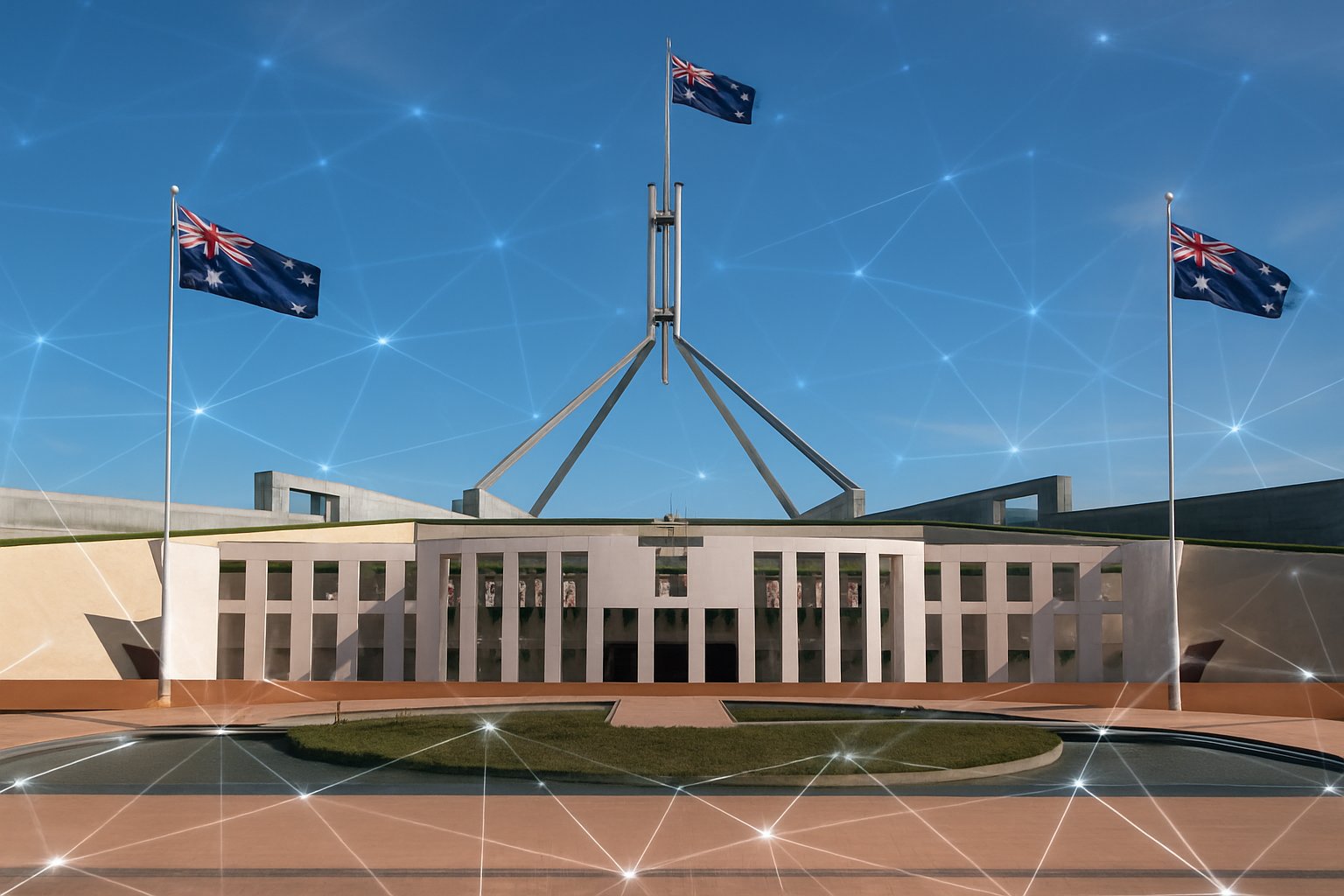
Canberra’s Parliament House stands at the center of the Sovereign Tech Alliance review.
These figures set high expectations. However, they also magnify scrutiny before any concrete cash arrives.
Research Credits Immediate Impact
The MoU delivers tangible benefits for Australian academia. Specifically, Anthropic pledged about AUD 3 million in Claude API credits to four institutions. Additionally, startups may claim up to US$50,000 in separate support. Treasury sources say these credits align with national policy goals for skills development.
ANU, Garvan Institute, Murdoch Children’s Research Institute, Curtin University receive credits.
Credits target genomics, rare-disease diagnostics, and advanced materials research.
Startup program opens later this year with rolling admissions.
Consequently, universities gain immediate tooling without new procurement hurdles. Professionals can deepen expertise with the AI Developer™ certification, ensuring teams extract full value from the credits.
These early wins boost goodwill. Nevertheless, bigger infrastructure questions still dominate political debate.
Data Centre Questions Loom
Anthropic confirmed exploratory talks on Australian data centres. Moreover, Treasurer Jim Chalmers insisted any future infrastructure must meet water and energy obligations. In contrast, the MoU lists no binding figures, leaving communities uncertain about local impacts.
Meanwhile, global demand for compute keeps escalating. Therefore, grid planners seek clarity on load projections before granting permits. Canberra regulators have flagged stricter environmental assessments for energy-intensive builds. Consequently, project timelines could extend well beyond initial headlines.
Unanswered details fuel caution. However, transparent milestones could reassure both investors and residents moving forward.
Environmental Stakes Rising Rapidly
Large AI clusters consume notable water for cooling. Additionally, renewable power procurement remains volatile across several Australian states. Activists argue the Sovereign Tech Alliance must embed sustainability clauses, not voluntary promises. Subsequently, ministers referenced emerging green-data-centre policy frameworks now in consultation.
Industry groups counter that modern designs recycle most cooling water and leverage on-site batteries. Nevertheless, life-cycle emissions remain under review by state environment agencies. Consequently, project sponsors may face mandatory offsets or performance bonds.
Environmental diligence will shape public support. Yet economic incentives could motivate rapid compliance if designed carefully.
Copyright Debate Intensifies Further
Creators fear AI systems trained on protected works without consent. Moreover, arts groups worry the alliance might pressure lawmakers toward looser text-and-data-mining rules. Canberra has denied such intent; however, uncertainty persists.
In contrast, Anthropic claims its safety research demands broad training corpora. Consequently, negotiators discuss potential licensing schemes that satisfy both researchers and rights holders. Meanwhile, legal scholars advise embedding audit rights within future infrastructure contracts to monitor data provenance.
Balancing innovation with fairness remains difficult. Still, early stakeholder engagement can avert costly litigation later.
Geopolitical Backdrop Matters Now
March saw the U.S. Department of Defense label Anthropic a supply-chain risk. Subsequently, the company sued to overturn that designation. These proceedings colour Canberra risk assessments within the Sovereign Tech Alliance.
Furthermore, foreign-interference laws require heightened due diligence on critical-technology partners. Therefore, federal security agencies will review any proposed data-sharing pipelines, including Anthropic’s Economic Index. In contrast, supporters argue that joint safety evaluations bolster international norms and offset strategic uncertainty.
National-security vetting may slow timelines. However, credible safeguards could ultimately strengthen cross-border cooperation.
Navigating Future Steps Together
Stakeholders now seek concrete next actions. Industry executives propose a staged roadmap linking research milestones to phased capital investment. Additionally, policymakers advocate public dashboards to track water, energy, and workforce impacts. Canberra committees will debate draft policy amendments later this quarter.
Meanwhile, business councils urge government to preserve developer flexibility. Consequently, compromise models such as legally binding side-letters might emerge. The Sovereign Tech Alliance thus evolves from symbolic handshake toward accountable governance.
Clear metrics will sustain confidence. Moreover, transparent negotiation updates will keep public debate grounded.
Conclusion: Anthropic’s Australian overture intertwines sky-high valuation, promising research credits, and unresolved environmental, copyright, and security issues. Nevertheless, disciplined oversight could convert headline hype into durable national advantage. Therefore, professionals monitoring the Sovereign Tech Alliance should track upcoming infrastructure disclosures, parliamentary reviews, and court filings. Finally, enhance your strategic value by pursuing the linked AI Developer™ certification and stay ahead in the dynamic AI landscape.