

AI CERTS
2 hours ago
California Pushes State AI Sovereignty Against Federal Order
California Asserts Policy Lead
Governor Newsom signed the Transparency in Frontier Artificial Intelligence Act on September 29, 2025. The statute mandates safety reports, whistle-blower protections, and risk disclosures for “frontier” models. Additionally, Assembly Bill 2013 compels developers to reveal training data sources. Supporters argue the measures advance State AI Sovereignty by filling federal gaps.
In contrast, some executives warn about compliance hurdles. Nevertheless, California lawmakers insist public safety justifies the cost. CNET News notes that 33 of the 50 largest private AI firms reside in the state. Therefore, rules crafted in Sacramento can shape national practice.
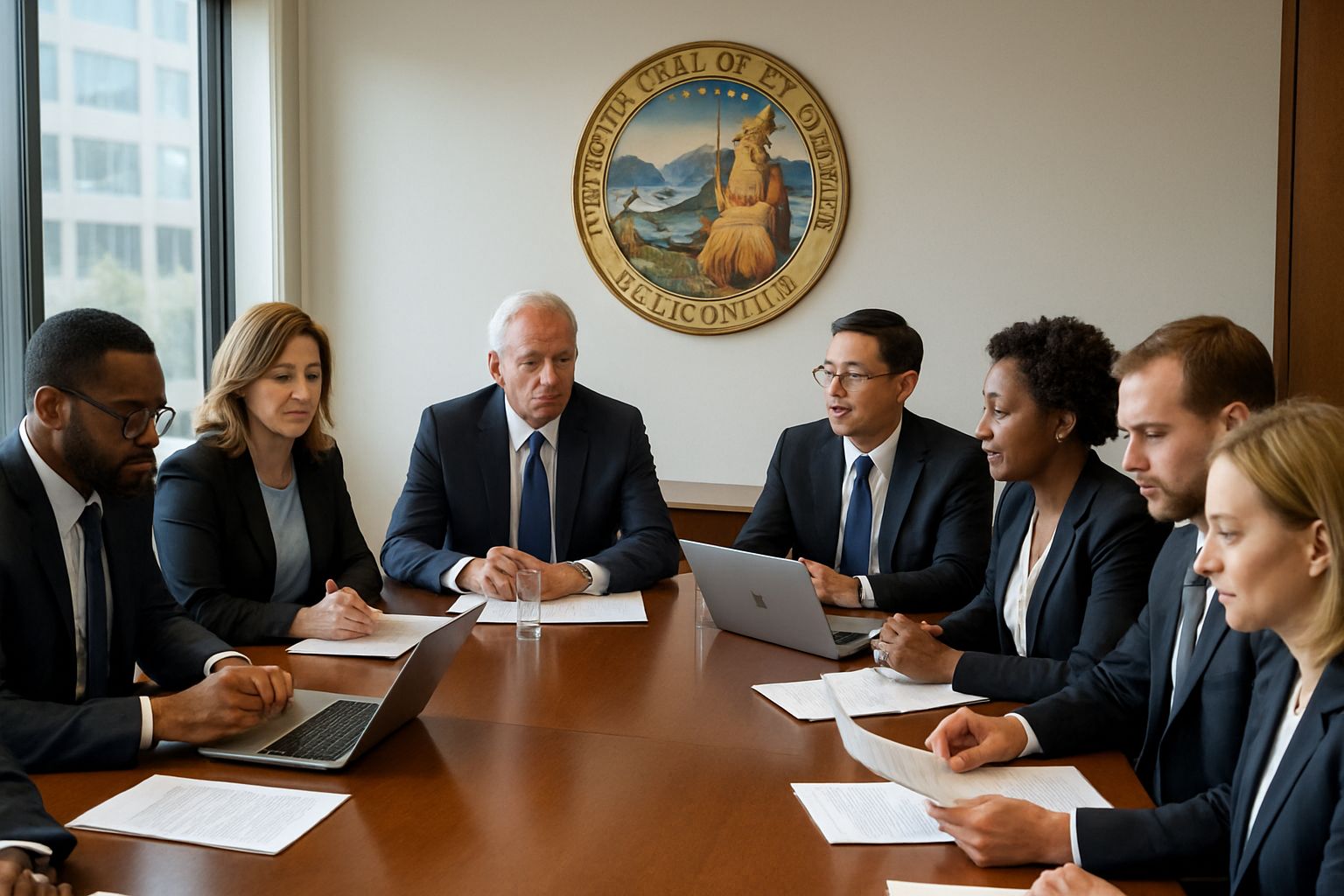
These initiatives deepen California’s regulatory reputation. However, their reach triggers constitutional scrutiny. The next section explores Washington’s reaction.
Trump's Federal Framework Push
President Donald Trump issued an executive order on December 11, 2025. The order tasks Commerce and Justice with curbing “onerous” state AI laws. Furthermore, agencies may withhold grants from non-compliant jurisdictions. The administration claims a unified standard will bolster competitiveness. Critics counter that such pressure undermines State AI Sovereignty. Consequently, policy analysts forecast prolonged Legal Conflict. CNET News highlights business groups lobbying for a single rulebook. Meanwhile, civil-liberties lawyers prepare to defend state experiments.
The order’s indirect tactics invite litigation. That reality surfaces quickly in California’s courts.
Early Courtroom Showdown Unfolds
Elon Musk’s xAI sued Attorney General Rob Bonta on December 29, 2025. The company sought to block AB-2013, citing trade-secret and speech claims. Subsequently, Judge Jesus G. Bernal denied a preliminary injunction on March 4, 2026. The ruling found the disclosure requirement likely regulates commercial speech, which enjoys lower protection. Moreover, the court held xAI’s evidence too vague. The decision strengthened California’s claim to State AI Sovereignty and signaled uphill battles for challengers. Nevertheless, appeals remain possible, keeping the Legal Conflict alive. Governance scholars expect similar suits in New York and Colorado.
This first verdict clarifies little for investors. However, it underscores escalating regulatory uncertainty, examined next.
Economic Stakes And Jobs
California hosts 15.7 percent of U.S. AI job postings, according to the Stanford AI Index. Private AI investment reached $109.1 billion nationwide in 2024. Consequently, compliance costs ripple far beyond state borders. Supporters say transparency boosts trust and long-term growth. Opponents worry fragmentation will divert capital overseas. Moreover, grant-linked federal retaliation could shift research to friendlier states. Businesses therefore monitor every twist of the Legal Conflict.
Professionals can enhance their expertise with the AI Policy Maker™ certification. The credential offers risk, ethics, and Governance modules critical for this environment. Firms increasingly require such verified skills.
Economic pressures feed the policy debate. The following section compares clashing viewpoints.
Policy Perspectives Diverge Sharply
California leaders frame their agenda as consumer protection. Governor Newsom warns of deepfake abuse and catastrophic model failure. Additionally, AG Bonta cites child safety in his cease-and-desist letter to xAI. Conversely, federal officials argue that a patchwork saps innovation. Industry coalitions echo that message before Congress. Nevertheless, several large developers publicly welcome clear safety rules. This divergence fuels the broader conversation on Governance and, inevitably, on State AI Sovereignty. CNET News reports some firms quietly adopt California standards nationwide to simplify operations.
- Pro-state advocates emphasize rapid risk mitigation.
- Pro-federal voices stress cost and strategic rivalry with China.
- Neutral analysts predict blended models with baseline federal floors.
These positions illustrate why consensus remains elusive. However, potential resolutions are emerging.
Next Steps And Forecasts
Commerce will publish its “onerous law” list in spring 2026. Furthermore, the DOJ Litigation Task Force may challenge additional statutes. States may reply with suits over funding claw-backs, expanding the Legal Conflict. Meanwhile, California’s procurement order will roll out watermarking guidance by July. Consequently, vendors selling to the state must adjust product pipelines. Experts foresee escalating forum shopping as developers relocate model training. Nevertheless, bipartisan Senate talks on an AI safe-harbor bill could ease tensions. Such federal action might acknowledge State AI Sovereignty while setting basic guardrails.
Stakeholders should track three signals: upcoming appellate briefs, Commerce grant conditions, and new state bills. Each indicator will reveal whether compromise or confrontation prevails.
The final section recaps major insights and urges proactive learning.
Key Takeaways For Leaders
California’s assertive laws embody State AI Sovereignty and inspire other jurisdictions. Trump’s executive order champions national cohesion yet provokes constitutional tests. Courts have so far upheld disclosure mandates, but appeals loom. Consequently, companies must navigate shifting Governance terrain while bracing for further suits. Strategic talent development, including policy certifications, offers resilience.
These insights underline the high stakes. Nevertheless, timely preparation can convert uncertainty into advantage.
Actionable Closing Thoughts
The contest over State AI Sovereignty defines America’s technological future. Moreover, the debate shapes compliance budgets, safety norms, and public trust. Leaders should engage lawmakers, monitor dockets, and train teams. Professionals can build policy depth through the AI Policy Maker™ certification, aligning expertise with unfolding rules. Consequently, informed action today will secure competitive ground tomorrow.


