

AI CERTs
4 hours ago
Burger King’s AI Chatbot Raises Service, Surveillance Questions
Fast-food drive-thrus have become laboratories for artificial intelligence. Burger King just joined the race with an AI Chatbot named Patty inside employee headsets. The voice assistant listens to every drive-thru interaction and flags missed menu items or messy workflows. It also tracks whether staff say “welcome,” “please,” or “thank you” during service. Burger King executives call the system a coaching tool rather than strict monitoring. However, labor advocates already fear expanded workplace Surveillance and algorithmic pressure on busy crews. The pilot covers roughly 500 U.S. restaurants with a national rollout slated by late 2026. Consequently, Burger King’s experiment offers a revealing case study for Customer Service technology and corporate Ethics debates. This article dissects the technical stack, business goals, and controversies professionals should track. Moreover, it outlines next steps for HR leaders evaluating similar tools.
Voice Assistant Patty Explained
Patty sits at the center of the broader BK Assistant platform. OpenAI speech models transcribe drive-thru audio in real time. Natural language understanding then spots target words and potential sentiment shifts. Subsequently, Patty pushes recipe cards, inventory alerts, or politeness metrics to the manager dashboard. In contrast, earlier QSR pilots focused only on automated order taking. Burger King says the AI Chatbot reduces misheard orders and speeds menu updates across channels. Meanwhile, the politeness feature tallies aggregate use of greeting keywords during Customer Service exchanges. RBI insists individual employees are not scored, yet technical architectures could allow that granularity. These design choices underpin every later controversy.
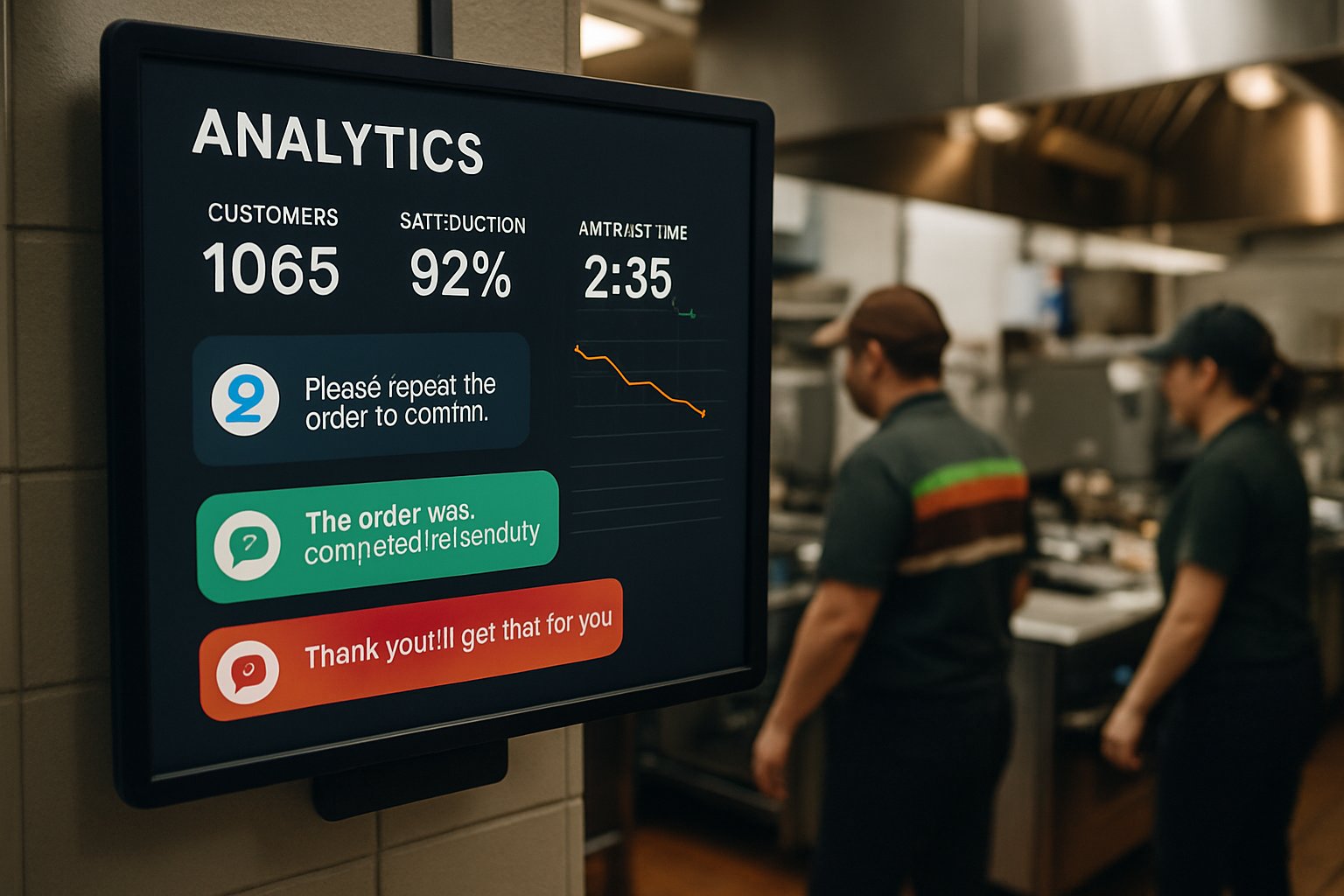
Patty blends transcription, analytics, and coaching in one headset. However, those same capabilities generate measurable operational gains and hidden costs.
Operational Gains And Costs
Burger King touts three primary advantages for managers. Firstly, inventory flags propagate to point-of-sale screens within fifteen minutes. Secondly, recipe guidance reduces training time for new hires. Thirdly, polite greetings correlate with improved Customer Service scores in internal tests. Moreover, executives claim Patty frees managers for guest engagement rather than paperwork. The AI Chatbot also reduces order errors, a metric closely tied to labor cost per transaction.
Key pilot statistics include:
- Average drive-thru accuracy rose by 12% in pilot stores.
- Greeting keyword usage climbed 18% over eight weeks.
- Manager time on inventory paperwork dropped 25% companywide.
Staff reported that the AI Chatbot answered recipe questions faster than shift supervisors. Consequently, company leaders frame Patty as a profitable upgrade rather than optional experiment. Yet every benefit arrives paired with new Surveillance and cost concerns. These tensions surface most clearly in worker reactions, explored next.
Surveillance Fears Emerge Quickly
Privacy advocates compare Patty to a digital supervisor always listening. Nevertheless, employees worry recordings might influence discipline, scheduling, or pay. In contrast to RBI’s assurances, architecture diagrams show potential individual dashboards. Critics argue such latent Surveillance chills casual conversation and increases workplace stress. Furthermore, speech recognition errors can mislabel accents as impolite silence. McDonald’s canceled an IBM drive-thru project in 2024 partly because of false positives. Therefore, Patty’s success depends on transparent metrics and clear HR policies. Burger King has not detailed data retention periods or consent signage for customers. These gaps fuel Ethics debates that the company must address quickly. However, the broader industry context offers cautionary lessons.
Industry Context And Comparisons
Quick-service chains have tested voice AI for nearly five years. Yum Brands uses NVIDIA edge boxes to analyze fryer queues. Wendy’s and Taco Bell both trialed drive-thru chatbots with mixed accuracy. Meanwhile, McDonald’s retreat underscored integration costs when errors frustrate guests. Consequently, investors now reward systems that augment staff over replacing them. Burger King positions its AI Chatbot as augmentation rather than automation. KFC tested an AI Chatbot in 2025 but withdrew after customer confusion. However, comparing metrics remains difficult because chains publish selective data. Independent audits rarely accompany press releases in this sector. Therefore, decision-makers should benchmark pilots against returned investment, accuracy, and employee sentiment. Those factors connect directly to upcoming regulatory and HR scrutiny.
Regulatory And HR Implications
Workplace monitoring laws vary across U.S. states and international markets. California requires notice when audio analytics inform employment decisions. Consequently, HR teams must map Patty’s data flow against each jurisdiction’s rules. The National Labor Relations Board also views constant recording as potential coercion. Moreover, union organizers could argue the system chills protected conversation. Ethics committees within Restaurant Brands International are reportedly drafting governance charters. Professionals can enhance their expertise with the AI Security Level-1 certification. Patty’s AI Chatbot status could classify it as electronic monitoring under emerging New York rules. Additionally, internal teams should schedule worker briefings and Q&A sessions before full deployment. Such engagement helps convert mistrust into constructive feedback cycles. Ultimately, transparent policy supports sustainable adoption and stronger Customer Service outcomes. These governance steps link technical design to broader responsibility frameworks. Next, we examine how leaders can balance both aims.
Balancing Ethics And Innovation
Successful rollouts depend on aligning profit motives with ethical safeguards. Firstly, teams should limit raw audio retention and anonymize transcripts quickly. Secondly, aggregate politeness metrics should avoid ranking individual workers publicly. Thirdly, algorithms need continuous bias auditing across accents and languages. Meanwhile, Burger King can publish quarterly transparency reports detailing error rates and corrective actions. Furthermore, franchisees deserve opt-in periods to adjust workflows and staffing. In contrast, hasty mandates often create resentment and compliance gaps. An unchecked AI Chatbot can quickly drift from helpful tool to disciplinary engine. Therefore, balanced governance nurtures innovation while respecting worker dignity. These principles inform the strategic roadmap outlined next.
Next Steps For Leaders
Technology, operations, and HR executives should convene cross-functional steering committees. Initially, define clear success metrics beyond raw return on investment. Additionally, engage employee representatives during pilot design to foster ownership. Subsequently, commission external audits covering data security, bias, and Customer Service impact. Each proposed audit should verify that the AI Chatbot logs remain aggregated and anonymous. Leaders should reference ISO guidance and emerging U.S. AI regulations. Moreover, maintain an emergency rollback plan if unexpected errors degrade guest experience. Finally, update governance documents annually as models evolve. These proactive measures keep innovation aligned with core values and social license.
Burger King’s Patty exemplifies how an AI Chatbot can blend operational analytics with human coaching. Pilots suggest real financial upside and faster guest satisfaction. However, constant audio Surveillance raises deep worker privacy and Ethics questions. Therefore, success depends on transparent governance, rigorous bias testing, and inclusive HR processes. Consequently, leaders must pair technical ambition with empathetic change management. Professionals considering similar deployments should study Patty’s data architecture and public reaction closely. Moreover, they can deepen risk expertise through industry certifications and cross-functional training. Act now to secure balanced, ethical AI innovations that delight customers without eroding trust.


