

AI CERTS
1 month ago
US Government Secures Early AI Model Access Signals Urgent Need for AI Training in the New Security Era
In parallel, companies like OpenAI have already begun sharing early versions of their models, such as GPT-5.5, with government agencies to support national security testing and responsible deployment strategies.
This marks a clear shift from reactive AI governance to proactive oversight. But it also exposes a critical gap that organizations can no longer ignore—the urgent need for AI training at every level.
A Turning Point in AI Governance
For years, AI development outpaced governance. Now, that gap is closing—but not without consequences.
Governments are stepping in because AI models are no longer simple tools. They are capable of identifying vulnerabilities, automating complex decisions, and even influencing critical infrastructure.
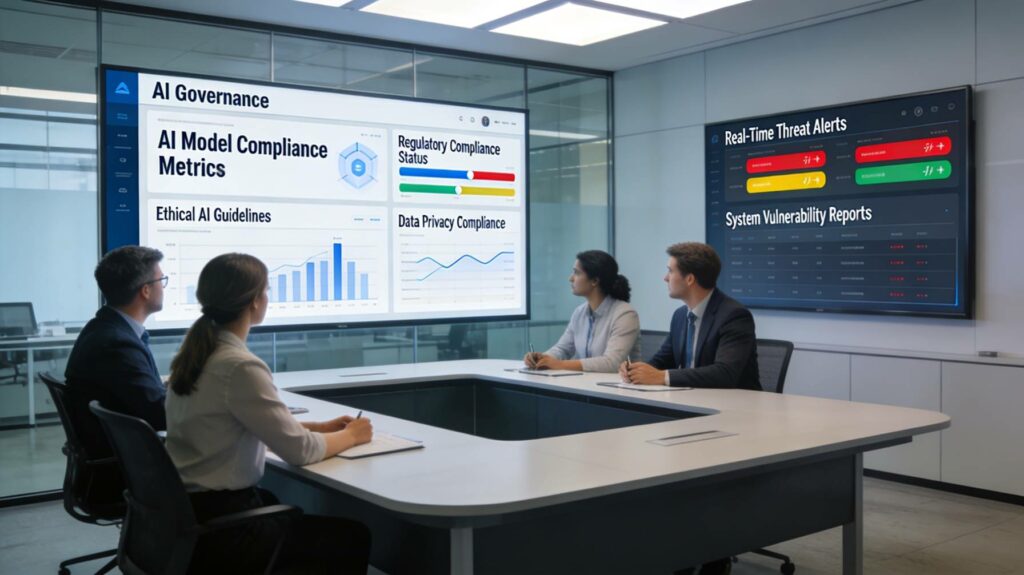
The fact that these models are being reviewed before public release highlights one key truth:
AI is now a matter of national security, not just business innovation.
This changes how organizations must approach AI adoption. It is no longer enough to implement AI tools. Companies must understand how these systems work, what risks they carry, and how to deploy them responsibly.
Without this understanding, businesses risk falling behind regulatory expectations—or worse, becoming part of the problem.
The Growing Complexity of AI Demands Skilled Professionals
As AI systems grow more advanced, so does their complexity.
These models can perform multi-step reasoning, autonomous task execution, and real-world decision-making. But with that capability comes unpredictability.
Governments are testing these systems because even developers do not fully understand all their implications. This uncertainty is exactly why trained professionals are essential.
Organizations need individuals who can:
- Interpret AI outputs critically
- Identify potential risks and biases
- Align AI use with compliance and ethical standards
- Bridge the gap between technical teams and leadership
Without proper training, AI adoption becomes a liability instead of an advantage.
The Talent Gap in the Age of AI Oversight
The biggest challenge is not access to AI tools. It is the lack of skilled people who can use them responsibly.
As governments introduce stricter oversight and testing frameworks, businesses will need professionals who understand both AI capabilities and regulatory expectations.
This is where the gap becomes evident.
Many organizations are already using AI, but very few have structured training programs in place. Teams are experimenting with tools without a clear understanding of risks, compliance, or long-term impact.
In a world where AI is being evaluated for national security threats, this lack of expertise is not sustainable.
Why AI Training Is No Longer Optional
The latest developments show that AI is entering a new phase—one defined by accountability.
Training is no longer just about learning how to use AI tools. It is about understanding the entire ecosystem, including safety, governance, ethics, and strategic implementation.
Organizations that invest in AI training will be able to:
- Stay ahead of evolving regulations
- Build trust with stakeholders and customers
- Reduce operational and reputational risks
- Unlock the full potential of AI innovation
Those that do not will struggle to keep up with both technological and regulatory changes.
Building a Future-Ready Workforce
The future of AI will not be defined solely by technology. It will be defined by the people who know how to use it effectively.
Governments are already collaborating with AI developers to build testing frameworks and safety protocols. Businesses must follow suit by building internal capabilities.
This means developing a workforce that is not only technically skilled but also aware of the broader implications of AI deployment.
Training becomes the foundation for responsible innovation. It ensures that AI is used not just efficiently, but ethically and strategically.
The decision by the U.S. government to secure early access to AI models is a signal to the entire world. AI is powerful, complex, and increasingly regulated.
To keep pace, organizations must move beyond adoption and focus on education.
The AI CERTs Authorized Training Partner program provides a structured pathway for organizations to build this capability. Through globally recognized certifications, industry-aligned curriculum, and scalable training models, it helps businesses equip their workforce with the skills needed to navigate the evolving AI landscape confidently.
FAQs
1. Why is the U.S. government reviewing AI models before release?
The government aims to identify potential risks related to cybersecurity, national security, and misuse before these models are publicly deployed.
2. How does this impact businesses using AI?
It increases the need for compliance, responsible deployment, and understanding of AI risks, making skilled professionals essential.
3. What skills are required for AI adoption today?
Organizations need expertise in AI fundamentals, ethics, governance, risk management, and real-world implementation strategies.
4. Why is AI training becoming critical now?
Because AI systems are becoming more powerful and regulated, untrained use can lead to errors, risks, and compliance issues.
5. How can organizations prepare for the future of AI?
By investing in structured training programs, building internal expertise, and aligning AI strategies with global standards and regulations.
Disclaimer: Some content may be AI-generated or assisted and is provided ‘as is’ for informational purposes only, without warranties of accuracy or completeness, and does not imply endorsement or affiliation.


