

AI CERTS
1 month ago
Energy-Saving AI Breakthrough Highlights Urgent Need for AI Training in 2026
At the heart of this breakthrough is a system called MEERKAT, which fundamentally rethinks how AI models learn. Instead of relying on traditional methods that require massive computational power and energy, this approach reduces communication loads by sharing only the most critical 0.1% of model updates. This cuts data transfer requirements by over 1,000 times and significantly lowers the energy needed for training.
Even more striking, the system bypasses the widely used backpropagation process—an energy-intensive mechanism that has long been central to AI training—replacing it with a lighter, more efficient method of iterative adjustments. The result is faster, cheaper, and more sustainable AI development.
This innovation is not just a technical milestone. It is a signal. A signal that AI is entering a new phase—one where efficiency, accessibility, and scalability will matter just as much as raw performance.
The Real Story Behind the Breakthrough
For years, one of the biggest criticisms of AI has been its enormous energy consumption. Training large models requires vast computing infrastructure, often concentrated in data centers that consume significant electricity. While global AI energy usage may still seem relatively small, the local impact—especially where data centers are concentrated—has raised serious concerns about sustainability and resource strain.
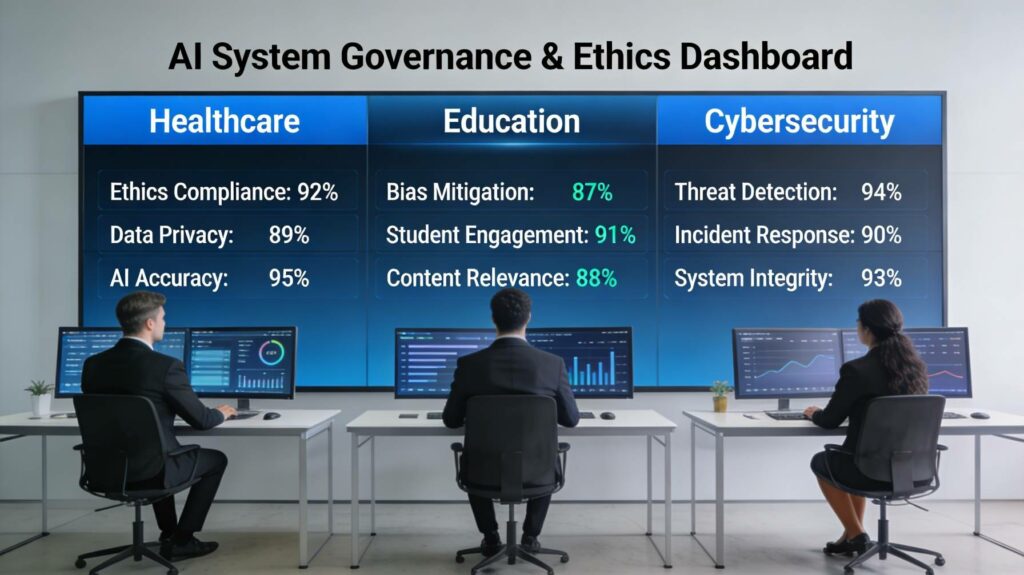
The Stevens breakthrough directly addresses this issue. By reducing both computational and communication costs, it opens the door for AI development in environments that were previously excluded due to limited resources. This includes sectors like healthcare, education, and cross-institutional research, where data privacy and infrastructure constraints have historically slowed progress.
But here’s the deeper implication:
If AI is becoming more efficient and accessible, then more organizations—and more individuals—will start building, deploying, and relying on it.
And that changes everything.
Why This News Increases the Demand for AI Skills
When AI becomes cheaper to train and easier to deploy, it doesn’t just benefit large tech companies. It democratizes innovation. Startups, mid-sized businesses, and even non-technical organizations can now participate in AI development.
But accessibility creates a new challenge:
Who is equipped to use these tools effectively?
The gap is no longer about access to technology. It is about access to knowledge.
As AI systems become more advanced and more integrated into everyday operations, professionals across industries must understand not just how to use AI—but how it works, how it impacts decision-making, and how to apply it responsibly.
The Stevens innovation accelerates this urgency. By lowering the technical and cost barriers, it increases the number of players in the AI ecosystem. And with more players comes a greater need for structured, high-quality AI training.
From Innovation to Implementation: The Missing Link
Technological breakthroughs often create excitement, but without skilled professionals, their impact remains limited. The history of innovation shows this clearly. New tools only become transformative when people know how to use them effectively.
AI is no different.
Organizations today are not just adopting AI—they are struggling to integrate it into workflows, align it with business goals, and ensure ethical and efficient use. The challenge is not just technical. It is strategic.
Understanding concepts like model efficiency, data handling, algorithm selection, and real-world application requires more than surface-level knowledge. It requires structured learning, hands-on exposure, and continuous upskilling.
This is where AI training becomes critical.
Because the future of AI will not be defined only by researchers building new models—it will be defined by professionals who can apply these innovations in real-world scenarios.
The Shift Toward Practical AI Expertise
The Stevens breakthrough also highlights another important shift: AI is moving from theoretical experimentation to practical implementation.
Earlier, AI development was largely confined to research labs and elite institutions. Now, with innovations that reduce cost and complexity, AI is becoming a practical tool for solving everyday problems.
This shift demands a different kind of expertise.
Not just data scientists and engineers, but business leaders, analysts, marketers, and decision-makers who can understand AI’s capabilities and limitations. People who can translate technology into value.
This is why traditional learning methods are no longer enough. The pace of change requires dynamic, industry-aligned training programs that keep professionals updated with the latest developments.
Bridging the Gap with Structured AI Training
As AI continues to evolve, organizations must move from reactive adoption to proactive capability building. Training is no longer optional—it is a strategic necessity.
Programs that offer structured pathways, real-world applications, and globally recognized certifications are becoming essential for both individuals and enterprises.
This is where the concept of becoming an Authorized Training Partner (ATP) becomes particularly powerful.
Rather than building training programs from scratch, organizations can leverage established frameworks, expert-designed curricula, and industry-recognized certifications to accelerate their AI journey.
Why ATP Is the Smart Next Step
The Stevens breakthrough is a glimpse into the future of AI—one that is faster, more efficient, and more accessible. But technology alone is not enough. The real advantage will belong to those who understand how to use it.
Becoming part of an ecosystem like the AI CERTs Authorized Training Partner (ATP) program enables organizations to stay ahead of this curve. It provides access to updated AI curricula, global recognition, and the ability to deliver high-impact training that aligns with industry needs.
In a world where AI is evolving faster than ever, the smartest investment is not just in technology—but in the people who use it.
FAQs
1. What is the new AI training method developed by Stevens Institute of Technology?
It is an energy-efficient approach that reduces data sharing and bypasses traditional backpropagation, significantly lowering computational and communication costs.
2. Why is energy efficiency important in AI training?
AI training consumes large amounts of energy, and improving efficiency helps reduce costs, environmental impact, and infrastructure limitations.
3. How does this breakthrough impact businesses?
It makes AI more accessible, allowing more organizations to adopt and deploy AI solutions without heavy resource constraints.
4. Why is AI training becoming essential now?
As AI becomes more widespread, professionals need structured knowledge to implement it effectively, responsibly, and strategically.
5. How can organizations start building AI capabilities?
They can partner with certified training programs like ATP to access expert-led curricula, global certifications, and scalable training solutions.
Disclaimer: Some content may be AI-generated or assisted and is provided ‘as is’ for informational purposes only, without warranties of accuracy or completeness, and does not imply endorsement or affiliation.


