

AI CERTS
2 hours ago
Pearson + TCS Just Proved It! AI Success Depends on Workforce Training, Not Tools
The Big Announcement That Everyone Should Be Paying Attention To
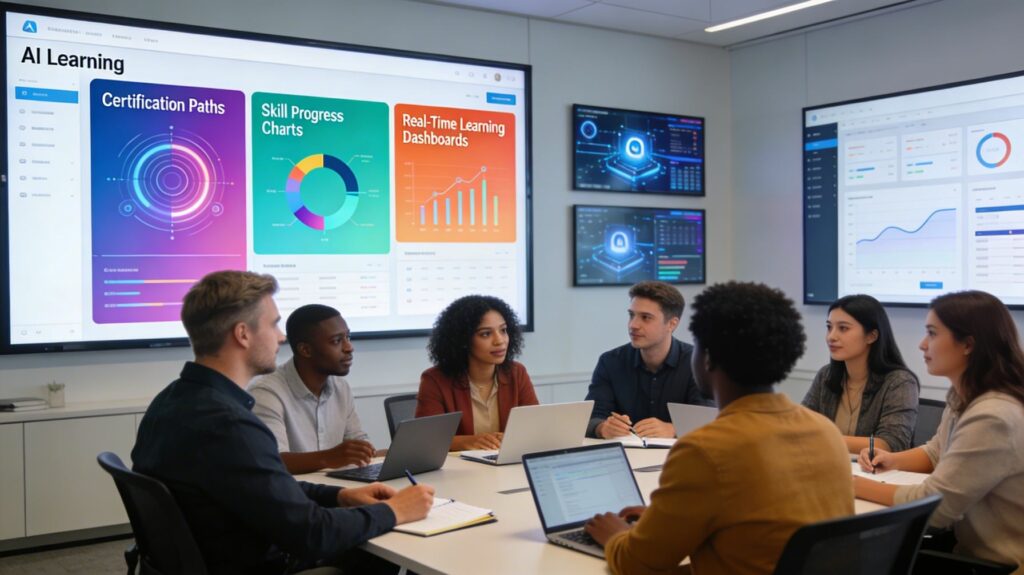
Pearson and TCS announced a multi-year strategic partnership aimed at building AI-powered learning and assessment solutions for enterprises worldwide.
At first glance, it may sound like just another corporate collaboration. But look deeper, and the intent is far more significant. The partnership combines Pearson’s expertise in learning and assessment with TCS’ AI, cloud, and digital platforms to help organizations build “future-ready” workforces.
The goal is not just to deploy AI tools. It is to embed learning directly into the workflow, ensuring employees can actually use AI effectively in real-world scenarios.
This marks a shift from AI adoption to AI readiness.
The Real Problem: AI Tools Without Skilled People
For years, enterprises have invested billions in AI tools, expecting immediate transformation. But results have been inconsistent.
Even Pearson’s CEO highlighted a hard truth: many organizations struggle to demonstrate ROI from AI investments because employees lack the skills and confidence to work with these technologies.
This is the missing link.
AI tools are powerful, but without proper training, they remain underutilized, misunderstood, or even misused. That leads to stalled projects, wasted budgets, and frustrated teams.
The Pearson-TCS partnership directly addresses this gap by focusing on workforce capability rather than just technological capability.
From AI Adoption to AI Enablement
What makes this partnership stand out is its focus on integrating learning into everyday work.
Instead of treating training as a one-time event, the collaboration aims to create continuously adaptive learning environments. These systems use AI-driven insights to identify skill gaps and provide personalized learning pathways.
This approach ensures that employees are not just trained once but evolve alongside AI technologies.
The companies are also working on co-developing AI-enabled learning products, using real-world validation to improve outcomes for both learners and businesses.
In simple terms, they are not just teaching AI. They are building AI-ready professionals.
Why This Changes the AI Game for Enterprises
This partnership highlights a critical shift in how organizations should approach AI transformation.
First, it reinforces that AI success is not a technology problem—it is a people problem. Companies that invest only in tools without investing in training will continue to struggle.
Second, it shows that learning must be embedded into business processes. Traditional training models are too slow for the pace of AI evolution.
Third, it introduces the idea of a “perpetually adaptive workforce.” This means employees continuously upskill as roles evolve, rather than reacting after disruption occurs.
This is not just innovation. It is survival.
The Rise of Skills Intelligence in AI Strategy
One of the most important aspects of this collaboration is the integration of skills intelligence into enterprise operations.
By leveraging AI-driven insights, organizations can map current capabilities, identify gaps, and predict future skill requirements.
This allows businesses to move from reactive hiring to proactive skill-building.
In a world where job roles are constantly changing due to AI, this capability is invaluable. It enables organizations to stay ahead of disruption instead of chasing it.
What This Means for the Future of Work
The Pearson-TCS partnership is a glimpse into the future of work.
In this future, learning is not separate from work—it is part of work. Employees are not just users of AI tools—they are collaborators with AI systems.
Leaders at TCS have emphasized that the long-term value of AI depends on how well organizations prepare their people to work alongside intelligent systems.
This is a fundamental shift in mindset.
AI is no longer just a tool to deploy. It is a capability to develop.
Where Organizations Are Still Getting It Wrong
Despite clear signals from industry leaders, many organizations are still making the same mistake.
They invest heavily in AI platforms but treat training as an afterthought. They expect employees to “figure it out” or rely on minimal onboarding sessions.
This approach is not just ineffective—it is risky.
Without proper training, AI systems can lead to poor decision-making, inefficiencies, and even compliance issues. More importantly, they fail to deliver the promised business value.
The Pearson-TCS partnership is a wake-up call. AI success requires intentional, structured, and continuous workforce development.
The Role of Structured AI Training Programs
This is where structured programs like the AI CERTs Authorized Training Partner (ATP) Program become critical.
As organizations move toward AI-driven operations, they need trusted frameworks to upskill their workforce at scale. The ATP model enables training providers, enterprises, and institutions to deliver industry-recognized AI certifications that align with real-world business needs.
Instead of building training from scratch, organizations can partner with established certification ecosystems to accelerate workforce readiness.
This approach mirrors what Pearson and TCS are doing at a global level—bridging the gap between AI capability and human capability.
The Bigger Lesson: Tools Don’t Transform Businesses—People Do
The biggest takeaway from this partnership is simple but powerful.
AI tools don’t create value. People using AI effectively create value.
Technology can enable transformation, but only skilled employees can drive it.
Organizations that understand this will lead the AI era. Those that don’t will continue to struggle, no matter how advanced their tools are.
Pearson and TCS have not just launched a partnership. They have redefined what AI success looks like.
And it starts with people.
FAQs
What is the Pearson and TCS partnership about?
The partnership is a multi-year collaboration focused on building AI-powered learning and assessment solutions for enterprises. It combines Pearson’s expertise in education with TCS’ AI and cloud capabilities to help organizations develop future-ready workforces.
Why is workforce training important for AI success?
Workforce training ensures employees can effectively use AI tools. Without proper skills, organizations struggle to achieve ROI from AI investments, leading to underutilized technology and poor outcomes.
How does this partnership impact businesses?
It helps businesses integrate learning into workflows, identify skill gaps, and continuously upskill employees. This leads to better adoption of AI, improved productivity, and stronger business results.
What is meant by a “future-ready workforce”?
A future-ready workforce is one that continuously adapts to changing technologies and job roles. Employees are equipped with the skills needed to work alongside AI and evolve as new capabilities emerge.
How can organizations start building AI-ready teams?
Organizations can adopt structured training programs, invest in continuous learning, and partner with certification providers like the AI CERTs Authorized Training Partner Program to scale workforce development effectively. Pearson + TCS Just Proved It! AI Success Depends on Workforce Training, Not Tools
The AI race has never been about who has the best tools. It’s about who has the best-trained people. And the latest partnership between Pearson and Tata Consultancy Services (TCS) just made that crystal clear.
While most organizations are still chasing the next big AI platform, this collaboration flips the narrative. It sends a powerful message: AI doesn’t fail because of weak technology—it fails because of unprepared workforces.


