

AI CERTS
2 months ago
OpenAI’s $445,000 AI Safety Hiring Push Shows Why AI Training Has Become a Strategic Business Priority
The position focuses on anticipating future risks associated with advanced AI systems and ensuring that innovation progresses alongside safety measures.
This hiring trend sends a larger message to enterprises, professionals, and training providers worldwide. The future of AI leadership will not belong only to organizations that adopt AI quickly. It will belong to those that build skilled teams capable of deploying AI responsibly, managing risks effectively, and creating governance frameworks that support long-term growth.
Why AI Safety Is Becoming a Business Imperative
Modern AI systems are becoming increasingly capable. Organizations are deploying AI across operations, customer experiences, cybersecurity, analytics, marketing, and decision-making. As capabilities grow, so do risks.
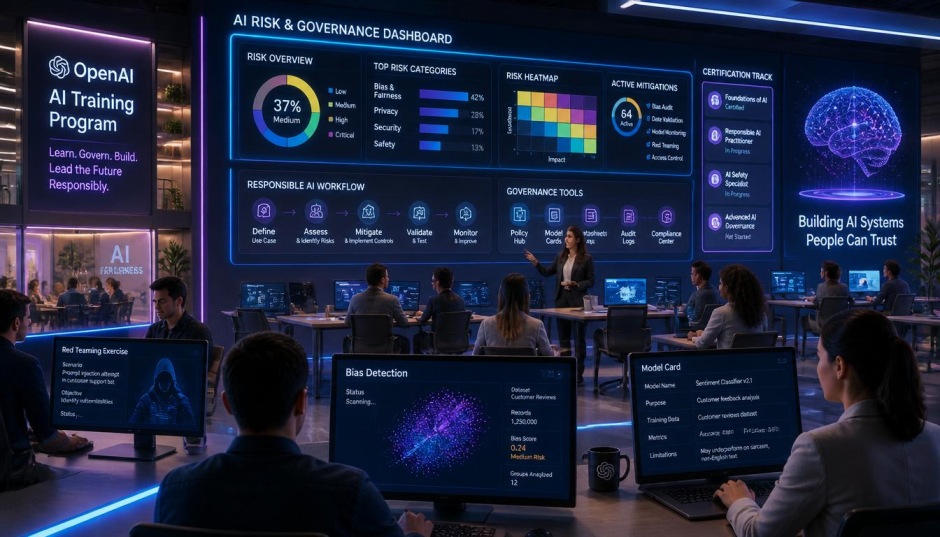
The OpenAI role reportedly focuses on preparedness and future challenges associated with highly advanced AI systems, including scenarios where AI may independently improve future versions of itself. The emphasis highlights an industry-wide recognition that safety cannot remain an afterthought. AI governance, interpretability, robustness, alignment, and responsible deployment are becoming core business priorities.
Research communities are also raising concerns around AI reliability and governance. Recent academic work highlights that AI systems deployed without proper safeguards can create unintended consequences, reinforcing the importance of structured AI oversight and accountability frameworks.
For organizations investing heavily in AI transformation, this creates a clear lesson. Technology investments alone are not enough. Workforce capability determines whether AI initiatives deliver long-term value.
The Growing AI Skills Gap Businesses Cannot Ignore
Many organizations are accelerating AI adoption faster than they are preparing their workforce. Teams often implement AI tools without deep understanding of ethical deployment, model limitations, governance requirements, or risk management practices.
This gap creates operational vulnerabilities. Poor AI implementation can affect customer trust, compliance efforts, data integrity, and business performance.
The increasing market value placed on AI safety professionals demonstrates that specialized expertise is becoming essential. Companies are actively searching for professionals who combine technical understanding with strategic thinking, governance awareness, and responsible AI capabilities.
The lesson for leaders is straightforward. AI transformation requires continuous learning strategies that equip teams with practical skills rather than surface-level awareness.
Why AI Training Has Become Essential for Modern Organizations
AI training is no longer limited to engineers or technical specialists. Executives, operations teams, marketers, cybersecurity professionals, HR leaders, and business decision-makers increasingly require AI literacy.
Effective AI education helps organizations strengthen governance frameworks, improve decision quality, reduce implementation risks, and create stronger alignment between innovation and business objectives.
Organizations that prioritize AI capability development position themselves to adapt faster to emerging technologies while maintaining operational resilience.
Training also creates confidence. Teams that understand AI systems can evaluate outputs critically, identify risks proactively, and implement responsible practices that strengthen business outcomes.
As AI becomes embedded across industries, workforce readiness becomes a competitive differentiator.
Building an AI-Ready Workforce for the Future
The OpenAI hiring announcement reflects more than a high-paying role. It signals an evolving market reality. Businesses increasingly recognize that AI success depends on people who understand how to develop, manage, and govern intelligent systems responsibly. (Ain)
Organizations that delay workforce development may find themselves struggling to keep pace with evolving regulatory expectations, operational demands, and competitive pressures.
AI readiness begins with learning ecosystems that enable professionals to strengthen capabilities continuously.
Training programs that focus on responsible AI adoption, governance principles, practical implementation strategies, and industry-specific applications help organizations prepare for long-term transformation rather than short-term experimentation.
How ATP Can Help
Professionals and organizations looking to strengthen AI capabilities can benefit from working with authorized learning ecosystems that support practical AI skill development.
The Authorized Training Partner program from AI CERTs Authorized Training Partner Program helps training organizations deliver industry-aligned AI education designed to prepare professionals for evolving workforce demands. Through structured learning pathways, businesses can strengthen AI readiness, improve workforce capability, and build stronger foundations for responsible AI adoption.
The future of AI will reward organizations that combine innovation with preparedness. AI training bridges that gap.
FAQs
1. Why are AI safety roles becoming more important?
AI systems are becoming increasingly advanced, creating greater demand for professionals who can ensure responsible development, governance, risk mitigation, and safe deployment practices.
2. How does AI training benefit organizations?
AI training improves workforce capability, strengthens governance, reduces implementation risks, and helps organizations maximize AI investments effectively.
3. Is AI training only useful for technical professionals?
No. Business leaders, marketers, HR teams, cybersecurity professionals, and operational teams increasingly require AI literacy to support enterprise transformation.
4. What skills are becoming valuable in AI careers?
AI governance, ethical AI practices, machine learning understanding, risk management, prompt engineering, AI strategy, and responsible deployment skills are becoming increasingly important.
5. How can businesses prepare for long-term AI transformation?
Organizations can build long-term readiness by investing in workforce education, governance frameworks, responsible AI implementation strategies, and continuous learning programs.
Disclaimer: Some content may be AI-generated or assisted and is provided ‘as is’ for informational purposes only, without warranties of accuracy or completeness, and does not imply endorsement or affiliation.


