

AI CERTS
54 minutes ago
Cisco’s AI Pivot and 4,000 Job Cuts Show Why AI Training Has Become a Business Survival Skill
This development reflects a larger shift happening across the global technology industry. Companies are investing aggressively in AI while simultaneously reshaping their workforce structures around automation, AI-powered systems, and digital transformation. The message is becoming increasingly clear: organizations are prioritizing AI-ready talent over traditional roles.
The Cisco announcement is not simply another layoff story. It is a signal that the future workplace will reward professionals who understand AI, adapt to evolving technologies, and continuously upgrade their skills.
AI Is Reshaping Roles Faster Than Companies Expected
For years, AI discussions focused heavily on innovation and productivity. In 2026, the conversation has shifted toward workforce redesign.
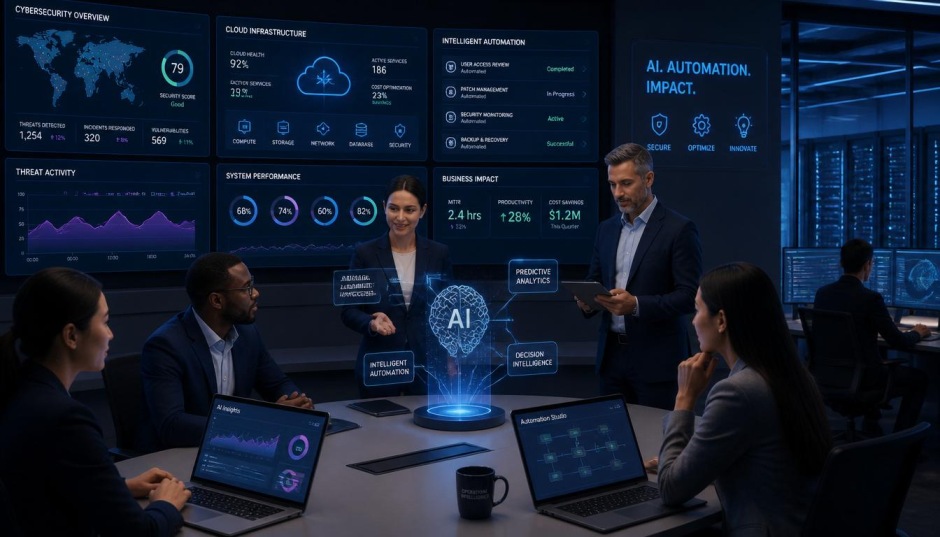
Cisco’s restructuring comes at a time when several major technology companies are reallocating resources toward AI development and infrastructure. The company’s AI infrastructure orders reportedly surged to $5.3 billion this fiscal year, with expectations to reach $9 billion soon.
This surge explains why organizations are reorganizing internally. Companies now need professionals who can work with AI systems, manage AI operations, interpret AI-driven insights, secure AI environments, and integrate AI into business workflows.
Traditional job functions are evolving quickly. Employees who once handled manual analysis, repetitive operations, or routine administrative tasks are now expected to collaborate with intelligent systems. AI is becoming deeply embedded into networking, cybersecurity, cloud infrastructure, customer support, operations, and decision-making.
That transformation is creating an urgent need for practical AI training.
The Real Challenge Is the Growing AI Skills Gap
The problem many businesses face today is not a lack of AI tools. It is a lack of AI-ready professionals.
As organizations adopt AI at scale, they require employees who understand how these systems work, how to use them responsibly, and how to align them with business goals. Unfortunately, workforce readiness has not kept pace with technological adoption.
This growing disconnect is creating pressure on both employers and employees.
Professionals who fail to build AI skills risk being left behind as companies restructure around automation and intelligent systems. Meanwhile, organizations struggling to find AI-capable talent face delays in innovation, operational inefficiencies, and competitive disadvantages.
Cisco’s move highlights this shift perfectly. The company is reducing certain roles while continuing to hire and invest in AI-focused areas.
This is exactly why AI education and certification have become critical in today’s economy.
Why AI Training Is Becoming Essential Across Industries
AI training is far beyond data scientists or machine learning engineers.
Today, professionals across departments need AI literacy. Marketing teams are using generative AI for campaigns and personalization. HR departments are integrating AI into recruitment and workforce analytics. Cybersecurity teams are deploying AI-powered threat detection systems. Operations leaders are automating workflows and predictive maintenance.
Even non-technical professionals are expected to understand AI fundamentals, prompt engineering, AI governance, ethical AI usage, and automation strategies.
Companies are increasingly valuing professionals who can bridge the gap between business strategy and AI implementation.
This is where structured AI certifications and training programs become extremely valuable. They help professionals build practical, industry-relevant AI skills that align with evolving business needs.
AI Training Helps Businesses Stay Competitive
Organizations investing in AI technologies must also invest in people.
Without workforce training, even the best AI infrastructure can fail to deliver meaningful outcomes. Employees need confidence and capability to work effectively with AI systems. Businesses that prioritize AI learning are far more likely to achieve successful transformation.
AI-trained teams improve productivity, accelerate innovation, strengthen cybersecurity readiness, and support better decision-making. They also reduce resistance to technological change because employees feel more prepared for the future.
Cisco’s AI pivot demonstrates that companies are making long-term strategic bets on AI-driven growth. Businesses across industries will increasingly expect their workforce to evolve alongside these investments.
The professionals who proactively gain AI expertise today will be better positioned for future leadership opportunities tomorrow.
Building an AI-Ready Workforce Requires the Right Learning Partner
As AI adoption accelerates globally, businesses and professionals need trusted training ecosystems that provide practical, future-focused learning pathways.
This is where the AI CERTs Authorized Training Partner Program can play a significant role.
The program helps training providers, organizations, and professionals access industry-aligned AI certifications designed to bridge the growing AI skills gap. From foundational AI knowledge to specialized certifications across cybersecurity, leadership, prompt engineering, data, and business applications, the program supports workforce readiness for the evolving AI economy.
In a market where companies are restructuring around AI capabilities, continuous learning is becoming one of the strongest forms of career security.
Conclusion
Cisco’s record growth combined with its AI-driven restructuring reveals a defining reality of the modern workforce: AI transformation is changing not only technology strategies but talent priorities as well.
Businesses are investing heavily in AI infrastructure, automation, and intelligent systems. As a result, professionals with AI expertise will increasingly become central to organizational growth and innovation.
The companies and individuals that succeed in this new era will not simply be those adopting AI tools. They will be the ones actively investing in AI education, AI readiness, and workforce transformation.
The AI CERTs Authorized Training Partner Program helps bridge that gap by enabling organizations and professionals to build practical AI skills that align with the future of work.
FAQs
1. Why is Cisco cutting jobs despite reporting strong growth?
Cisco is restructuring its workforce to redirect investments toward AI infrastructure, cybersecurity, optics, and enterprise AI solutions while focusing on long-term AI-driven growth.
2. How is AI impacting the global job market?
AI is automating repetitive tasks, transforming job roles, and increasing demand for professionals with AI, automation, and digital transformation skills across industries.
3. Why is AI training important for professionals today?
AI training helps professionals remain relevant in evolving workplaces by building skills in AI tools, automation, prompt engineering, AI governance, and intelligent business systems.
4. Which industries are most affected by AI transformation?
Technology, cybersecurity, healthcare, finance, marketing, manufacturing, retail, and customer service industries are all experiencing major AI-driven changes.
5. How can organizations prepare employees for AI adoption?
Organizations can prepare employees through structured AI training, certifications, practical learning programs, and continuous workforce upskilling initiatives like the AI CERTs Authorized Training Partner Program.
Disclaimer: Some content may be AI-generated or assisted and is provided ‘as is’ for informational purposes only, without warranties of accuracy or completeness, and does not imply endorsement or affiliation.


