

AI CERTS
2 hours ago
AI That Trains Itself? Why PonyWorld 2.0 Signals a New Era and a New Skill Gap
This isn’t just another upgrade in autonomous driving it’s the beginning of self-improving AI systems that can train themselves. And while that sounds revolutionary, it also introduces a pressing question: is the workforce ready for AI that no longer waits to be taught?
What Is PonyWorld 2.0 and Why It Matters
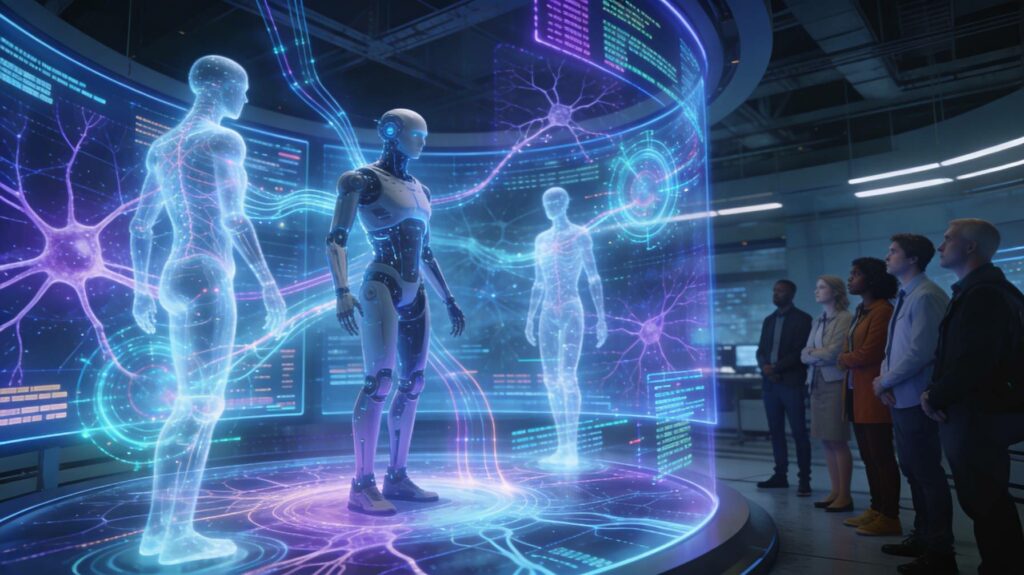
At its core, PonyWorld 2.0 is a “world model” upgrade a sophisticated training engine that powers autonomous driving systems. But unlike traditional AI models, this one doesn’t just learn from data. It actively improves itself.
The system introduces three breakthrough capabilities. It can diagnose its own weaknesses, identify scenarios where it underperforms, and generate targeted data collection tasks to improve those gaps.
This means AI is no longer passively trained, it becomes an active participant in its own development cycle.
Even more significant is its structured “intention layer,” which allows the system to understand why it made certain decisions. It can compare its intentions with real-world outcomes and refine itself accordingly.
This shift transforms AI from a reactive tool into a self-reflective system.
From Simulation to Self-Improvement: A New AI Paradigm
Traditionally, AI development followed a linear path. Engineers trained models using large datasets, deployed them, and then manually improved them over time.
PonyWorld 2.0 breaks this cycle.
Instead of relying solely on human engineers, the system continuously analyzes its own performance in real-world conditions. When it detects gaps, it doesn’t wait, it triggers targeted data collection and retraining processes.
This creates a closed-loop learning system where AI evolves faster, more efficiently, and at scale.
The implications are massive. Autonomous driving, for instance, is no longer limited by how quickly engineers can label data. Instead, the system itself determines what data it needs to improve safety, comfort, and performance.
This is what experts are calling the rise of “physical AI”, systems that learn directly from real-world interactions and continuously refine themselves.
Why This Signals a New Era for Autonomous Driving
The autonomous driving industry is entering a new phase. The challenge is no longer proving that driverless technology works it’s about scaling it efficiently and safely.
PonyWorld 2.0 directly addresses this challenge.
By focusing training on the most difficult scenarios, the system accelerates performance improvements while reducing unnecessary data processing. (PR Newswire)
This efficiency is critical as companies like Pony.ai aim to deploy thousands of autonomous vehicles across multiple cities globally. (@IntellectiaAI)
In simple terms, the faster AI learns, the faster autonomous vehicles can scale and the sooner they become a mainstream reality.
The Hidden Disruption: A Growing Skill Gap
While the technology is groundbreaking, it also exposes a critical gap.
If AI can train itself, what happens to the human role in AI development?
The answer isn’t “less important, it’s “fundamentally different.”
Instead of focusing on manual data labeling or basic model training, professionals will need to understand how to guide, audit, and align self-improving systems. Skills like AI governance, reinforcement learning strategies, ethical oversight, and system optimization will become essential.
This is where many organizations and professionals risk falling behind.
Because while AI is evolving faster than ever, workforce readiness is not.
Why AI Training Matters More Than Ever
This is exactly why initiatives like the AI CERTs Authorized Training Partner (ATP) Program are gaining relevance.
The AI CERTs ATP program is designed to help training providers, institutions, and organizations deliver industry-aligned AI education that matches real-world advancements like self-improving systems.
Instead of outdated curricula, ATP partners gain access to structured, certification-driven programs that focus on practical AI capabilities from foundational knowledge to advanced applications.
In a world shaped by systems like PonyWorld 2.0, training is no longer optional. It becomes the bridge between technological advancement and human capability.
Organizations that invest in AI education today will be the ones capable of leveraging tomorrow’s breakthroughs.
The Bigger Picture: AI That Evolves Beyond Us
PonyWorld 2.0 is not just about autonomous driving. It represents a broader shift in how AI systems are built and scaled.
Self-improving AI could soon extend beyond vehicles into robotics, healthcare, logistics, and smart infrastructure. Any system that operates in the real world can benefit from this continuous learning loop.
But with this power comes responsibility.
As AI systems become more autonomous in their learning, the need for human oversight, ethical frameworks, and strategic direction becomes even more critical.
The future isn’t about AI replacing humans, it’s about humans evolving alongside AI.
Conclusion: The Race Between AI and Human Readiness
PonyWorld 2.0 has made one thing clear: AI is entering an era where it can improve itself faster than ever before.
The real question is no longer what AI can do.
It’s whether we’re prepared to keep up.
Because in this new era, the competitive advantage won’t just belong to companies with the best AI—it will belong to those with the most AI-ready workforce.
FAQs
What makes PonyWorld 2.0 different from traditional AI systems?
PonyWorld 2.0 stands out because it can diagnose its own weaknesses and guide its own improvement. Unlike traditional AI, which relies heavily on human intervention, it creates a feedback loop where the system continuously learns from real-world performance and evolves accordingly.
How does self-improving AI impact autonomous driving?
Self-improving AI accelerates the development of autonomous vehicles by focusing on the most challenging driving scenarios. It enhances safety, efficiency, and scalability, enabling faster deployment of driverless fleets across cities.
Will AI that trains itself reduce the need for human professionals?
Not necessarily. While it reduces manual tasks like data labeling, it increases the demand for advanced roles such as AI governance, system auditing, and strategic oversight. Human expertise becomes more critical, not less.
What skills will be important in the era of self-improving AI?
Skills like reinforcement learning, AI ethics, data strategy, system monitoring, and AI governance will be crucial. Professionals will need to understand how to guide and manage AI systems rather than just train them.
How can organizations prepare for this shift?
Organizations can invest in structured AI training programs, such as those offered through the AI CERTs ATP initiative, to ensure their teams are equipped with the skills needed to work alongside next-generation AI systems.


