

AI CERTS
2 hours ago
AI MRI and Interpretability AI Revolution
Recent open-source projects like Neural MRI, plus industry manifestos from Anthropic, promise systematic scans of weights, activations, and circuits. Moreover, clinical regulators stress that transparent decision pipelines are mandatory before autonomous diagnostics reach hospitals. This article dissects the momentum, methods, benefits, and limits behind the AI MRI movement. Readers will also learn where to build skills and gain certification to stay ahead.
Market Momentum Quickly Builds
Momentum accelerated during the past year, bridging academia and industry. Moreover, Jihoon Jeong released Model Medicine and the Neural MRI code in March 2026. Meanwhile, Anthropic CEO Dario Amodei published an April 2025 essay that demanded an "MRI for AI" within two years. Consequently, venture decks and research roadmaps now reference the metaphor as shorthand for transparency.
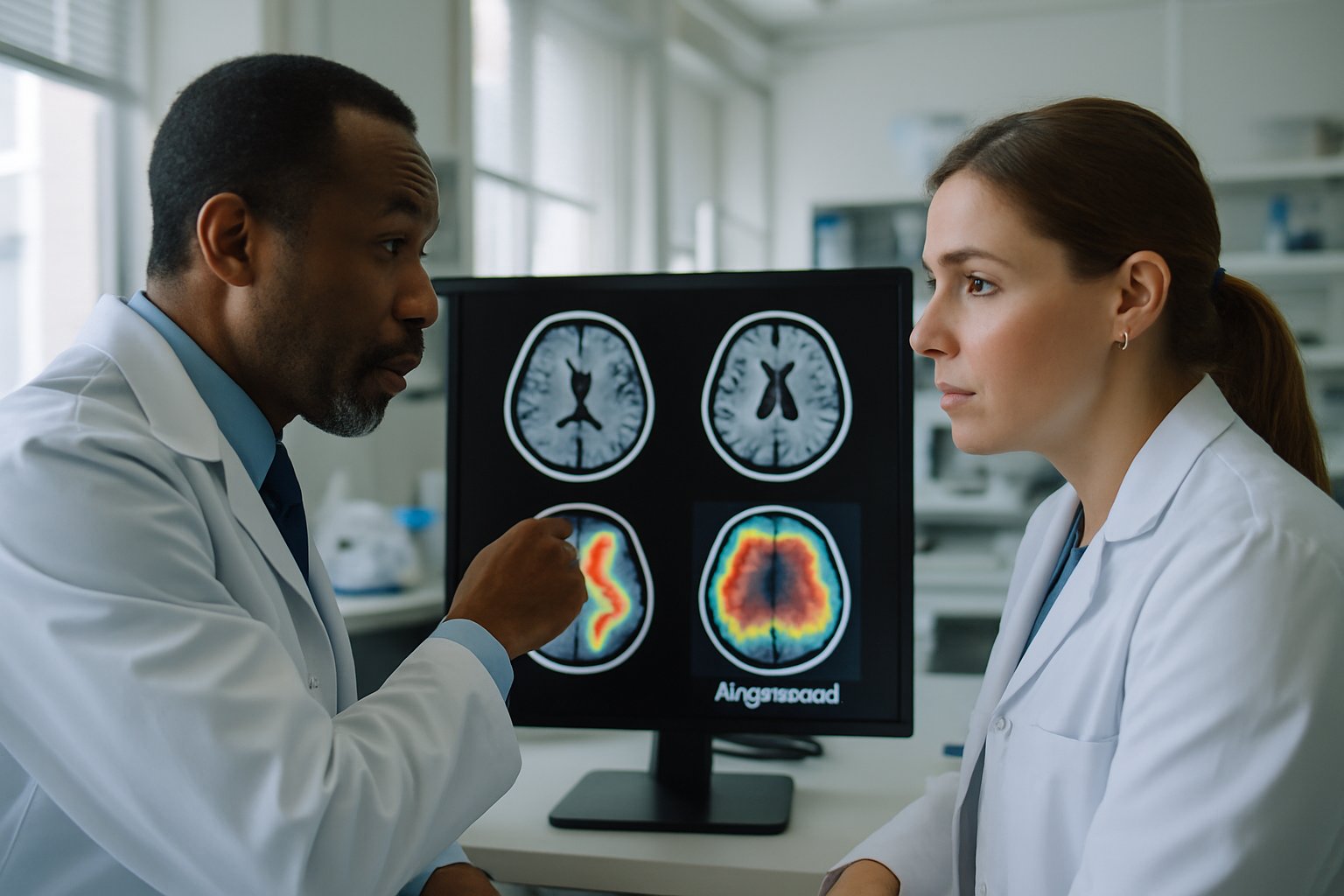
- March 2026: Neural MRI demoed five scan modes on GPT-2 and Mistral-7B.
- April 2025: Anthropic set 2027 targets for scalable model scans.
- 2024-2026: Clinical journals flagged opacity as a regulatory barrier.
Interpretability remains the central research term in funding calls.
These milestones show rapid alignment across sectors. However, tool maturity still lags behind ambitious timelines.
Therefore, understanding the technical core is essential.
Neural MRI Core Explained
Neural MRI treats a model like a patient under clinical imaging. Furthermore, it maps classic MRI modalities to concrete interpretability outputs. The T1 scan reveals topology, while T2 plots weight distributions. Additionally, fMRI shows prompt-triggered activations. DTI diagrams information pathways, and FLAIR highlights anomalous features.
Consequently, engineers can ablate suspected circuits and measure causal shifts in logits. Moreover, real-time token streaming visualizes reasoning traces as they unfold. This capability embodies the promise of Interpretability AI by turning speculation into measurable evidence.
These scan modes provide a cohesive diagnostic toolkit. In contrast, traditional saliency maps offer only coarse surface hints.
Industry Voices Onboard Rapidly
Dario Amodei captured mainstream attention with a stark warning. He wrote, “We do not understand how our own AI creations work.” Consequently, Anthropic invested heavily in mechanistic analysis, reporting thirty million discovered features in one commercial model.
Meanwhile, Google DeepMind and OpenAI share similar roadmaps, though public details remain scarce. Nevertheless, all groups echo the AI MRI metaphor when pitching safety budgets. Interpretability AI thus gains executive sponsorship alongside scaling research. Consequently, project managers now list Interpretability AI milestones next to inference optimizations.
Corporate endorsements accelerate community adoption. However, fundamental scientific hurdles still challenge every lab.
Clinical Field Raises Concerns
Radiologists confront strict liability when algorithms mislead physicians. Moreover, systematic reviews show heatmaps often fail stability tests. Consequently, regulators insist that any clinical model expose deeper interpretability, not just colored pixels.
Experts label current systems "black box" devices that obstruct informed consent. In contrast, AI MRI style scans could document where reasoning diverges from medical guidelines. Nevertheless, validation studies remain sparse and small.
Clinical stakeholders view Interpretability AI as essential for trust but demand empirical proof. Therefore, rigorous benchmarks will be decisive.
Benefits And Known Limits
Neural MRI, and by extension AI MRI, promises tangible gains across research, safety, and governance. Furthermore, causally validated interventions can patch hallucinations without full retraining.
- Diagnosis: locate faulty circuits within seconds.
- Triage: prioritize fixes by measured impact.
- Audit: provide regulators quantitative Interpretability AI transparency reports.
However, the method covers only a partial concept map because features overlap through superposition. Additionally, scanning frontier models consumes meaningful GPU hours and sensitive weight access. Interpretability AI researchers warn that no single scan guarantees safety.
Benefits clearly outweigh stagnation, yet expectations must stay realistic. Consequently, community standards are now forming.
Roadmap Toward Shared Standards
Working groups within the mechanistic community draft fidelity benchmarks for each scan mode. Meanwhile, Anthropic targets 2027 for automated detection of most dangerous behaviors. Moreover, open labs discuss telemetry APIs for closed models to balance IP with oversight.
Professionals can enhance expertise with the AI+ Researcher™ certification. Such credentials validate skills in dataset triage, circuit tracing, and emerging interpretability techniques. Therefore, hiring managers may soon view Interpretability AI proficiency as baseline for safety roles.
Standards and education evolve in parallel. In contrast, complacency risks repeating opaque software mistakes.
Skills For Future Practitioners
Engineers eager to join the field need diverse expertise. Consequently, successful teams mix deep learning, causal inference, visualization, and regulatory knowledge. Moreover, familiarity with black box failure modes enables focused hypothesis testing.
Toolkit fluency should cover TransformerLens, the Neural MRI repo, and basic GPU profiling. Additionally, practitioners must write reproducible notebooks that map reasoning traces to observed behaviors. Interpretability AI case reports reward clear storytelling and rigorous statistics.
Skill development closes the gap between theory and deployment. Therefore, early adopters gain competitive advantage.
Conclusion
AI MRI technology moves the field from metaphors to measurable scans. Moreover, Neural MRI already visualizes topology, tensors, activations, and circuits on open transformer models. Industry leaders back the push, while clinicians highlight evidence demands. Consequently, benefits around diagnosis, auditing, and safety appear within reach, yet limits regarding scale and completeness persist. Continuing collaboration on standards, benchmarks, and education will decide how quickly opaque black box systems become transparent assets.
Professionals keen to lead should combine mechanistic tooling with certified training. Interpretability AI therefore stands not just as a research niche but as the next pillar of responsible deployment. Explore emerging projects and pursue certification today to stay ahead.


