

AI CERTS
3 hours ago
AI Integration Takes Center Stage at MIT EmTech 2026
Moreover, fresh data from Stanford, McKinsey, and OpenAI shows adoption curves steepening fast. Therefore, moving from pilots to production now affects competitiveness, security, and talent strategy. Meanwhile, EmTech speakers will share practical blueprints, risks, and lessons drawn from real deployments.
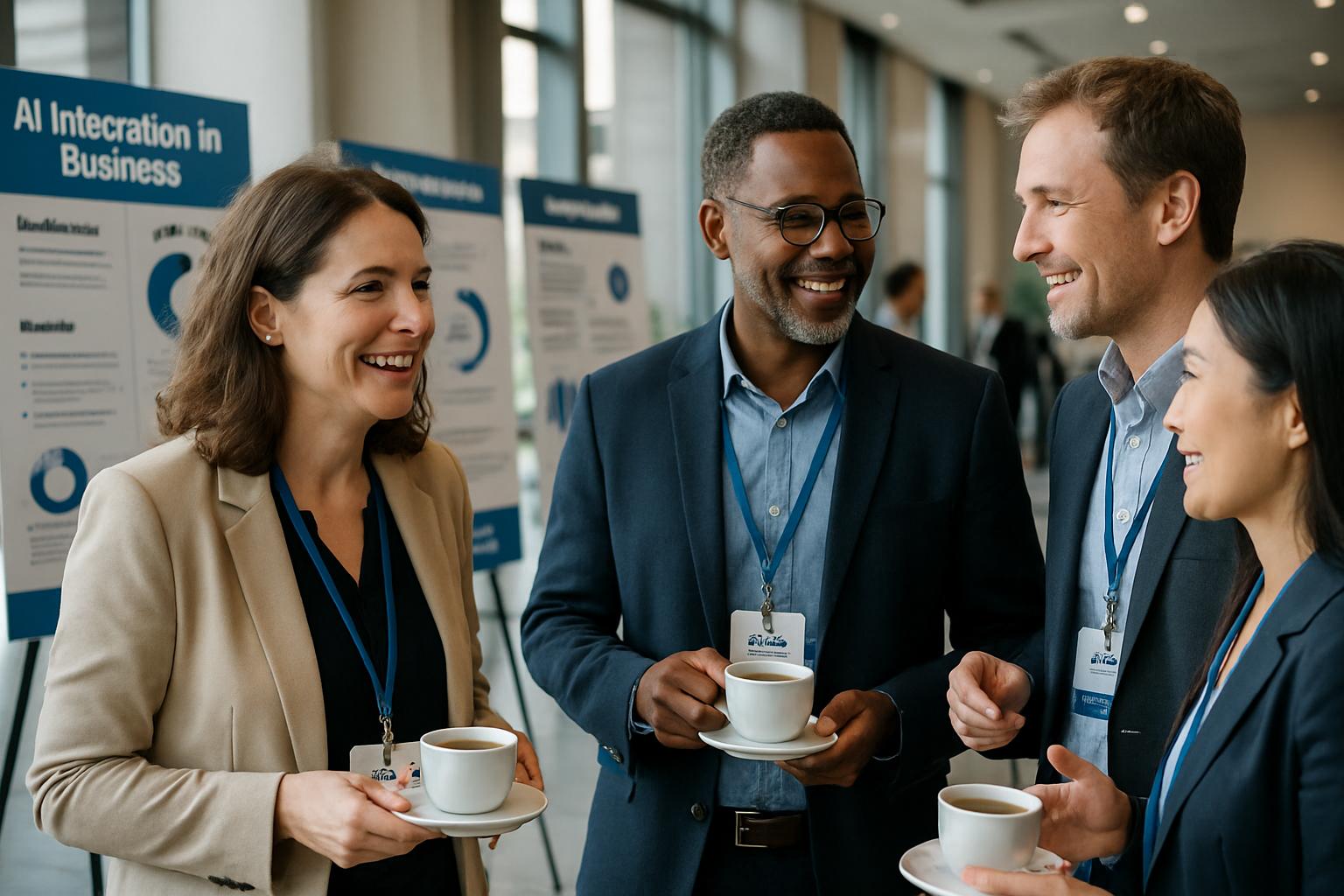
Readers will gain a concise tour of the agenda, supporting statistics, and expert perspectives. Furthermore, links to certification resources appear where professional upskilling matters most. Let us examine how The Great Integration narrative unfolds across sessions.
Event Sets Crucial Context
Brian Bryson, director of content, states, “2026 is the year organizations must operationalize AI to stay competitive.” However, the conference will not just celebrate success. The published agenda spotlights integration challenges, security gaps, and workforce upheaval. Consequently, every track links strategic vision to operational detail.
Day one, titled Integrate, opens with the session “From Pilots to Production.” Speakers will explain migrating proof-of-concept models into hardened pipelines. In contrast, day two shifts to Execute, focusing on agentic systems and revenue machines. Finally, the Connect pillar on day three emphasizes leadership and workforce renewal.
These structural chapters frame the story clearly. Consequently, attendees can map personal priorities onto the broader narrative. AI Integration appears in every pillar, reinforcing its cross-functional impact.
The event architecture signals disciplined thinking about scaling intelligent capability. However, data trends reveal why that structure matters next.
Enterprise Adoption Numbers Rise
Stanford HAI’s latest index reports 78% of organizations used AI during 2024, up sharply from 55%. Moreover, McKinsey finds one-third of executives already harness generative models in at least one function. Consequently, spending patterns have shifted from experimentation toward production tooling and monitoring.
OpenAI’s 2025 enterprise report echoes that shift, citing 40-60 minutes saved daily per employee. Meanwhile, Gartner forecasts double-digit growth for agent management platforms through 2027. Therefore, the conference agenda leads with adoption evidence rather than aspirational hype.
Such metrics justify describing 2026 as the year of AI Integration. However, rising usage also expands risk surfaces. Those tensions headline the next program block.
Adoption data confirms momentum that boards can no longer ignore. Consequently, organizers dedicate significant time to operational threats.
Operational Themes And Risks
Session titles such as “Hallucinations, Hype, and Hard Reality” confront accuracy and trust issues head-on. Mandiant research warns that production agents can leak data or accept malicious prompts. Furthermore, Palo Alto Networks executive Ian Swanson will outline least-privilege controls for model access.
The EmTech agenda also tackles the “trust recession” affecting consumer confidence. In contrast, revenue-focused sessions show how governed pipelines still drive measurable gains. Therefore, balanced governance appears indispensable for sustained AI Integration.
Security experts emphasize three priority controls:
- Comprehensive agent inventory with real-time anomaly detection
- Strict prompt, data, and identity segmentation
- Automated policy audits across the new AI stack
Nevertheless, speakers insist benefits outweigh risks when programs include those safeguards. Consequently, organizations are urged to harden infrastructure before scaling headcount reliant on agentic workflows. Effective AI Integration security depends on layered defenses.
Robust governance converts experimental code into dependable capability. Therefore, platform choices become paramount, as the next sessions explain.
Deep Dive AI Stack
MIT editors will host a panel on composable architectures supporting modular model swaps. Moreover, HPE engineers plan demos showing data fabric, orchestration, and scalable vector stores. The “AI factory” framework will map data, models, and runtime into repeatable pipelines.
In contrast, vendors like ServiceNow will outline plug-and-play agent shells for internal tools. Organizers argue that stack flexibility increases speed yet reduces vendor lock-in. Such claims will receive scrutiny from CIOs attending the workshop.
Therefore, selecting reference architectures early accelerates AI Integration across diverse business units. However, reskilling teams to exploit new layers remains essential.
The modern stack underpins scale, security, and future experimentation. Subsequently, discussion shifts to human capital implications.
Workforce And Leadership Shift
Donna Morris from Walmart plans to share lessons on reskilling 60,000 associates for AI-augmented workflows. Meanwhile, Kevin Delaney will explore cultural change required for agentic collaboration. Additionally, Michael Chui will detail McKinsey’s “AI factory” talent model using cross-functional squads.
Speakers converge on three workforce imperatives:
- Continuous upskilling aligned to new AI stack
- Redesigned incentives rewarding human-AI teamwork
- Transparent communication mitigating trust recession fears
Consequently, leadership development becomes as important as technical deployment. Professionals can deepen delivery capabilities through the AI Project Manager™ certification. Such credentials help translate strategy into repeatable AI Integration outcomes.
Workforce agility heavily influences eventual return on investment. Therefore, event organizers schedule mentoring lounges alongside technical briefings.
Preparing For Cambridge April
Tickets grant access to both on-campus and online experiences running April 21–23. Moreover, the updated program includes salons, networking dinners, and virtual partner showcases. Attendees should review the integration strategy track early, because seats fill quickly.
MIT Media Lab will host keynote sessions; live stream access remains available worldwide. Consequently, global executives can compare integration playbooks without travel constraints. Furthermore, recorded archives stay available for thirty days post-event.
Organizers recommend joining the pre-conference Slack channel to coordinate meetings. Such coordination maximizes networking value and sparks collaborative AI Integration projects.
Early scheduling prevents logistical friction during the intense three-day program. Consequently, participants arrive focused on discussion rather than details.
Key Takeaways For Executives
The Great Integration narrative frames AI as core infrastructure, not an experiment. The conference compresses that message into three actionable imperatives. Firstly, secure composable stacks. Secondly, embed governance and risk controls early. Thirdly, invest in people who can drive AI Integration programs.
Moreover, adoption data verifies that operational laggards risk rapid obsolescence. In contrast, early movers already capture measurable productivity and revenue gains. Consequently, decision makers should benchmark progress against the published agenda milestones.
These lessons distill hours of sessions into a concise executive checklist. Subsequently, the conclusion highlights strategic next steps.
EmTech AI 2026 will translate hype into discipline through a packed, evidence-driven program. Speakers will unpack composable stacks, security controls, and human capital plays. Consequently, attendees gain concrete roadmaps for sustained AI Integration at scale.
Moreover, adoption statistics showcase urgency, while balanced risk discussion prevents blind acceleration. Professionals ready to lead can validate skills via the AI Project Manager™ credential. Therefore, the path from pilot to platform becomes clearer than ever.
Register early, study the agenda, and prepare pointed questions for Cambridge or online. Strategic engagement now will decide competitive standing in 2027 and beyond. Consequently, the Great Integration era rewards leaders who act decisively today.


