

AI CERTs
2 months ago
AI Educator Guide: Plagiarism Detection and Integrity Policies
A quiet storm is sweeping higher education halls.
Generative AI now drafts essays in seconds, challenging long-standing plagiarism safeguards.
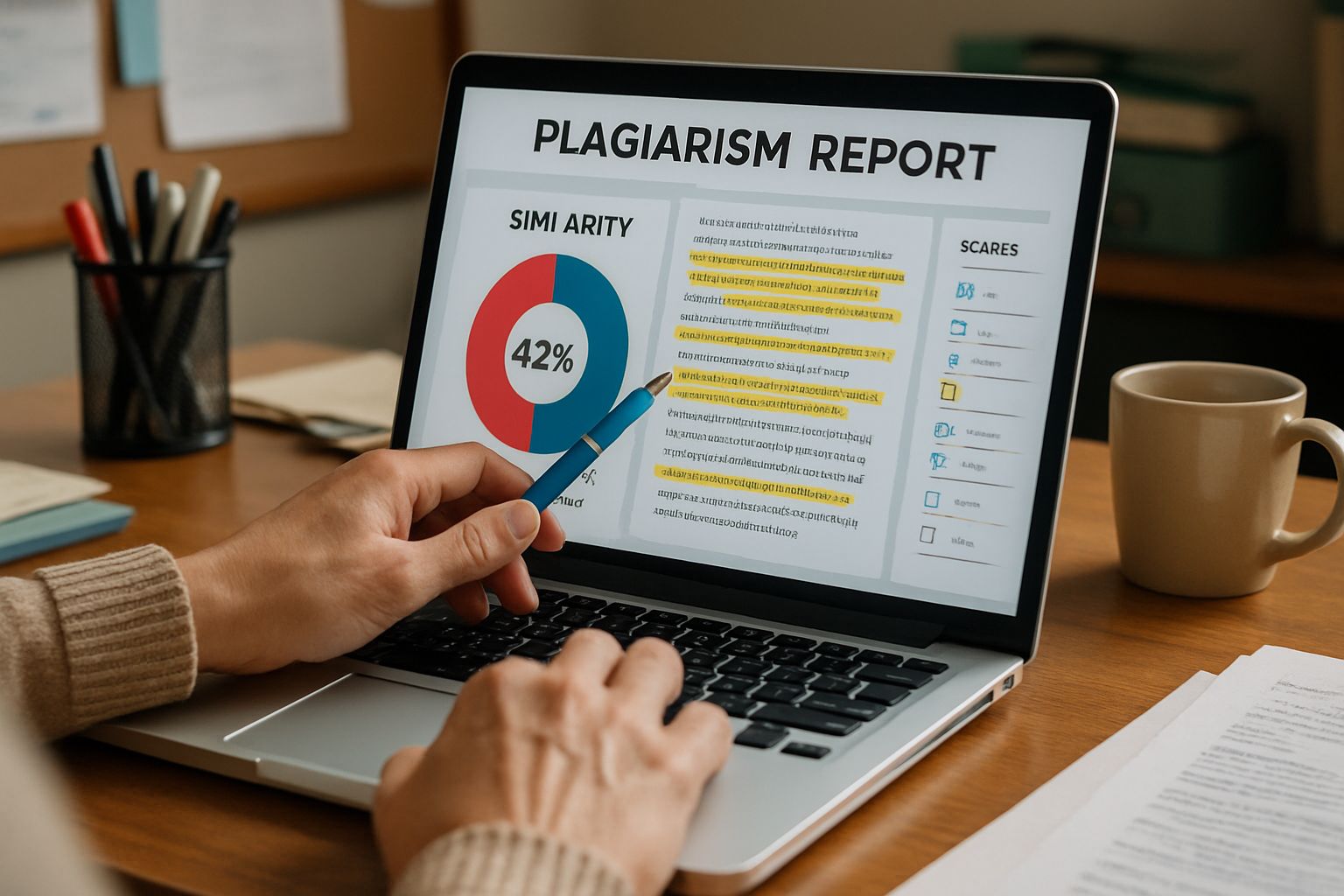
Consequently, administrators, vendors, and faculty scramble to preserve assessment credibility.
At the center stands the AI Educator balancing innovation with responsibility.
However, recent detector misfires raise tough questions about fairness, bias, and due process.
This news analysis dissects current plagiarism detection tools, institutional policy shifts, and emerging Classroom practices.
Moreover, it offers pragmatic steps any department can adopt without stifling creative Learning.
These insights equip technologists, leaders, and Students to navigate an evolving integrity landscape confidently.
Meanwhile, statistics reveal soaring AI misuse reports across continents.
Therefore, understanding technology limits and human factors has never been more urgent.
The following sections unpack data, expert opinions, and alternatives driving the 2026 discussion.
Surge Of AI Detection
Turnitin processed about 200 million submissions during 2024, flagging 11% for significant AI content.
Furthermore, its February 2026 update claims better recall with minimal extra false positives.
Independent researchers remain cautious because sample bias often distorts vendor metrics.
In contrast, Guardian reporting counted 6,900 confirmed UK cases in 2023-24, a sharp escalation.
Consequently, many learners fear automatic penalties based solely on algorithmic suspicion.
Nevertheless, vendor leaders frame detection scores as conversation starters rather than verdicts.
Accuracy gaps appear starker when detectors screen multilingual Classroom essays.
Jisc calculations show a 1% false positive rate can mislabel hundreds, undermining integrity conversations from the start.
Moreover, bias tends to hit non-native writers hardest, deepening equity worries.
Consequently, universities now demand transparent validation datasets before renewing contracts.
An AI Educator requires such evidence before advising disciplinary action.
These numbers highlight scale without certainty.
However, raw volume alone cannot justify punitive decisions.
Next, we examine what the statistics really reveal.
Current Plagiarism Statistics Snapshot
Data sources vary, yet patterns converge.
Tyton Partners found 59% of Students used GenAI monthly during 2024.
Meanwhile, faculty usage lagged at 22%, exposing a pedagogical knowledge gap.
Consequently, the typical lecture hall now hosts uneven expertise and expectations.
Stanford’s Integrity Working Group urged assessment redesign after reviewing internal offence metrics.
Every AI Educator should translate these statistics into tailored risk assessments.
- Turnitin 2024: 11% of papers had 20% or more AI text.
- Only 3% displayed 80% AI content, yet alarms rose quickly.
- Guardian 2025: 5.1 cheating cases per 1,000 UK learners.
- Peer studies place detector accuracy below 80% for varied genres.
These figures offer context but lack nuance around false positives and local Policy.
Therefore, statistical headlines must combine with qualitative case reviews.
Reliable oversight demands numbers plus narrative.
Subsequently, scrutiny pivots toward tool reliability.
That reliability debate sits under our next lens.
Detection Tools Under Scrutiny
Most detectors analyze token patterns instead of confirmed authorship.
Therefore, outputs remain probabilistic signals rather than courtroom evidence.
International Journal for Educational Integrity placed many tools below 80% accuracy.
Moreover, bias against non-native grammar inflated false positives by up to 15%.
In contrast, vendor marketing highlights continuous model training and recall gains.
However, methodologies stay proprietary, preventing independent replication.
Stanford experts advise combining detectors with draft portfolios and oral defenses.
Turnitin acknowledged limitations, urging educators to treat its score as starting dialogue.
Consequently, an AI Educator must weigh efficiency against potential harm.
Privacy concerns further complicate adoption because third-party uploads trigger FERPA or GDPR reviews.
Tool opacity shrinks institutional trust.
Nevertheless, transparent design could rebuild confidence.
Therefore, the vigilant AI Educator demands open algorithms.
Next, we explore how Policy evolves alongside these doubts.
Evolving Academic Integrity Policy
Since 2023, universities shifted from blanket bans to nuanced disclosure frameworks.
Stanford now requires syllabus statements clarifying acceptable AI Learning support.
Meanwhile, Vanderbilt paused Turnitin’s detector pending data-protection assessments.
UNESCO guidance urges global systems to embed critical AI literacy, not prohibition.
Consequently, Policy conversations emphasize proportional responses over zero-tolerance rhetoric.
An informed AI Educator helps committees draft balanced language.
Many departments exempt in-person exams but allow AI brainstorming when documented.
Moreover, draft checkpoints record process evidence to support fair investigations.
These layered controls give learners room for responsible creativity.
Subsequently, sanctions escalate only after human review confirms misconduct.
Policy momentum favors balanced governance.
Therefore, assessment design becomes the critical battlefield.
Alternative strategies now enter the spotlight.
Alternative Assessment Design Strategies
Educators experiment with reflections, oral defenses, and collaborative projects.
Process-oriented rubrics value Learning growth over finished prose.
Additionally, watermark research embeds hidden signatures in generated drafts, deterring wholesale copying.
However, watermark robustness drops when learners paraphrase or combine systems.
A rising approach captures timestamped drafts inside the Classroom platform.
Consequently, teachers view revision history as provenance proof.
An AI Educator can integrate these workflows through LMS plugins or vendor pilots.
Professionals can enhance expertise with the Chief AI Officer™ certification.
For any AI Educator, process evidence simplifies consultations.
These designs shift focus from product to process.
Consequently, holistic evidence reduces dispute frequency.
Finally, we outline actionable steps for every educator.
Practical Steps For Educators
Start by auditing course objectives for higher-order skills resistant to automation.
Next, craft a clear Policy statement defining acceptable uses and disclosure rules.
Furthermore, pilot detectors in low-stakes settings to collect local accuracy data.
Parallel Classroom discussions should teach learners how to cite AI assistance ethically.
Moreover, schedule draft checkpoints that capture progressive Learning artefacts.
Invite librarians and disability services when reviewing procedures.
Consequently, diverse perspectives surface hidden access challenges.
An experienced AI Educator will document decisions, ensuring consistency across sections.
- Establish validation logs for each detector trial.
- Provide workshop links and reflective prompts on day one.
- Align sanctions ladder with institutional fairness guidelines.
These steps foster consistency and trust.
Subsequently, continuous review will refine the framework.
The journey now turns toward sustainable culture building.
Conclusion And Call-To-Action
Plagiarism detection technology matures, yet certainty remains elusive.
Nevertheless, data-informed Policy, transparent tools, and creative assessment design can uphold scholarly Integrity.
Classroom strategies that emphasize process empower learners and respect diverse Learning styles.
Moreover, an agile AI Educator can champion innovation while protecting academic values.
Therefore, institutions should test, adapt, and share results across networks.
Explore the linked certification to deepen strategic expertise and guide the next transformation.
Meanwhile, stakeholders must demand open metrics from vendors to rebuild confidence.
Ultimately, collaboration will decide whether generative AI enriches or erodes education.


