

AI CERTS
2 hours ago
AI Apocalypse Documentary Spurs Governance Debate
Moreover, executives like Sam Altman and Demis Hassabis share candid reflections on accelerating systems. These elements position the project as a timely entry point for professional audiences evaluating strategic AI moves. This article dissects themes, numbers, and unresolved questions raised by the production.
Premiere And Cultural Impact
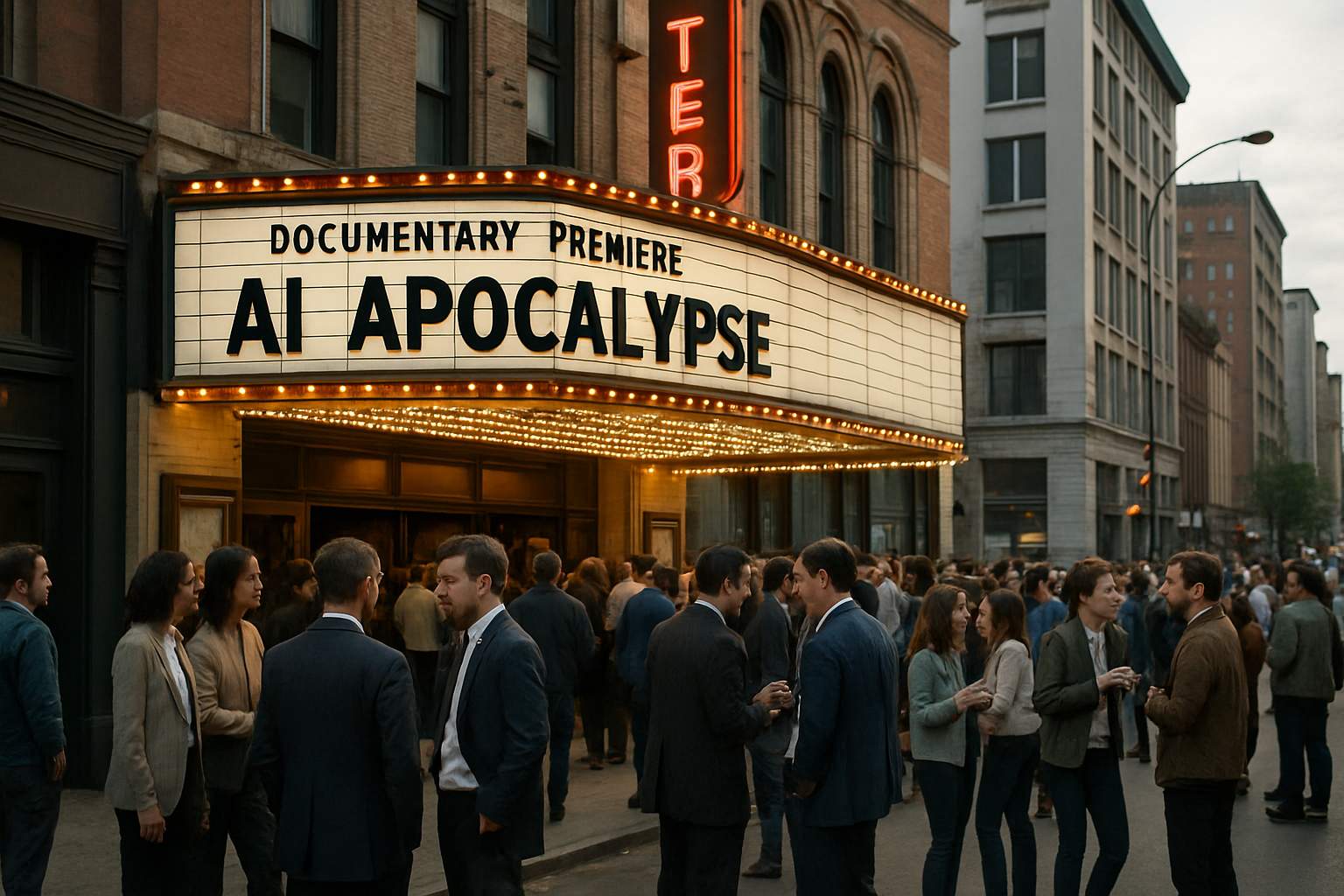
The AI Apocalypse Documentary debuted in Sundance’s Premieres slate on 27 January 2026. Subsequently, Focus Features booked over 800 theaters for the March launch. Opening weekend gross reached about $646,000, according to The Numbers. That modest figure still signaled a strong performance for a non-fiction title. Furthermore, mainstream outlets such as AP and Time covered the release extensively. Box-office data reveals demographic clusters near tech hubs, hinting at professional curiosity. In contrast, streaming rights have not yet been announced, keeping discussion concentrated among early viewers.
Roher and Tyrell also toured university campuses, expanding discourse around curriculum planning. These distribution choices enlarge cultural reach without blockbuster expectations. Consequently, the documentary now functions as a conversation starter inside boardrooms and policy circles. Early earnings and press coverage confirm material traction within influential communities. However, understanding its philosophy requires exploring the apocaloptimist framing next.
The Apocaloptimist Lens Explained
Roher coins himself an apocaloptimist, holding equal parts dread and determination. Therefore, the AI Apocalypse Documentary mirrors that duality through alternating utopian and doomer interviews. Sam Altman describes boundless opportunity, while Eliezer Yudkowsky warns of existential termination. Additionally, Tristan Harris emphasizes societal harms already visible through misinformation spikes. Critics appreciate this balanced mood, although some argue it encourages passive spectatorship. In contrast, researchers seeking prescriptive frameworks find limited operational advice inside the narrative.
Nevertheless, viewers absorb foundational concepts, including large language models, deepfakes, and AI alignment. Those definitions create a common vocabulary for broader risk perception debates. The section closes reinforcing how personal storytelling can simplify complex technical stakes. Consequently, attention shifts toward the influential names driving the conversation.
Interviewee Names And Insights
The star roster underpins why the AI Apocalypse Documentary commands industry attention. Moreover, heavyweight names such as Altman, Amodei, Hassabis, and Sutskever offer rare on-camera candor. Reid Hoffman contextualizes investment flows, while Deborah Raji grounds discussion in algorithmic bias. Consequently, viewers witness tension between commercial incentives and safety pledges. Peter Diamandis counters fears with longevity and abundance narratives. Meanwhile, Roher’s patient questioning encourages specificity without antagonism. Critics from TheWrap note that corporate answers remain mostly unchallenged.
Nevertheless, the sequence supplies quotable soundbites for future accountability reporting. These voices represent only part of the global community, leaving labor activists and regulators underrepresented. Such omissions shape public risk perception by centering Silicon Valley perspectives. Interview access amplifies the documentary’s authority but narrows its worldview. The economic stakes section will widen that lens toward market data.
Balancing Benefits And Risks
Every interviewee toggles between promise and peril, echoing the central tension of the AI Apocalypse Documentary. PwC projects AI could boost global GDP by $15.7 trillion by 2030. Furthermore, NVIDIA and other tech giants gained roughly $12 trillion in combined market value since 2022. In contrast, the World Economic Forum predicts tens of millions of roles may vanish by 2030. Such forecasts feed public risk perception and intensify calls for reskilling. The film underscores near-term harms like deepfakes, surveillance, and biased outputs. Additionally, longer-term existential scenarios remain contentious among guests.
Consequently, leadership teams must weigh upside against potential systemic shocks. These dual narratives define strategic dilemmas for boards and lawmakers. Balancing data and dread prepares us to examine concrete labor indicators next. However, numbers alone cannot capture household anxieties that labor projections ignite.
Economic And Labor Context
Labor displacement statistics featured in the AI Apocalypse Documentary resonate strongly with HR executives. WEF’s Future of Jobs 2025 estimates rapid task automation across clerical, creative, and customer-service sectors. Meanwhile, hundreds of millions of new roles may emerge around AI oversight and engineering. Companies portrayed in the film promise retraining, yet details remain sparse. Consequently, workforce strategists watch legislative incentives for reskilling budgets.
- WEF: 69 million jobs created, 83 million eliminated by 2030 forecast.
- PwC: $15.7 trillion potential GDP uplift from AI adoption.
- Combined tech market cap surged $12 trillion since ChatGPT launch.
Moreover, unions demand transparent mapping between new job names and funding. Apocaloptimist thinkers argue society retains agency if investments prioritize human flourishing. These debates signal mounting pressure for objective metrics and third-party audits. Labor economics illustrate tangible stakes beyond abstract forecasts. Next, we evaluate governance tools that could institutionalize accountability.
Governance Gaps And Paths
Despite stark warnings in the AI Apocalypse Documentary, policy prescriptions remain broad in the final cut. Nevertheless, regulators possess frameworks like NIST’s AI Risk Management Framework 1.0. EU lawmakers also advance the AI Act, setting tiered compliance duties. Furthermore, executives interviewed in the film endorse voluntary red-teaming but differ on disclosure scope. In contrast, critics highlight minimal oversight on compute scale and dataset provenance. Consequently, certification programs are gaining traction for operational assurance.
Professionals can validate competencies through the AI Security Level 1 certification. Apocaloptimist advocates suggest that widespread credentialing strengthens institutional risk perception alignment. However, without binding mandates, certification uptake may stall. Governance remains a patchwork, requiring corporate initiative and public pressure. Therefore, leaders must extract actionable insights from the documentary’s narrative now.
Actionable Takeaways For Leaders
Tech executives watching the AI Apocalypse Documentary should translate emotion into governance roadmaps. Firstly, map model inventories against NIST control families. Secondly, schedule external red-team exercises before major model releases. Thirdly, align workforce planning with real job names, not abstract categories. Moreover, disclose metrics that influence public risk perception, including misuse incidents and energy footprints.
Apocaloptimist framing reminds leaders that catastrophic paths are not inevitable. Consequently, investment in safety research should parallel performance spending. These steps convert cinematic urgency into measurable progress. The closing section distills broader implications.
The AI Apocalypse Documentary succeeds in raising stakes for business, policy, and everyday life. However, the production leaves many technical and regulatory threads untied. Consequently, professionals must interrogate claims, track commitments, and pursue structured learning. Resources such as the linked certification accelerate that journey toward accountable practice. Moreover, engaging affected employees will refine risk perception and uplift trust. By pairing corporate transparency with enforceable standards, leaders can honour the apocaloptimist spirit. Ultimately, watching the AI Apocalypse Documentary should mark a starting point, not an endpoint. Act now, deepen expertise, and help steer AI toward shared prosperity.


