

AI CERTS
1 week ago
Agentic AI Architecture: Beating Single-Agent Bottlenecks
Moreover, we compare single and multi-agent systems using real token economics. Finally, you will gain an actionable roadmap and certification resources to future-proof teams. Read on to understand why architecture choices shape enterprise scale outcomes. Meanwhile, market projections show a 9x revenue jump for agent tooling by 2030. Therefore, ignoring architectural trade-offs now risks runaway costs later.
Why Bottlenecks Emerge Now
Gartner expects Fortune-500 companies to manage 150,000 agents by 2028. Moreover, only 13% report having adequate governance. In contrast, McKinsey finds 72% already deploy generative AI somewhere. These adoption curves collide with compute, policy, and data limitations.
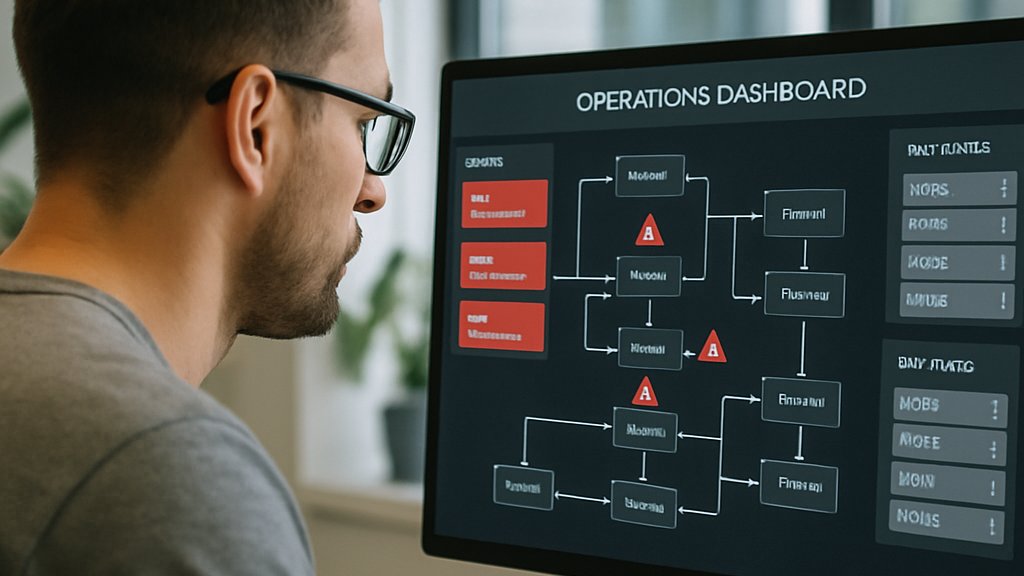
- Token overheads for some multi-agent systems run 3x higher than single agents.
- The “AI agents” market may reach $47 B by 2030, according to VDF.ai.
- LangChain’s $1.1 B valuation signals intense investor faith in orchestration tooling.
However, single agents become brittle once contexts balloon across departments. Meanwhile, fragmented permissions make identity and audit complicated. Consequently, teams face quality dips, latency spikes, and unpredictable bills.
These challenges expose hidden costs. Nevertheless, understanding root causes enables informed architectural choices. Subsequently, the next section dissects context limits further.
When Context Limits Hurt
Enterprise knowledge lives in tickets, SharePoint sites, and shadow systems. Consequently, one model rarely ingests everything without noise. Stanford researchers showed parity between single and multi-agent runs only when “thinking tokens” stayed equal. Furthermore, quality crashed as context windows overflowed.
RAG patterns extend reach yet multiply prompts. Moreover, compliance filters insert extra calls. In contrast, specialized agents can isolate finance data from marketing chatter. Therefore, agentic AI architecture often shifts toward modularity as data grows.
Context sprawl degrades quality and inflates cost. However, fair evaluation requires matching reasoning budgets across approaches. These insights set the stage for measuring single-agent performance.
Evaluating Single Agent Performance
Effective baselines prevent premature complexity. Additionally, leaders should log reasoning tokens per request. Gartner urges teams to inventory agents before scaling. Meanwhile, Microsoft AutoGen users throttle token budgets to benchmark latency.
Tran and Kiela argue many multi-agent systems shine only after extra compute. Consequently, cost comparisons become skewed. Nevertheless, single agents still fail when tasks demand specialization, safety checks, or parallel review loops.
Baseline metrics clarify trade-offs. Subsequently, we explore why thinking tokens matter.
Why Thinking Tokens Matter
Thinking tokens quantify hidden reasoning steps. Moreover, equalizing this budget levels the playing field. In contrast, raw accuracy numbers ignore compute fairness. Therefore, Gartner now recommends reporting per-request token splits.
Accounting for thinking tokens prevents architecture inflation. However, teams must still plan for future workloads. Consequently, many adopt agentic AI architecture incrementally, adding agents only where budgets break.
Balanced metrics drive transparent decisions. Meanwhile, orchestration emerges as the next scalability lever.
Scaling With Effective Orchestration
Orchestrators assign tasks, track context, and secure credentials. Furthermore, they enable parallelism without blowing memory. LangGraph, Semantic Kernel, and IBM watsonx all pitch streamlined pipelines.
However, every orchestration hop introduces latency. Gartner warns of an “AI swarm tax” when calls multiply. Consequently, experts cap the word “orchestration” to deliberate checkpoints, not every micro-function.
Teams need observability dashboards, audit logs, and rollback paths. Moreover, an orchestrator should expose policy hooks for external risk engines. Therefore, successful workflow design unites engineering and compliance early.
Right-sized orchestration unlocks parallel gains. Nevertheless, governance still dictates sustainable growth. Subsequently, the focus shifts to control frameworks.
Strong Governance Remains Critical
Inventory, permissioning, and retirement processes tame agent sprawl. Additionally, Gartner lists six control steps, including TRiSM tooling. Meanwhile, IBM promotes AgentOps dashboards for real-time policy enforcement.
Enterprises also need versioning to roll back rogue behaviors. In contrast, many startups launch agents without kill-switches. Consequently, breaches or hallucinations escalate quickly.
Governance safeguards protect brand and budget. However, culture and staffing gaps persist. Therefore, leadership must fund training and certifications, such as the Chief AI Officer™ credential.
Effective governance closes risk gaps. Subsequently, we present engineering steps to operationalize safeguards.
Practical Engineering Action Steps
Engineers can follow a staged maturity path:
- Prototype single agents with strict reasoning budgets.
- Add logging for tokens, latency, and data access.
- Standardize shared skills and connectors.
- Introduce light orchestration for parallel validation.
- Scale fleets only after observability and rollback tests pass.
Moreover, align architecture reviews with cost forecasts. Meanwhile, verify GPU capacity before launching agent clusters. In contrast, many pilots fail due to procurement delays.
These steps translate strategy into code. Consequently, they morph proofs-of-concept into robust enterprise scale deployments.
Actionable practices accelerate safe growth. Nevertheless, continuous feedback ensures architecture remains efficient. Therefore, revisiting metrics quarterly keeps fleets lean.
agentic AI architecture now sits at the center of digital transformation. However, success depends on balanced evaluation, disciplined workflow design, and vigilant governance. Furthermore, incremental adoption curbs cost shocks. Consequently, enterprises avoid the swarm tax while unlocking parallel intelligence. Professionals can deepen expertise through the linked certification and stay ahead of rapid innovation.
Disclaimer: Some content may be AI-generated or assisted and is provided ‘as is’ for informational purposes only, without warranties of accuracy or completeness, and does not imply endorsement or affiliation.


