

AI CERTs
8 months ago
India’s Biometric AI Payments Surge: UPI Transactions up 35%
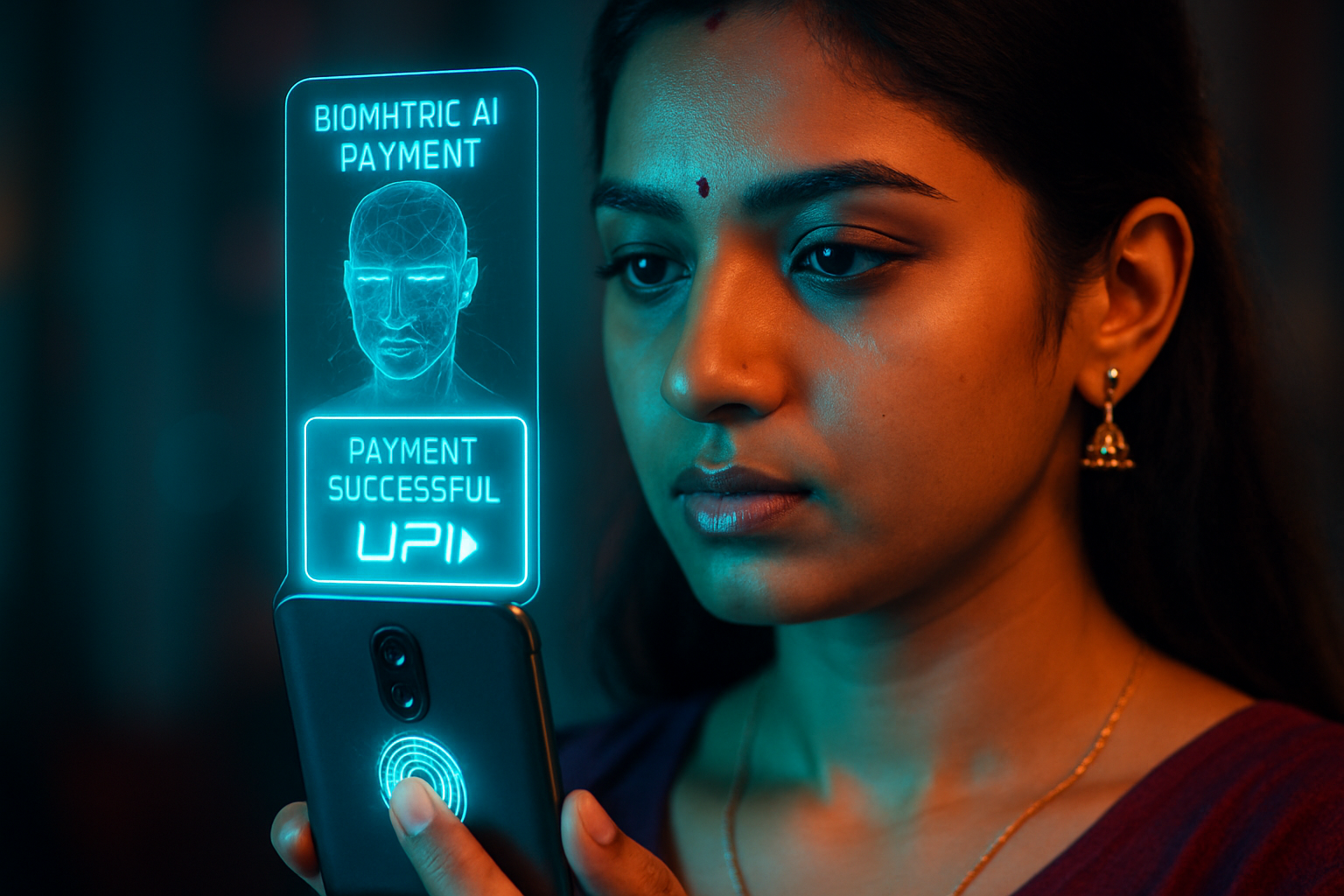
India’s payment landscape is accelerating faster than many global markets. UPI processed 14.44 billion July 2024 transactions worth ₹20.64 lakh crore, a 35% annual value jump. Simultaneously, Aadhaar biometric authentications crossed 150 billion by April 2025, reflecting massive identity infrastructure adoption. Consequently, financial institutions are racing to combine biometrics and AI for seamless transaction flows. This convergence, known as biometric AI payments, promises speed, inclusion, and reduced fraud. However, privacy concerns and regulatory complexity require careful navigation. The following analysis unpacks data trends, security implications, policy shifts, and strategic actions for stakeholders. Moreover, AI fintech growth momentum hinges on building reliable digital transaction security frameworks across all user segments. Consequently, smart banking innovation will shape competitive advantage in 2025 and beyond.
UPI Growth Snapshot Today
UPI remains the clearest indicator of India’s digital appetite. Furthermore, NPCI data shows relentless monthly highs through 2024 and 2025.
- July 2024: 14.44 billion transfers; value ₹20.64 lakh crore, +35% year-on-year.
- August 2025: volumes surpassed 20 billion, confirming sustained double-digit percentage growth.
- FY24-25: estimated 185.8 billion total UPI transactions across consumer and merchant channels.
Consequently, merchants from kirana stores to ecommerce giants treat UPI as default tender. Moreover, PhonePe and Google Pay still control over 80% share, raising concentration debates. Nevertheless, NPCI expects volumes to multiply as credit lines and IoT triggers join the rail. These numbers set the commercial backdrop for biometric AI payments adoption at national scale. UPI’s momentum establishes a vast testing ground for new authentication layers. The next section examines what drives biometric usage within this ecosystem.
Biometric Adoption Drivers Now
Rapid smartphone penetration supplies native fingerprint and face sensors to millions. Additionally, UIDAI’s AI-based face authentication promises liveness detection against replay attacks. Banks therefore see lower OTP costs and improved success rates when biometrics replace SMS. Aadhaar authentications exceeded 150 billion, while monthly face authentications touch 14 crore. Consequently, biometric AI payments integrate seamlessly with UPI collect requests and AePS cash-out services. Analysts link this shift to broader AI fintech growth as startups build risk engines around behavioral signals. Moreover, rural merchants welcome fingerprint PoS because literacy barriers vanish. However, smart banking innovation still demands offline capabilities and multilingual prompts for deeper inclusion. These adoption catalysts point to accelerating user trust. Yet regulation defines how fast these tools reach high-value payments.
Regulatory Framework Shifts Ahead
RBI’s 2025 authentication directions keep two-factor minimum while encouraging risk-based checks. In contrast, earlier rules mandated static OTP plus PIN for every transaction. Now, device biometrics, contextual AI, and Aadhaar face auth qualify as approved factors. Furthermore, the guidance schedules phased adoption to allow bank system upgrades. Regulators emphasize digital transaction security by requiring dynamic factors for risky scenarios. Consequently, banks must certify models under AI+ Security Level 1™ or equivalent audits before rollout. These compliance steps legitimize biometric AI payments for larger ticket sizes. Moreover, policy makers monitor privacy safeguards, including data minimization and on-device template storage. Industry consultations continue on liability splits when biometric spoofing occurs. Overall, regulation balances innovation speed with consumer protection. Security considerations merit deeper discussion next.
Security And Fraud Balance
Fraudsters increasingly target AePS outlets with cloned fingerprints and stolen Aadhaar numbers. However, AI liveness checks and device binding cut replay risks during biometric captures. UIDAI claims facial AI rejects static photos with 99.5% accuracy, yet independent audits remain limited. Meanwhile, NPCI proposes stricter agent onboarding and geofencing alerts for abnormal patterns. Banks apply real-time analytics to score each request, raising digital transaction security without user friction. Subsequently, biometric AI payments gain credibility among regulators watching complaint volumes. Nevertheless, data privacy advocates lobby for stronger consent dashboards and revocation controls. Enterprises pursuing AI fintech growth must therefore embed explainable models to survive audits. These defensive layers showcase a maturing risk culture. Market structure implications follow.
Market Power Dynamics Analysis
PhonePe holds about 48% UPI volume while Google Pay follows at 35%. Consequently, merchant bargaining power concentrates within two wallets. NPCI earlier proposed caps, yet implementation deadlines keep shifting. In contrast, smaller apps like Paytm and CRED innovate on credit and rewards to differentiate. Moreover, integration of biometric AI payments can let challengers bypass OTP bottlenecks and improve success rates. Banks see this as smart banking innovation that can diversify revenue away from interchange compression. Additionally, AI fintech growth ecosystems may flourish if open APIs democratize biometric modules. Regulators therefore monitor anticompetitive bundling of identity, payments, and credit data. Competitive dynamics will hinge on biometric costs and fraud liability allocation. Innovation trends illustrate possible futures.
Innovation Roadmap Forward View
NPCI sponsors pilots for voice-enabled UPI on feature phones using on-device neural networks. Additionally, RBI’s sandbox explores IoT appliances initiating autonomous payments after biometric confirmation. Consequently, refrigerators may place grocery orders, executing biometric AI payments invisibly in the background. Startups build developer kits combining FIDO standards, risk scoring, and Aadhaar face APIs. Moreover, digital transaction security improves when tokens, biometrics, and behavioral analytics operate in concert. These stacks embody smart banking innovation designed for ambient commerce. However, sustainable scaling requires affordable biometric sensors for micro merchants and offline liveness detection. Industry groups therefore back open reference designs under open-source licenses. With such collaboration, biometric AI payments could reach rural cash-heavy outlets within two years. Innovation trajectories appear promising yet contingent on clear liability frameworks. Actionable recommendations now follow.
Strategic Recommendations For 2025
Executives should prioritize holistic risk assessment across every biometric flow. Therefore, structured actions for 2025 appear below.
- Integrate hardware keys and liveness checks before public deployment.
- Secure AI+ Security Level 1™ audits to validate attack resistance.
- Benchmark models against RBI risk thresholds and update quarterly.
- Publish transparent metrics to strengthen digital transaction security trust.
- Open anonymized fraud data to spur AI fintech growth collaboration.
Moreover, champion smart banking innovation through multilingual voice interfaces and offline options. These steps sustain adoption while protecting brand reputation. A concise outlook concludes the discussion.
Conclusion And Outlook Ahead
India’s payments ecosystem stands at an inflection point. UPI volume expansion offers a massive sandbox for authenticating value at national scale. Meanwhile, UIDAI’s biometrics and RBI’s flexible regulations converge to reduce friction and fraud. Consequently, digital transaction security now depends on robust liveness tests and transparent governance. Moreover, open standards and lower hardware costs will unlock new service models across rural markets. Nevertheless, privacy vigilance and competition oversight remain vital to sustain public confidence. Readers seeking deeper technical skills can explore the AI+ Security Level 1™ pathway today. Act now to future-proof your organization and influence India’s next payment breakthrough.
Disclaimer: Some content may be AI-generated or assisted and is provided ‘as is’ for informational purposes only, without warranties of accuracy or completeness, and does not imply endorsement or affiliation.


