

AI CERTS
4 hours ago
Kazakhstan’s Renewable Energy and AI Infrastructure Partnership Highlights Why AI Training Is the Next Competitive Advantage
The initiative demonstrates that sustainable energy and artificial intelligence are becoming deeply interconnected, creating new opportunities for governments, enterprises, and professionals alike.
As organizations worldwide invest in digital transformation, projects like these reinforce one important reality: technology investments succeed only when supported by people who possess the right AI skills.
A New Model for Energy and Digital Infrastructure
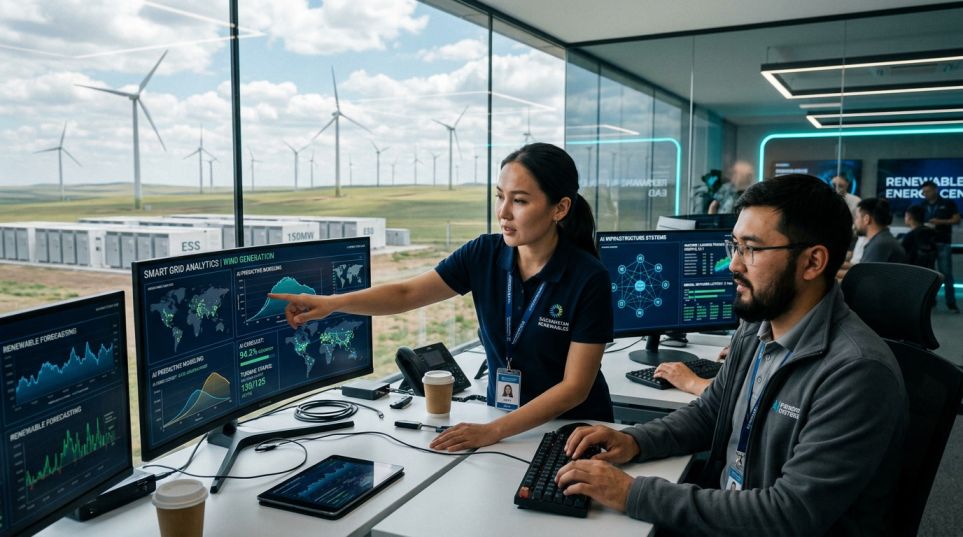
Kazakhstan and Masdar are strengthening their partnership by combining large-scale renewable energy projects with infrastructure designed to support AI-powered data centers. Alongside the construction of a 1 GW wind farm and a 600 MWh battery energy storage system, both organizations are advancing plans for round-the-clock renewable energy solutions capable of supplying reliable electricity for AI infrastructure. This reflects a broader strategy of building digital economies where sustainable power and artificial intelligence grow together rather than independently.
AI infrastructure requires enormous computing power, and computing power requires stable, sustainable electricity. Renewable energy projects equipped with intelligent forecasting, battery optimization, and grid management technologies are becoming essential components of national AI strategies. Countries investing in these integrated ecosystems are positioning themselves for long-term economic competitiveness.
Why Artificial Intelligence Is Essential for Renewable Energy
Renewable energy systems generate enormous volumes of operational data every second. Wind speeds fluctuate, solar production varies with weather conditions, and battery storage systems continuously adjust to changing demand. Managing these variables manually is nearly impossible at scale.
Artificial intelligence enables operators to forecast energy production, optimize battery performance, predict equipment failures before they occur, automate maintenance scheduling, and improve overall grid efficiency. AI models analyze historical and real-time information to make faster and more accurate operational decisions than traditional methods. As renewable infrastructure expands globally, intelligent automation becomes a necessity rather than an optional enhancement. Research continues to show AI's growing role in renewable forecasting, predictive maintenance, smart grids, and energy optimization.
This growing dependence on AI means organizations require professionals who understand not only AI technologies but also how they apply within industries such as energy, infrastructure, manufacturing, logistics, and sustainability.
The Biggest Investment Is Not Technology but Talent
Large-scale infrastructure announcements often highlight financial investments worth billions of dollars. However, the true long-term value comes from developing skilled professionals capable of designing, deploying, governing, and managing AI-driven systems.
Organizations implementing AI-powered renewable energy solutions need leaders who understand AI strategy, engineers who can build intelligent systems, analysts who can interpret operational insights, cybersecurity professionals who can protect digital infrastructure, and project managers who can oversee responsible AI implementation.
Without continuous AI training, businesses risk underutilizing expensive technologies, facing implementation delays, or struggling with governance and compliance challenges. Workforce readiness has become just as important as technological readiness.
The Kazakhstan-Masdar collaboration offers an important lesson for organizations worldwide. Building AI infrastructure is only one part of digital transformation. Developing AI-capable talent ensures those investments continue delivering measurable business value for years to come.
AI Training Bridges the Gap Between Innovation and Business Success
As industries embrace AI-enabled infrastructure, professionals across functions need practical AI knowledge rather than purely technical expertise. Business leaders must understand AI strategy and governance. Operations teams need to leverage AI for process optimization. Technology professionals require skills in deploying intelligent systems responsibly. Even non-technical professionals increasingly benefit from AI literacy as AI becomes embedded in everyday workflows.
Organizations that prioritize structured AI learning create stronger innovation cultures, accelerate technology adoption, improve decision-making, and increase operational efficiency. AI education also helps teams identify opportunities for automation while maintaining responsible and ethical AI practices.
Rather than viewing AI as a standalone technology initiative, forward-looking organizations are integrating AI training into workforce development strategies to remain competitive in rapidly evolving markets.
Preparing for an AI-Driven Future with an Authorized Training Partner
The Kazakhstan-Masdar partnership illustrates that the future belongs to organizations capable of combining sustainable infrastructure with intelligent technologies. As AI becomes central to energy, manufacturing, finance, healthcare, logistics, and countless other sectors, continuous AI education becomes an essential business investment.
Working with an AI CERTs Authorized Training Partner enables organizations to build AI-ready teams through globally recognized certification programs designed for professionals across industries and experience levels. By delivering structured learning, practical knowledge, and industry-aligned certifications, Authorized Training Partners help businesses develop the workforce needed to successfully implement AI initiatives, maximize technology investments, and confidently lead digital transformation in an increasingly AI-powered world.
Disclaimer: Some content may be AI-generated or assisted and is provided ‘as is’ for informational purposes only, without warranties of accuracy or completeness, and does not imply endorsement or affiliation.


