

AI CERTS
3 hours ago
Intel’s America 250 Initiative Highlights Why AI Training Is Essential for Building the Future Workforce
The announcement reinforces an important reality for organizations, governments, and training providers alike: AI leadership depends as much on people as it does on technology.
For organizations involved in AI education, this development presents a valuable lesson. Building AI-ready businesses and economies requires continuous training, practical skill development, and industry-recognized certifications that prepare professionals for real-world AI adoption.
AI Innovation Requires a Workforce That Can Keep Pace
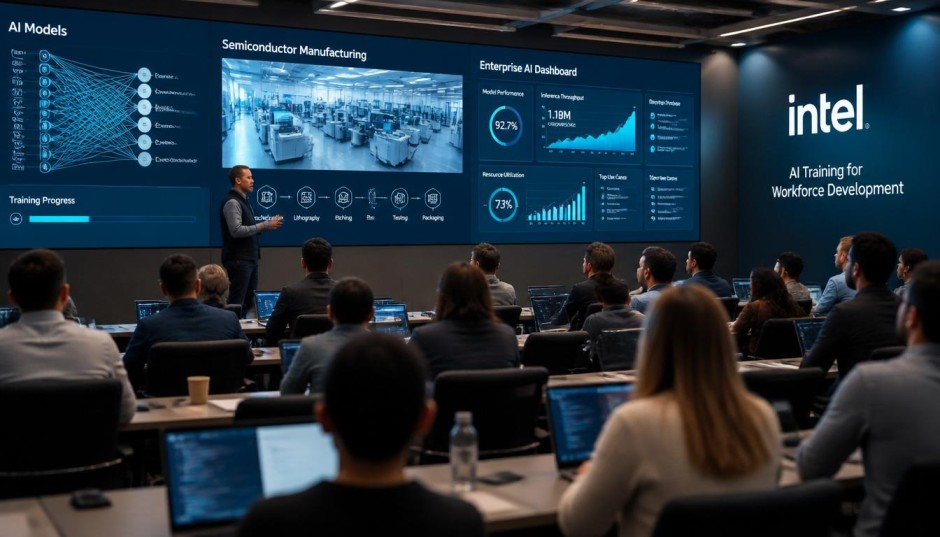
Intel's announcement highlights that artificial intelligence has become central to global competitiveness. The company emphasizes strengthening U.S. innovation through research, semiconductor manufacturing, AI infrastructure, and investments in education initiatives that prepare students, educators, and professionals for the AI-driven economy. Rather than treating AI as a standalone technology, Intel positions workforce development as a strategic requirement for sustaining long-term innovation and economic resilience.
This perspective reflects a broader trend across industries. Organizations may invest heavily in AI platforms, cloud infrastructure, and intelligent systems, but these investments generate meaningful business value only when employees possess the skills to deploy, manage, and optimize AI responsibly. The technology alone cannot transform an organization; knowledgeable professionals are the driving force behind successful implementation.
The Biggest Lesson Is That AI Skills Have Become Strategic Assets
One of the strongest takeaways from Intel's initiative is that workforce readiness deserves the same level of investment as technology infrastructure. Intel's education programs, AI-ready schools, educator development, and workforce initiatives demonstrate that developing talent is viewed as a national competitive advantage rather than simply a corporate social responsibility effort.
Businesses can draw an important lesson from this approach. AI projects often encounter challenges because employees struggle to integrate AI into existing workflows, understand responsible AI practices, or identify high-value use cases. Organizations that prioritize structured AI learning create teams capable of making informed decisions, improving operational efficiency, and identifying innovation opportunities before competitors do.
This growing emphasis on human capability explains why AI certifications and professional training are becoming increasingly valuable across industries, regardless of technical background.
AI Adoption Demands Continuous Learning Across Every Role
The AI economy is expanding beyond software engineers and data scientists. Business leaders, operations managers, marketers, HR professionals, cybersecurity teams, healthcare practitioners, educators, finance professionals, and manufacturing specialists are all expected to understand how AI influences their daily responsibilities.
Intel's focus on expanding AI education across schools, colleges, and professional development illustrates that AI literacy is becoming a universal workforce requirement rather than a niche technical specialization.
For employers, this creates an urgent need to establish structured learning pathways that help employees understand AI fundamentals, ethical implementation, governance, automation opportunities, and industry-specific applications. Without organized training initiatives, organizations risk slowing AI adoption despite making significant investments in technology.
Why Training Partners Play a Critical Role in AI Transformation
As organizations accelerate AI implementation, many face a common challenge: they know AI is important but lack internal expertise to build enterprise-wide capability. This is where professional AI training partners become increasingly valuable.
Training partners bridge the gap between emerging AI technologies and workforce readiness by delivering structured learning programs aligned with business objectives. Instead of relying on scattered online resources, organizations benefit from guided learning paths, hands-on instruction, globally recognized certifications, and practical implementation strategies that accelerate AI adoption.
The demand for such expertise is expected to continue growing as industries seek professionals who can confidently integrate AI into business operations while maintaining responsible and ethical practices.
Turning Industry Momentum into Workforce Readiness
Intel's America 250 initiative sends a message that extends beyond semiconductor manufacturing and national innovation. It demonstrates that the future of AI leadership depends on building skilled professionals who can innovate responsibly, adapt to changing technologies, and create lasting business value.
For businesses, educational institutions, and governments, the takeaway is clear: investing in AI education today strengthens competitiveness tomorrow. Organizations that begin developing AI capabilities within their workforce will be better positioned to innovate, improve productivity, and respond to evolving market demands.
Conclusion
As AI adoption accelerates across every sector, organizations need trusted partners to develop future-ready talent. Becoming an Authorized Training Partner (ATP) with AI CERTs® enables training providers to deliver globally recognized AI certification programs, help businesses upskill their workforce, and support professionals in building practical AI expertise. By equipping learners with industry-relevant knowledge and certifications, ATPs play an essential role in bridging the gap between rapid AI innovation and the skilled workforce required to sustain it.
Disclaimer: Some content may be AI-generated or assisted and is provided ‘as is’ for informational purposes only, without warranties of accuracy or completeness, and does not imply endorsement or affiliation.


