

AI CERTS
3 hours ago
Singapore AI Framework Sets New Agentic Governance Standard
Framework Origins And Evolution
Initial work began inside IMDA in early 2025 as large language models gained memory and planning features. Therefore, regulators identified agent identity challenges and rising autonomy levels that exceeded existing guidance. At Davos, Singapore AI champions presented Version 1.0, framing it as a living document aligned with international standards. Moreover, the May update incorporated cross-sector input from banks, cloud suppliers, and start-ups. Industry voices from Google Cloud and AWS praised the framework’s practical tone.
Nevertheless, critics noted its non-binding nature could blunt enforcement. These historical steps highlight Singapore’s iterative policy style. However, more oversight mechanisms remain necessary before mass adoption.
The framework’s timeline shows quick turnarounds between consultation rounds. Consequently, stakeholders expect further revisions in 2027 once implementation data emerges.
Four Pillar Framework Structure
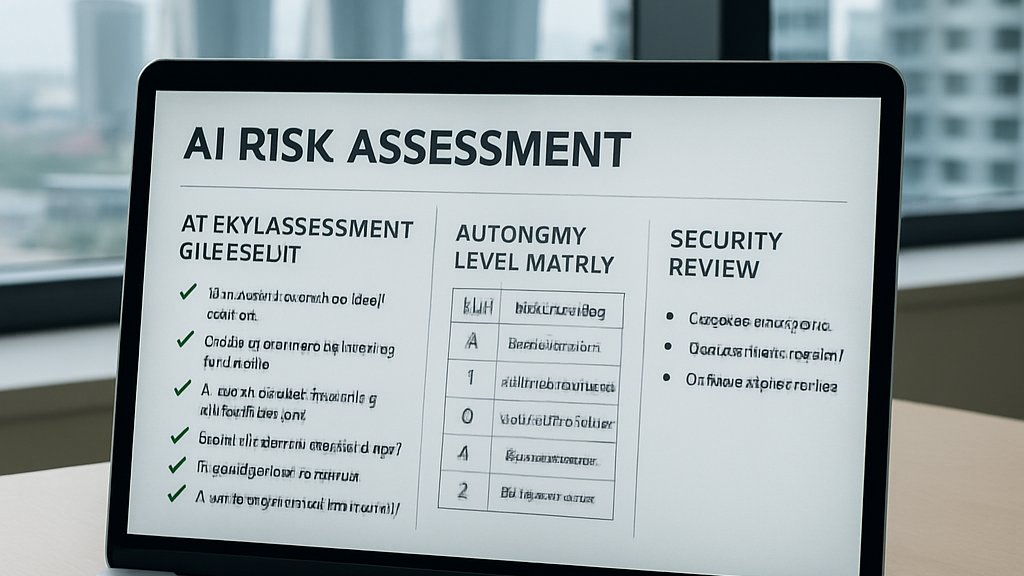
The document organises guidance around four complementary dimensions: risk assessment, human accountability, technical controls, and end-user responsibility. Each pillar references agent identity components such as model, memory, tools, and protocols. Additionally, designers must classify autonomy levels before deployment and set granular permissions. For example, low-risk marketing agents operate with narrow tool access, while financial bots require human sign-off at every critical step.
Key implementation duties include:
- Mapping task scope against autonomy levels
- Establishing clear human checkpoints and override metrics
- Logging every action for post-hoc investigation
- Running red-team drills to expose emergent behaviours
Moreover, IMDA advises continuous monitoring to detect semantic drift during long-running workflows. In contrast, many global guidelines still treat AI governance as a pre-launch checklist. These structural elements therefore position the framework as a dynamic safety playbook.
These pillars provide practitioners with an actionable roadmap. Subsequently, attention shifts toward securing the technical stack itself.
Security Addendum Details Unpacked
The Cyber Security Agency published a companion paper titled “Securing Agentic AI” during public consultation. It expands the core guide with threat models for tool bridging, data exfiltration, and multi-agent cascades. Furthermore, the addendum outlines capacity thresholds that trigger mandatory manual review. Consequently, development teams gain clarity on when to pause autonomous execution and request approval.
Singapore AI regulators recommend adopting the OpenClaw testing suite, co-developed by GovTech and Google, for stress testing agents. Additionally, they promote least-privilege design, encrypted memory stores, and signed action logs to preserve agent identity integrity. Nevertheless, an adversarial audit released in June warns that detection of subtle semantic drift remains immature. Therefore, external assurance services will likely expand.
Security guidance closes many operational gaps. However, enterprises still seek tangible business value before committing resources.
Benefits For Enterprise Deployers
Corporate participants highlight three immediate gains from following the framework. First, teams can calibrate autonomy levels early, reducing rework during audits. Second, shared taxonomies improve cross-department dialogue about agent identity and accountability. Third, alignment with international AI governance norms eases cross-border launches across Asia Pacific markets.
Industry case studies reinforce these benefits. OCBC piloted an internal compliance assistant that flags anomalous transactions and escalates uncertain cases to humans. Workday embedded guardrails into its HR agent suite, thereby cutting error rates by 17%. Moreover, cloud vendors integrate the framework’s logging schema into managed AI services, shortening rollout cycles.
Professionals can deepen their ethical design skills with the AI Ethics for Business™ certification. Consequently, teams gain a structured lens for continuous oversight.
These examples showcase clear operational wins. Nevertheless, several critical gaps demand resolution before full confidence emerges.
Challenges And Critical Gaps
Independent researchers caution that voluntary adoption may create a “checkbox culture.” Additionally, current text lacks a mandate for structurally independent assessors. Moreover, no native mechanism detects semantic drift in real time, leaving autonomy levels unchecked during prolonged runs. In contrast, Europe’s proposed AI Act includes binding obligations and penalties.
Technical hurdles persist as well. Large enterprises struggle to integrate fine-grained permissions across heterogeneous toolchains. Consequently, monitoring dashboards often lag behind agent actions. Furthermore, limited Asia Pacific talent in specialised AI governance roles slows implementation speed.
The audit community therefore calls for three improvements: external certification bodies, automated drift detectors, and capacity thresholds tied to deployment scale. These recommendations underscore the growing maturity gap. However, planned updates and ecosystem tools could close it swiftly.
Regional Impact Forecasting Trends
Policy analysts predict that neighbouring Asia Pacific regulators will reference the framework when drafting local rules. Consequently, multinationals see Singapore AI compliance as a fast track to regional acceptability. Moreover, IMDA positions the guide as a neutral bridge between Western and Chinese standards.
Financial services leaders already lobby for a joint sandbox spanning Singapore and Sydney. Additionally, Japanese telecom operators expressed interest in sharing audit findings on agent identity management. Therefore, cross-border harmonisation could accelerate safe AI governance across the region.
Such momentum signals rising demand for certified professionals. Subsequently, educational providers expand curricula to cover autonomy levels, logging norms, and risk bounding.
Conclusion And Next Steps
Singapore AI leadership set a pragmatic benchmark for managing modern autonomous agents. The framework clarifies agent identity, calibrates autonomy levels, and embeds AI governance best practices. Security addenda, case studies, and living-document updates further strengthen its value. However, independent assurance and real-time drift detection remain open challenges.
Consequently, enterprises should pilot the guide, measure outcomes, and share lessons with IMDA. Professionals seeking deeper expertise should pursue the linked AI Ethics certification. Act now to place your organisation at the forefront of responsible agentic innovation.
Disclaimer: Some content may be AI-generated or assisted and is provided ‘as is’ for informational purposes only, without warranties of accuracy or completeness, and does not imply endorsement or affiliation.


