

AI CERTS
3 hours ago
AI Risk Registers Rewire Enterprise Risk Playbooks
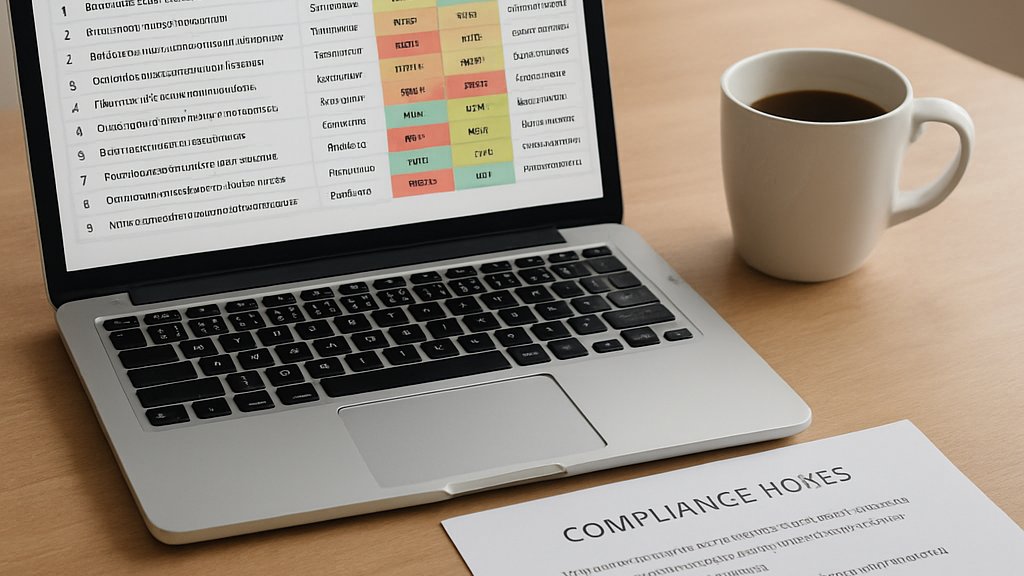
Analyst alerts, consultancy playbooks, and new GRC platforms all converge on a shared operational heartbeat. They position the living AI risk register as the centerpiece for scoring, monitoring, and escalating exposure. Moreover, boards demand quarterly heatmaps that translate technical findings into strategic decisions. Therefore, organizations scramble to embed repeatable workflows before the next exam cycle.
Boards Demand Clear Oversight
Boardrooms feel rising pressure from investors and regulators alike. Gartner’s 2025 Directors Survey found 72% expect structured AI oversight within twelve months. Furthermore, directors link algorithmic failures to immediate valuation swings, treating them as core enterprise risk dimensions.
Playbooks from Deloitte and Atos therefore prescribe a dual cadence. Monthly operational reviews surface model incidents early, while quarterly packets summarize risk movements, funding needs, and policy exceptions. Consequently, directors can compare exposure against appetite and approve remediation budgets.
Effective oversight starts with timely, digestible data. However, regulation is accelerating adoption even faster.
Regulation Drives Rapid Adoption
The EU AI Act anchors the regulatory sprint. Article Nine mandates continuous risk management, documented registers, and evidence retention across the lifecycle. Additionally, ISO/IEC 42001 formalizes similar expectations through a certifiable management system.
US firms, in contrast, map NIST’s AI RMF artifacts into the same repository to satisfy compliance auditors. Consequently, multinational groups construct crosswalks that align regional laws, easing internal audit sampling.
Key Adoption Statistics Now
- 78% of organizations use AI in at least one function (Stanford AI Index 2025).
- 72% of boards expect formal AI oversight within a year (Gartner 2025 survey).
- AI governance tools market projected between US$0.4–0.75B by 2026.
These forces transform voluntary good practice into legal obligation. Moreover, playbooks must translate clauses into daily tasks. Consequently, teams now focus on practical register construction.
Building Practical Risk Registers
Practitioners view the register as an evolving contract between builders, owners, and oversight bodies. Each row records use case, data lineage, model version, likelihood, impact, controls, residual exposure, and evidence links.
Organizations begin by generating risk catalogs that reference known harms such as bias, privacy leakage, and robustness gaps.
Moreover, catalog entries map to existing enterprise risk taxonomies, ensuring AI hazards slot into familiar reporting structures.
Internal audit teams want clear field definitions, scoring logic, and change logs for sampling. Meanwhile, compliance officers insist on traceable connections between controls and statutory articles.
Article Nine Obligations Clarified
Article Nine expects iterative assessments, documented mitigations, and proof that owners reviewed outputs before deployment. Therefore, register workflows must support timestamps, signatures, and immutable evidence hashes.
Solid structure increases audit readiness and board confidence. Nevertheless, tooling determines whether registers stay current.
Tool Market Quickly Expands
A new wave of AI-native GRC vendors offers automated discovery, scoring, and board-ready dashboards. Holistic AI, Riskonnect, and Woose integrate model scanning, evidence ledgers, and permissioned views.
Emerging Platform Features List
- Automated discovery of sanctioned and shadow AI assets.
- Risk scoring aligned with NIST AI RMF tiers.
- Evidence ledger linking tests and red-team reports.
- One-click board dashboards with heatmaps and trends.
Traditional GRC suites also add AI modules to maintain continuity with broader enterprise risk inventories.
Furthermore, integration with ticketing systems enables internal audit to trace remediation from finding to closure. Consequently, compliance data flows automatically into regulatory reports.
Vendor breadth reduces build effort but introduces evaluation complexity. The benefit discussion highlights that trade-off.
Benefits Outweigh Persistent Challenges
Early adopters report faster decision cycles, clearer accountability, and fewer surprise incidents. Moreover, transparency boosts stakeholder trust during product launches and incident reviews.
Importantly, registers connect AI program health to overall enterprise risk appetite, unlocking budget conversations. Additionally, risk catalogs standardize language, allowing leaders to benchmark enterprise risk across business units.
Nevertheless, maintaining thousands of dynamic entries strains resources. Shadow AI, agentic workflows, and vendor model updates generate constant churn.
Therefore, compliance leads must pair automation with defined owner duties, while internal audit verifies evidence depth, not template presence.
Benefits remain compelling despite these hurdles. Leaders now ask what actions will close the maturity gap.
Next Steps For Leaders
Executives should initiate a cross-functional workshop to inventory sanctioned and shadow AI within 30 days.
Subsequently, teams should issue a minimal risk catalogs set that anchors scoring consistency.
Professionals can deepen their governance toolkit through the AI Agile Project Management Fundamentals™ certification.
Moreover, aligning register metrics with enterprise risk dashboards accelerates funding and executive sponsorship.
Internal audit and compliance partners must be embedded early to confirm that enterprise risk controls map correctly to audit scopes.
Structured next steps transform ambition into routine practice. Consequently, enterprises fortify enterprise risk governance before regulators arrive.
Immediate Action Checklist Now
Create ownership matrices, automate discovery, and schedule quarterly board sessions to maintain sustained progress.
Conclusion And Call-To-Action
In summary, AI-specific registers have shifted from optional spreadsheet to mandatory governance backbone. They align developers, owners, and directors through a single source of risk truth. Furthermore, the approach ties quantitative metrics to overall enterprise risk strategy, enabling faster budget approvals. Nevertheless, success depends on automation, clear roles, and a culture that treats the register as living. Leaders should act now, formalize playbooks, and invest in professional upskilling. Start by exploring the above certification and give your governance program an immediate credibility boost.
Disclaimer: Some content may be AI-generated or assisted and is provided ‘as is’ for informational purposes only, without warranties of accuracy or completeness, and does not imply endorsement or affiliation.


