

AI CERTS
2 hours ago
Houston Methodist Scales Ambient Clinical AI Enterprise-Wide
Methodist partnered with Ambience Healthcare after extensive pilots across outpatient, emergency, and inpatient services. Therefore, leaders claim measurable productivity gains, lower burnout, and stronger operational margins. Independent journalists have verified many of those figures, though gaps in external validation remain.
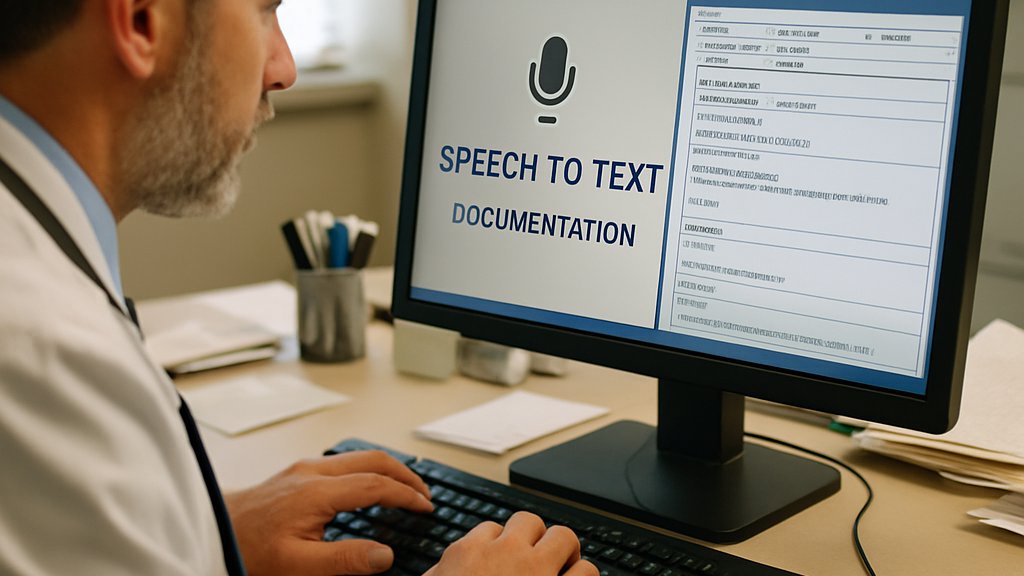
Meanwhile, regulators urge cautious governance because voice data touches protected health information. This article unpacks the technology, performance numbers, governance model, and lessons for other systems. Readers will see where Ambient Clinical AI excels and where questions still linger. Subsequently, recommendations guide executives who plan their own hospital deployment journeys.
Houston Methodist Rollout Insights
Houston Methodist began ambient pilots in 2025 with 500 outpatient doctors. However, leadership quickly expanded coverage after satisfaction surveys passed 80 percent. By February 2026 the system confirmed enterprise activation across nine hospitals and 2.4 million visits.
- 40% drop in documentation time across specialties.
- 33% cut in after-hours charting, reducing burnout.
- 27% rise in direct patient face time.
- Utilization exceeding 80% of all encounters.
- Chart-aware support covering more than 200 specialties.
Furthermore, Healthcare IT News echoed those percentages, citing a 44% average cut in note creation. In contrast, earlier scribes had hovered below 60% usage and offered limited inpatient reach. Executives credit tight Epic integration and iterative interface tweaks for the strong physician workflow adoption.
The statistics confirm sizable efficiency and engagement gains. However, technology details explain how those gains materialized, which we examine next.
Chart Awareness Technology Explained
Ambient Clinical AI differs from simple transcription through its chart awareness engine. Ambience Healthcare models access longitudinal labs, medications, and imaging before drafting each note. Consequently, suggested assessments reference trends rather than one-off findings.
Natural language processing merges with large language models to spot codes and diagnostic cues. Moreover, automated draft sections map directly to Epic smart fields, minimizing manual clicks. This end-to-end loop forms a new category often labeled documentation AI.
Vendors label this category documentation AI because draft notes form the product's core value. Ambient Clinical AI also supports coding suggestions that reduce payer queries. Nevertheless, experts warn about hallucinations and transcription errors. Therefore, Houston Methodist mandates human sign-off and tracks clinician edit rates weekly. Peer reviewers also audit random notes for bias and compliance.
Chart awareness expands precision yet introduces governance burdens. The following performance metrics reveal how practice patterns actually changed.
Workflow Impact Metrics Revealed
Ambience logs show median documentation time dropping from 13 minutes to 7.5 minutes. Meanwhile, encounter closure rates within 24 hours improved by 22% across ambulatory clinics.
Roberta Schwartz notes that the chart now works for clinicians, not the reverse. Furthermore, clinicians spent 27% more minutes speaking with patients rather than screens.
Doctors interviewed credited Ambient Clinical AI with restoring work-life balance. Improved throughput increased clinical capacity by accommodating extra same-day appointments. Consequently, revenue per provider session climbed, although detailed ROI figures remain unpublished.
Time savings translated into faster billing cycles because charts locked sooner. Consequently, days in accounts receivable reportedly fell by two days quarter over quarter. Researchers urge peer-reviewed studies before linking those financial gains directly to automation.
Metrics illustrate tangible productivity boosts. Next, we address the controls that kept the hospital deployment compliant.
Governance And Compliance Safeguards
Houston Methodist formed a multidisciplinary committee spanning legal, privacy, informatics, and patient advocacy. Additionally, the committee reviews vendor logs against HIPAA and state wiretapping statutes each month.
In contrast, some peers still rely on boilerplate business associate agreements without specific audio clauses. Therefore, the system updated consent forms and posted listening notices in exam rooms.
BDO advisors urge similar diligence because billing automation can trigger audit penalties. Moreover, clinicians maintain final authority, preserving a human-in-the-loop defense.
Regulators may soon issue specific Ambient Clinical AI guidance on consent language and audio retention. Houston Methodist also implements real-time ASR dashboards that flag elevated error rates to support staff. Additionally, quarterly audits review note accuracy across language groups to monitor equity impact.
Professionals can enhance expertise through the AI Medical Assistant™ certification.
Governance frameworks safeguarded data trust and regulatory standing. Market dynamics now influence adoption decisions across the sector.
Market And Competitive Landscape
Analysts value the generative documentation market near one billion dollars in 2025. Subsequently, forecasts suggest multi-billion figures by early 2030s with double-digit growth rates.
Sizable venture capital backs rivals like Abridge, Nuance DAX, Suki, and Epic. However, few competitors match the inpatient breadth of Ambience’s chart-aware engine today.
Analysts expect Ambient Clinical AI offerings to consolidate through mergers as standards mature. Hospital deployment patterns often follow EHR affiliation, integration ease, and vendor security posture.
Moreover, vendor pricing models vary from per-provider subscriptions to encounter-based fees, complicating ROI math. Health systems chasing greater clinical capacity must weigh license costs against expanded patient access revenue.
KLAS survey data show ambient vendors jockeying for Best in KLAS recognition, influencing procurement cycles. Furthermore, large group purchasing organizations negotiate bundled EHR and scribe contracts, lowering unit costs. Consultants advise hospitals to model three-year total cost scenarios, including microphone replacements and GPU hosting fees.
Global policy trends will also shape uptake. European regulators weigh stricter audio retention limits, while some Asian countries encourage fast digital adoption.
Competitive pressure accelerates innovation and pricing flexibility. Implementation lessons clarify how leaders can translate options into real gains.
Implementation Lessons For Systems
Successful sites start with narrow outpatient pilots before scaling. Consequently, clinicians refine prompts, microphone placement, and note templates in low-risk settings.
Houston Methodist moved next into the emergency department, then inpatient floors once error rates stabilized. Additionally, weekly huddles surfaced specialty quirks, guiding vendor tweaks within the physician workflow.
Leaders warn that ambient signal quality plummets in noisy trauma bays without directional microphones. In contrast, quiet offices required minimal acoustic adjustment.
- Focus on integration first.
- Secure multidisciplinary oversight early.
- Track metrics transparently.
- Iterate microphone and template settings.
Ambient Clinical AI proved resilient during influenza surges, maintaining throughput despite staffing gaps. Training champions recorded Ambient Clinical AI demo videos for late adopters. Superusers flagged documentation AI errors through an integrated feedback widget.
Before automation, limited clinical capacity forced appointment backlogs. Scaled automation ultimately unlocked clinical capacity in cardiology and oncology.
Leaders budgeted ample change-management resources, including onsite coaches during every go-live. In contrast, institutions that cut training short often see adoption plateau.
The emergency department presented acoustic complexity due to alarms and overlapping conversations. Therefore, engineers employed beam-forming arrays and fine-tuned noise filters. Subsequently, signal-to-noise ratios improved, and note accuracy climbed to 95%. Cardiology fellows praised automatic inclusion of prior ejection fraction values pulled from the longitudinal record. Orthopedic surgeons valued automatic implant catalog numbers, which reduced manual lookup time.
Consequently, iterative deployment guarded clinician trust and accelerated utilization. The closing section synthesizes overall findings and next steps.
Conclusion And Future Outlook
Houston Methodist demonstrates that Ambient Clinical AI can shift documentation from burden to advantage. Moreover, sustained adoption shows scale is possible beyond a single hospital deployment. Clinicians regained evenings, and patients gained attention—hard metrics validate those impressions. Nevertheless, continuous oversight remains mandatory because transcription errors and coding drift never disappear. Systems eyeing similar gains should pilot narrowly, govern broadly, and measure relentlessly.
Consequently, enterprise success will hinge on culture as much as computational horsepower. Future releases may integrate medical imaging summaries, further compressing diagnostic timelines. Stakeholders should monitor standards bodies to stay aligned with emerging best practices. Professionals can future-proof careers by earning the linked certification and deepening responsible AI fluency. Act now to explore training resources and position your organization for the next wave of clinical automation.
Disclaimer: Some content may be AI-generated or assisted and is provided ‘as is’ for informational purposes only, without warranties of accuracy or completeness, and does not imply endorsement or affiliation.


