

AI CERTS
4 hours ago
VisionWave Acquisition Reshapes Defense AI Systems Sensing Market
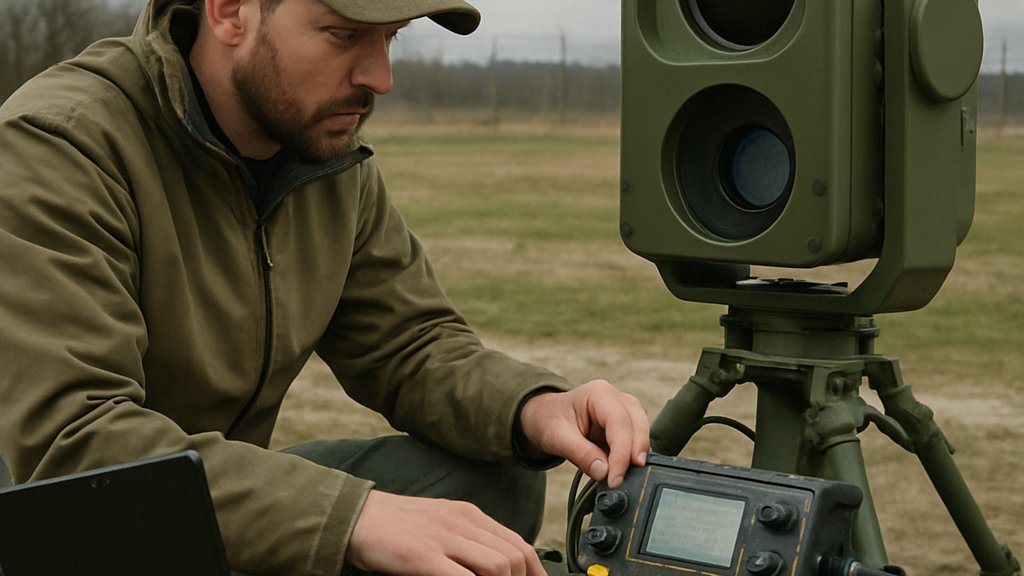
Moreover, it highlights growth opportunities and potential pitfalls for the security sector.
Readers gain clear guidance on next steps and certification paths.
Nevertheless, every deal hides complexities around regulation, integration and finances.
Therefore, we start with the macro forces driving multi-sensor platforms.
Subsequent sections dive into the deal mechanics and technology layers.
Finally, the conclusion distills strategic takeaways for procurement teams.
Key Market Drivers Overview
Global defense budgets keep rising amid drone proliferation and contested borders.
Consequently, commanders demand faster detection and classification across multiple spectra.
Stereo vision, RF radar and AI analytics now converge under modern Defense AI Systems.
Defense AI Systems vendors emphasize modular upgrades for lifespan extension.
Moreover, recent market studies forecast high-single-digit growth for military sensors through 2030.
Counter-UAS solutions record the fastest compound annual rates.
In contrast, legacy standalone cameras struggle with swarms and low-visibility threats.
Therefore, integrated stacks appeal to procurement officers seeking reliability and cost efficiency.
- Military sensor market size: ~$56B by 2030 (Mordor)
- Counter-UAS CAGR: above 12% in several reports
- Multispectral orders rising 18% in 2025 NATO budgets
These numbers confirm strong momentum for layered perception.
Subsequently, the buyer positions itself at the convergence point.
Let us examine how the deal structure supports that goal.
Deal Structure Explained Clearly
The agreement signed June 3 outlines a two-stage stock swap.
Stage one delivers 46% ownership to VisionWave through new common shares.
Furthermore, stage two lifts control to 52% after a pilot milestone closes.
Aggregate consideration reaches $17.5 million, issued at volume-weighted average pricing.
Additionally, up to $3 million in equity grants incentivize Foresight Autonomous managers.
The combined platform broadens battlefield sensing coverage at near and long ranges.
Nevertheless, the transaction requires Nasdaq, shareholder and regulatory approval before closing.
In April, a term sheet first framed the acquisition at 51% control.
Consequently, recent filings only tweak percentages, not valuation.
Legal protections include resale registration and anti-dilution clauses for both parties.
Overall, the structure balances risk between small-cap partners.
Therefore, financial exposure hinges on share performance and pilot success.
Defense AI Systems investors will scrutinize dilution scenarios carefully.
Next, we explore the integrated technology stack.
Technology Stack Integration Details
VisionWave markets its STRATUM SENSE platform as a three-layer architecture.
Layer one uses RF radar for long-range detection and tasking.
Layer two now gains Foresight Autonomous stereo and thermal perception.
Layer three applies xClibre AI video analytics for classification and behavior alerts.
High-resolution sensing across visible and infrared bands fills near-field gaps.
Moreover, neuromorphic sensors reduce latency by reporting only scene changes.
Consequently, Defense AI Systems built on event data can react faster to drones.
Sensor fusion algorithms then correlate RF tracks with stereo depth for precise targeting.
Additionally, the company plans to expose an open API for integrators.
Developers can plug analytics into existing command systems with minimal changes.
Such interoperability remains crucial for NATO and joint projects.
This layered design strengthens feature depth while managing bandwidth.
In contrast, single-sensor packages seldom match combined accuracy.
We now review how rivals compare.
Competitive Landscape Snapshot Today
Major defense primes monitor this acquisition while selling integrated sensor suites.
L3Harris, Elbit, and Teledyne each promote hybrid radar and optical kits.
However, few competitors match the buyer's depth in RF plus neuromorphic imaging.
Foresight Autonomous holds more than 100 patents covering stereo algorithms and thermal calibration.
Meanwhile, Parsons and Raytheon focus on command software rather than core sensing hardware.
Consequently, the buyer aims to carve a niche among primes as a flexible integrator.
Analysts also compare deal value with historical benchmarks.
The $34 million implied post-money valuation sits below similar optical sensor exits.
Nevertheless, small caps often trade at discounts because revenue traction remains limited.
The buyer therefore enjoys a relatively low entry price.
Yet, market leaders will respond quickly to preserve share.
Procurement teams compare emerging Defense AI Systems against established offerings from primes.
Risks deserve equal attention, which we discuss next.
Risks And Challenges Ahead
Integration complexity tops the risk list for this acquisition.
Multiple hardware and software stacks must interoperate under harsh battlefield conditions.
Furthermore, export controls could delay shipments to sensitive regions.
Financial volatility also looms because payment is denominated in buyer shares.
In contrast, cash transactions shield sellers from stock swings.
Moreover, both firms have reported negative earnings and ongoing cash burn.
- Regulatory clearance across US and Israeli jurisdictions
- System validation cycles exceeding 24 months
- Talent retention amid competitive hiring
These obstacles may slow the promised synergy timeline.
Nevertheless, proactive governance can mitigate several factors.
Delayed integration can erode confidence in Defense AI Systems readiness.
The market still offers sizable upside, as the next section shows.
Growth Opportunities Forecast 2030
VisionWave projects accelerated bookings once pilots convert to production in 2027.
Defense AI Systems are slated for border surveillance, naval platforms, and mobile command posts.
Additionally, the security sector demands rapid retrofit kits for existing vehicles.
Market analysts foresee multi-billion counter-UAS spending corridors across Asia and Europe.
Consequently, layered sensing architectures will likely become procurement baselines.
The company hopes to license algorithms through OEM channels besides direct sales.
Professionals can formalize their domain skills through the AI for Government™ certification.
Such credentials improve credibility when designing or procuring Defense AI Systems in sensitive programs.
Clearly, adoption curves favor early movers with validated products.
Therefore, the company must deliver operational proofs soon.
Finally, we consolidate key insights.
Strategic Takeaways And Conclusion
VisionWave’s stake in Foresight Autonomous signals a pivotal moment for layered perception.
The move strengthens the buyer’s portfolio while rescuing Foresight Autonomous from capital constraints.
Moreover, Defense AI Systems gain a robust fusion of RF, optical, and AI analytics.
However, execution risks remain high given integration tasks, regulatory reviews, and volatile equity markets.
Consequently, stakeholders should monitor filing updates and pilot milestones closely.
Nevertheless, early collaboration can secure integration slots within future defense budgets.
Therefore, project leads may benefit from earning the referenced certification.
Such moves also reassure the wider security sector about continued innovation.
Take action now, deepen expertise, and help shape the next generation of Defense AI Systems.
Disclaimer: Some content may be AI-generated or assisted and is provided ‘as is’ for informational purposes only, without warranties of accuracy or completeness, and does not imply endorsement or affiliation.


