

AI CERTS
3 hours ago
Meta and Reliance Ink AI Data Center Deal in India
Therefore, the new facility will bring high-density clusters close to India’s massive user base. Meanwhile, renewable power deals worth nearly one gigawatt aim to offset operational emissions from day one. Nevertheless, questions remain regarding water consumption, regulatory oversight, and sovereign compute safeguards. This article unpacks the deal’s technical foundations, strategic drivers, and broader market ramifications. Each section keeps you informed with concise, expert insight.
Deal Signals Market Shift
Industry watchers note that Meta’s Jamnagar move follows OpenAI–Tata and several cloud announcements. However, this lease represents the first public commitment to an Indian AI-ready campus of hyperscale proportions. Consequently, banks and local governments expect fresh capital inflows for parallel projects along India’s west coast.
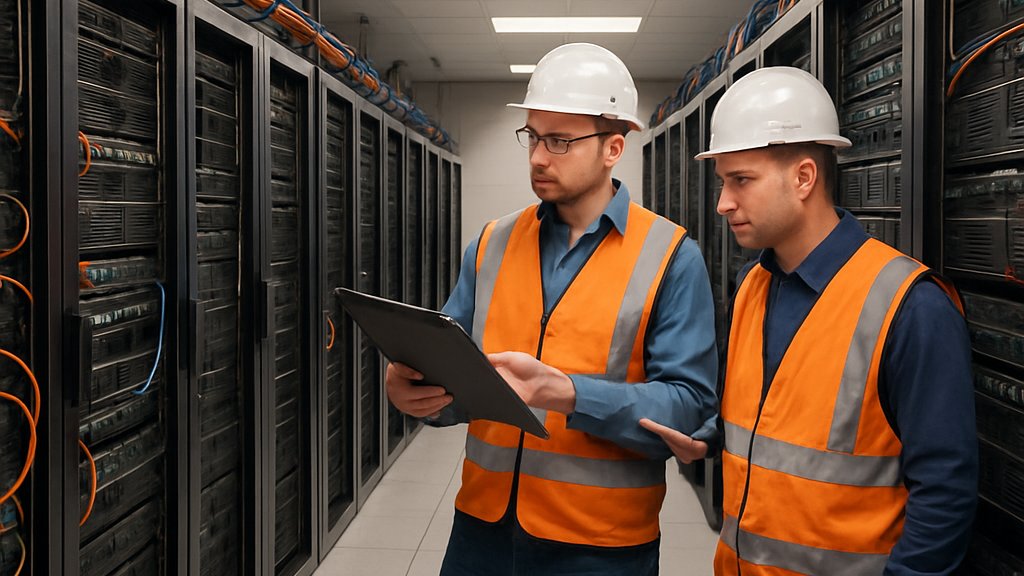
Reliance will design, construct, and operate the campus while Meta covers energy and water expenses. Furthermore, Reliance gains a marquee tenant that de-risks financing and accelerates site permitting. In contrast, past data center buildout relied on speculative capacity with limited anchor clients.
Analysts argue the partnership deepens synergy cultivated since the company’s earlier investment in Jio Platforms. Moreover, the deal underscores Meta’s plan to localize compute for privacy and latency benefits. Such momentum foreshadows intensified competition among hyperscalers within India cloud corridors.
These developments confirm a maturing domestic ecosystem for advanced workloads. Meanwhile, attention now shifts to exact capacity and delivery milestones.
Investors therefore view the Jamnagar AI Data Center as a reference model for subsequent financing.
Capacity And Build Timeline
The first construction phase promises 168 megawatts of IT load within roughly two years. Subsequently, optional expansions could raise the campus toward multi-hundred-megawatt territory. Therefore, Jamnagar could host one of Asia’s largest specialised sites for generative models. This AI Data Center will anchor a digital corridor along Gujarat’s coastline.
- 168 MW initial IT power
- 925 MW renewable PPAs committed
- Two-year first phase completion target
- Desalinated seawater cooling loop
Reliance will deploy modular halls, high-density liquid cooling, and low-latency fabrics optimised for GPUs. In contrast, earlier Indian facilities averaged less than 10 megawatts per hall. Moreover, Meta has locked renewable power contracts of 925 megawatts to back the load.
Water stewardship remains critical along Gujarat’s dry coastline. Consequently, the design uses desalinated seawater loops that minimise freshwater draw. Regulators have welcomed the approach, yet independent audits will track discharge quality.
The roadmap outlines aggressive scaling paired with sustainability features. However, energy sourcing deserves its own spotlight next.
Renewable Energy Backbone Built
CleanMax will supply 837 megawatts of solar capacity through long-term power agreements. Additionally, Fourth Partner Energy contributes 88 megawatts of wind-solar hybrids for round-the-clock profiles. Therefore, Meta expects to match consumption with new green generation from day one.
Analysts highlight that such bundled deals shield operators from volatile spot prices. Nevertheless, grid integration studies must confirm stability given high renewable penetration. These findings influence regional planning for subsequent sites.
Renewable alignment strengthens the venture’s environmental credibility. Consequently, focus now turns to commercial motives behind the investment. Reliable green supply remains essential for any AI Data Center operating at such scale.
Strategic Business Drivers Revealed
Localised compute lowers latency for more than half a billion Indian social users. Moreover, enterprise customers on WhatsApp and Jio platforms will gain faster inference capabilities. Such performance bumps support pay-per-use AI services that power India cloud expansion.
Cost diversification also matters. In contrast, land and power prices in coastal Gujarat remain lower than many global hubs. Subsequently, Meta can broaden its supply chain while Reliance opens new revenue streams. Local ownership of the AI Data Center also supports compliance with forthcoming tariff rules.
Geopolitical factors influence decisions as well. Therefore, on-shore capacity aids compliance with emerging data residency and sovereign compute policy frameworks. Furthermore, local regulators favour investments that create skilled jobs and technology transfer.
These drivers reveal why both firms moved quickly. Nevertheless, environmental and social risks still warrant scrutiny.
Sustainability And Key Risks
AI workloads consume vast electricity and water volumes. Consequently, critics worry about grid reliability during peak summer demand. Government projections show data centre load could hit 13.56 gigawatts by 2032. Every AI Data Center amplifies the urgency of coordinated grid planning.
Environmental NGOs request transparent reporting on carbon intensity and water discharge. Meanwhile, Reliance has pledged annual sustainability disclosures aligned with global standards. Nevertheless, desalinated cooling reduces direct freshwater withdrawal compared to inland facilities.
Local communities also demand fair land compensation and workforce inclusion. Consequently, planners must balance project speed with social licence considerations. Failure to engage stakeholders could delay the data center buildout schedule.
Comprehensive oversight can mitigate these intertwined risks. Meanwhile, competitive pressures keep accelerating announcements across India cloud providers.
Competitive Indian Landscape Evolves
Microsoft, Google, and Amazon have flagged fresh AI Data Center plans for Mumbai and Hyderabad. Additionally, OpenAI and Tata recently disclosed a 100-megawatt site focusing on training clusters. Consequently, consultants forecast up to eight gigawatts of national capacity by 2030.
Growing demand encourages an unprecedented data center buildout wave across Tier-2 cities like Chennai. Moreover, state governments compete through tax incentives and renewable policy tweaks. In contrast, land availability and transmission corridors may bottleneck some proposals.
Sovereign compute requirements are also shaping architectural decisions among foreign entrants. Therefore, many contracts now contain clauses for locally managed encryption keys and compliance audits. Such measures reassure regulators while maintaining global service agility.
Market rivalry ensures rapid technical innovation and price competition. Subsequently, stakeholders watch for formal groundbreaking dates in Jamnagar.
What Comes Next Now
The conglomerate expects to break ground within this fiscal quarter after securing final environmental clearances. Meanwhile, Meta will finalise GPU procurement and network peering agreements. Additionally, suppliers plan workforce training programs for high-density liquid cooling maintenance.
Analysts anticipate a second AI Data Center tranche once initial halls reach 80 percent utilisation. Moreover, further renewable contracts may follow if load forecasts rise. Sovereign compute policy drafts should emerge from New Delhi later this year.
Professionals tracking the sector can deepen skills through the AI Cloud Architect™ certification. Consequently, certified talent will be well placed to lead the next data center buildout. This accreditation also demonstrates practical understanding of AI Data Center sustainability frameworks.
Jamnagar’s groundbreaking agreement showcases how India now anchors global AI infrastructure strategy. Moreover, the AI Data Center will leverage renewable energy, desalinated water, and modular expansion to mitigate impacts. Meta secures localized compute, while the conglomerate unlocks diversified digital revenues. Consequently, stakeholders expect accelerated data center buildout across multiple states. Nevertheless, policy clarity on sovereign compute and resource management remains vital. Professionals who master cloud architecture standards will drive this next growth phase. Therefore, consider pursuing the AI Cloud Architect™ credential to stay competitive. Act now and lead India cloud projects shaping the decade ahead.
Disclaimer: Some content may be AI-generated or assisted and is provided ‘as is’ for informational purposes only, without warranties of accuracy or completeness, and does not imply endorsement or affiliation.


