

AI CERTS
2 hours ago
Food Service Robotics: Marc Lore’s 500-Bowl Breakthrough
Consequently, operators and investors alike are reassessing timelines for scaled restaurant automation. The following sections trace the acquisition history, quantify throughput, and evaluate strategic pathways into 2026. Readers seeking credentials in this emerging field can explore accredited programs later in the piece. Meanwhile, regulatory bodies watch reliability metrics to anticipate new safety guidelines. Therefore, grounding claims in verifiable data remains essential.
Infinite Kitchen Rollout Begins
Wonder bought Sweetgreen’s Spyce robotics unit for $186.4 million in late 2025. Subsequently, the team rebranded the hardware as Infinite Kitchen and accelerated deployment. Marc Lore positioned the move as a cornerstone of his broader restaurant automation vision. Moreover, Sweetgreen retained licensing rights and already runs the system in over twenty sites. In contrast, Wonder plans hundreds of AI kitchens powered by the same machinery.
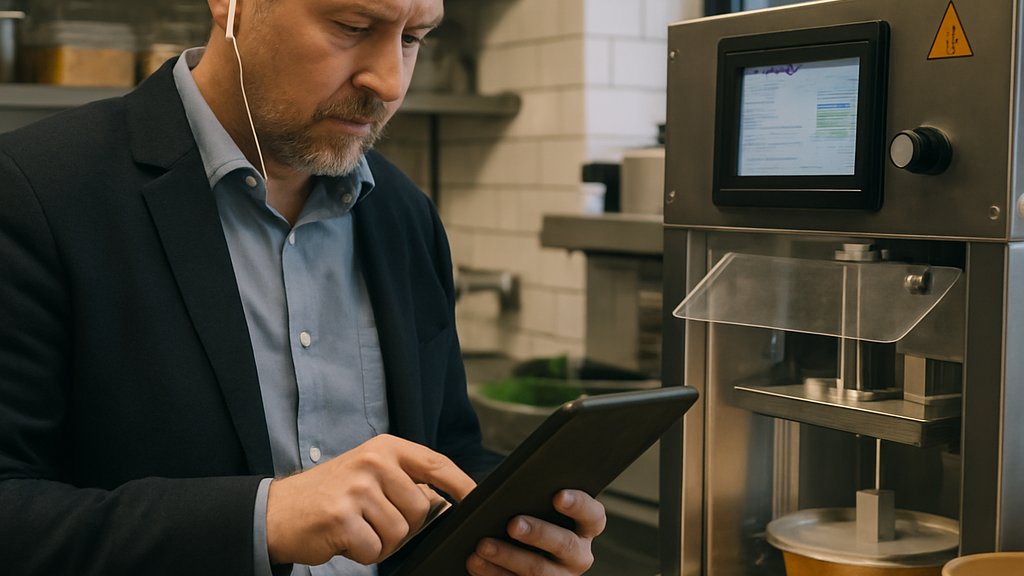
These early steps place Wonder among the most capitalised players in Food Service Robotics. However, execution speed will determine whether the investment yields durable competitive advantage. Consequently, analysts monitor opening cadence and unit economics closely. Lore told Fortune that Infinite Kitchen would appear in Wonder facilities “imminently”. Therefore, market validation could arrive within this quarter.
The acquisition secured proprietary hardware and talent. Nevertheless, real proof will emerge once throughput claims face public scrutiny.
Throughput Numbers In Focus
Fortune quoted Marc Lore claiming 500 bowls each hour from a single Infinite Kitchen unit. Meanwhile, human staff average roughly 30 to 45 bowls per hour in comparable formats. Consequently, the robot delivers a potential tenfold productivity uplift on the assembly line. Labor productivity gains reach headline status when investors model payback periods. However, top speed rarely translates into continuous output because cleaning and ingredient reloads introduce downtime.
- 500 bowls per hour robot capacity.
- 30–45 bowls per hour human average.
- $186.4M cost to acquire robotics unit.
Food Service Robotics metrics like speed and accuracy form new benchmarking standards. To estimate realistic capacity, engineers examine cycle time, uptime, and changeover frequency. In contrast, vendor figures generally assume near-perfect availability. Nevertheless, even a 50% derate leaves 250 bowls per hour, dwarfing manual throughput. Therefore, Wonder could serve multiple virtual brands from one line without queuing delays. Such density improves delivery promise times and creates customer stickiness.
Peak metrics excite investors yet require empirical validation. Subsequently, we explore how these numbers reshape labor allocation.
Labor Productivity Impact Analysis
Automation rhetoric often centers on headcount reduction, yet the reality proves subtler. Wonder executives argue that staff can refocus on hospitality, quality control, and last-mile packing. Furthermore, the Infinite Kitchen requires technicians to manage software updates and sanitation cycles. Service robots cannot handle customer complaints or ingredient prep yet. Consequently, total kitchen labor may fall modestly while productivity per worker rises sharply.
Economists calculate labor productivity by dividing output units by paid hours. If Infinite Kitchen sustains 400 bowls per hour with two operators, ratio improvements appear dramatic. Moreover, consistency lowers remake waste, indirectly saving labor. Nevertheless, early adopters must track hidden costs like maintenance downtime that erodes gains. Therefore, robust key performance indicators should accompany any Food Service Robotics rollout.
Robots offer stronger output per hour yet still need human oversight. Next, we study how Wonder leverages that mix to scale new brands.
Scaling Virtual Brand Model
Wonder’s strategy marries high throughput with AI-generated menus through its Wonder Create platform. The tool can spin up concepts, photos, and pricing from a prompt within minutes. Consequently, Infinite Kitchen hardware becomes a flexible production base for dozens of cuisines. Marc Lore expects 400 compact AI kitchens next year, each running many digital storefronts. Furthermore, the approach reduces real estate costs because one location replaces several traditional restaurants.
Food Service Robotics unlocks this multi-brand capacity by standardising motion control and portioning. In contrast, manual lines struggle when menu complexity surges. Moreover, software updates can adjust recipes across the network instantly. Nevertheless, customer acceptance of unknown virtual brands remains uncertain. Therefore, Wonder allocates marketing spend to overcome discovery barriers.
Virtualisation multiplies revenue potential without proportional labour expansion. However, technical reliability must match that promise, which leads into the risk discussion.
Technical Automation Risks Ahead
Complex mechatronics expose operators to unplanned downtime and spare-part shortages. Jay Naik admitted that some diners dislike seeing service robots handle their meals. Furthermore, cleaning protocols must satisfy strict health codes, adding operational friction. In contrast, human crews adapt quickly when ingredients run out. Consequently, uptime analytics and predictive maintenance gain priority within Wonder’s engineering roadmap.
Food Service Robotics systems must meet NSF and UL guidelines before large chains sign contracts. Capital expenditure also looms large. Each Infinite Kitchen reportedly costs several hundred thousand dollars, excluding installation. Moreover, software licensing and support add recurring fees. Labor productivity savings must offset those burdens to justify scale. Nevertheless, investors believe vertical integration can compress food costs and raise margins.
Technical hurdles remain substantial despite headline throughput. Subsequently, executives formulate mitigation plans before accelerating expansion.
Strategic Outlook For 2026
Industry analysts forecast heated competition as rival chains adopt similar Food Service Robotics platforms. Food Service Robotics adoption curves will hinge on verified total cost models. Meanwhile, Sweetgreen continues licensing the technology across 30-plus stores, preserving first-mover benefits. Marc Lore targets national coverage, leveraging existing Grubhub logistics partnerships. Additionally, regulatory certainty could accelerate capital flows into AI kitchens and supporting ecosystems. In contrast, a consumer backlash would prolong return-on-investment timelines.
Operators seeking competitive edges may pursue specialised certifications to understand robotics integration. Professionals can enhance their expertise with the AI Robotics Professional™ certification. Moreover, skilled talent remains scarce, making credentialed engineers valuable. Consequently, companies may subsidise training to secure implementation success. Therefore, current managers should track workforce development as closely as machine uptime.
Competitive dynamics hinge on execution, regulation, and talent supply. Next, we conclude with final considerations and action steps.
Key Takeaways And Actions
Wonder’s Infinite Kitchen showcases the disruptive potential of Food Service Robotics in quick-service environments. Throughput, labor productivity, and brand density could converge to reshape unit economics. However, technical complexity and consumer perception still present material risks. Moreover, rival chains and startups are racing to develop service robots of their own. Consequently, stakeholders should validate performance claims, invest in talent, and prepare agile rollout plans.
Nevertheless, early movers who combine rigorous data with strategic patience can capture outsized rewards. Therefore, explore specialised credentials and monitor field pilots to stay ahead in Food Service Robotics adoption. Visit the certification link above and join the conversation shaping tomorrow’s kitchens.
Disclaimer: Some content may be AI-generated or assisted and is provided ‘as is’ for informational purposes only, without warranties of accuracy or completeness, and does not imply endorsement or affiliation.


