

AI CERTS
2 months ago
ESET’s 2026 SMB Cyber Readiness Index Highlights AI Concerns and the Growing Need for AI Training
While many organizations feel better prepared to defend themselves against cyber threats, the rapid adoption of AI technologies is introducing new risks that require a different level of awareness, expertise, and workforce readiness.
This growing confidence is encouraging, but it also highlights a challenge facing organizations worldwide. Confidence alone does not guarantee resilience. As cybercriminals begin leveraging AI to automate attacks, create sophisticated phishing campaigns, and identify vulnerabilities faster than ever before, businesses must ensure their teams possess the skills needed to understand and manage these evolving threats. The conversation is shifting from simply implementing cybersecurity tools to developing AI-literate professionals capable of navigating an increasingly complex threat landscape.
The Expanding Role of AI in Cybersecurity
Artificial intelligence is transforming cybersecurity on both sides of the battlefield. Security teams are using AI to improve threat detection, automate incident response, and analyze vast amounts of security data in real time. At the same time, threat actors are using AI to scale attacks, generate convincing fraudulent communications, and bypass traditional security defenses. Experts increasingly recognize that AI is becoming a force multiplier for both defenders and attackers.
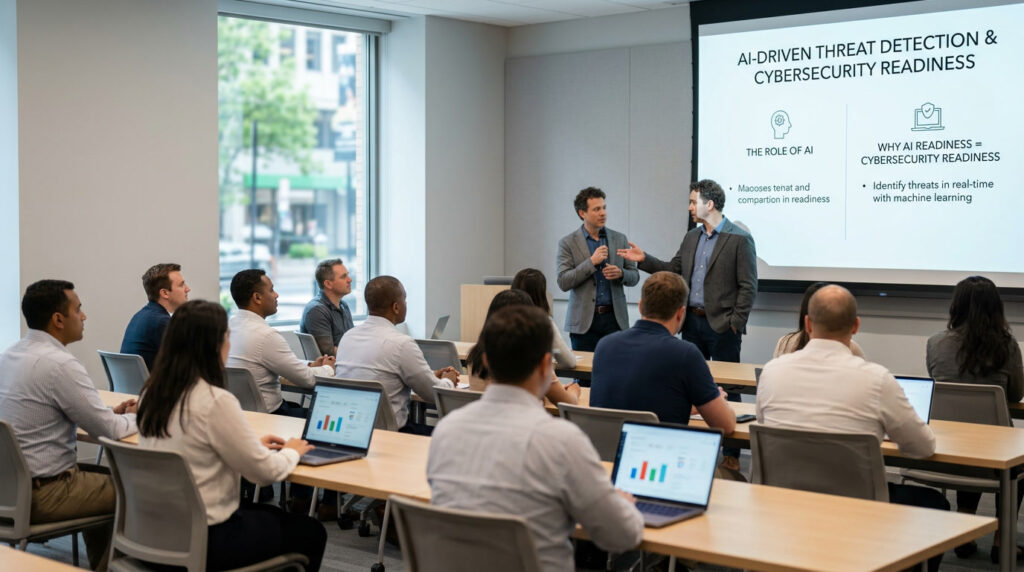
The ESET findings suggest that while organizations appreciate the benefits AI can bring to security operations, many remain concerned about the risks associated with AI-driven threats. This concern is justified. AI-powered phishing attacks can be highly personalized, deepfake technologies can be used to manipulate trust, and automated attack systems can identify weaknesses at unprecedented speed. As AI capabilities continue to evolve, businesses that lack AI awareness may struggle to respond effectively to emerging threats.
Why Cybersecurity Readiness Now Depends on AI Readiness
One of the most important lessons from the 2026 SMB Cyber Readiness Index is that cybersecurity readiness and AI readiness are becoming inseparable. Traditional cybersecurity training focused primarily on password management, phishing awareness, and compliance requirements. While these fundamentals remain important, organizations now need employees who understand how AI impacts security operations, decision-making, risk management, and threat detection.
Research consistently shows that human error remains one of the leading causes of successful cyberattacks. Even organizations with strong security tools can face significant risks when employees lack the knowledge to identify advanced threats or understand how AI-generated content can be used maliciously. Confidence without capability can create blind spots that cybercriminals are eager to exploit.
AI training helps bridge this gap by equipping professionals with practical skills that go beyond traditional cybersecurity awareness. Employees learn how AI systems work, how attackers may misuse them, how AI can support defensive strategies, and how to evaluate risks associated with AI adoption. These skills are becoming essential across departments, from IT and security teams to executives responsible for organizational strategy.
Key Lessons Businesses Can Learn from the Report
The findings from the ESET report provide valuable insights for organizations of all sizes. First, cyber resilience should be measured by preparedness rather than confidence alone. Businesses must continuously evaluate whether their workforce can recognize and respond to AI-driven threats as effectively as they handle conventional cyber risks.
Second, AI adoption requires governance and education. Organizations cannot rely solely on technology vendors to manage AI-related risks. Internal teams must understand the ethical, operational, and security implications of AI systems to ensure responsible deployment.
Third, workforce development is becoming one of the most important cybersecurity investments. Technology evolves rapidly, but trained professionals remain the foundation of effective cyber defense. Companies that prioritize AI education are better positioned to strengthen resilience, improve decision-making, and adapt to emerging threats.
Finally, organizations should view AI as both an opportunity and a responsibility. While AI can enhance efficiency and improve security outcomes, its benefits can only be fully realized when employees possess the knowledge and confidence to use it effectively.
Building a Future-Ready Workforce Through AI Training
As AI continues to reshape cybersecurity, workforce development will play a decisive role in determining which organizations successfully navigate the next era of digital risk. Businesses need professionals who can understand AI-driven threats, leverage AI-powered defenses, and contribute to strategic security initiatives.
AI training provides a structured path toward building these capabilities. It empowers professionals to move beyond basic cybersecurity awareness and develop the practical expertise required to manage modern digital environments. As organizations increase their investments in AI technologies, the demand for skilled and certified AI professionals will continue to rise across industries.
Conclusion
Organizations looking to strengthen their AI and cybersecurity capabilities can benefit from partnering with an Authorized Training Partner (ATP) from AI CERTs. Through industry-recognized training and certification programs, ATPs help professionals and businesses build the AI knowledge, practical skills, and strategic understanding needed to navigate today's evolving cyber landscape with confidence. Learn more at AI CERTs Authorized Training Partner Program.
FAQs
What is the ESET 2026 SMB Cyber Readiness Index?
The report measures how prepared small and medium-sized businesses are to address cybersecurity challenges while highlighting emerging concerns related to AI-driven threats and organizational resilience.
Why are businesses concerned about AI in cybersecurity?
AI can be used by cybercriminals to automate attacks, create sophisticated phishing campaigns, generate deepfakes, and exploit vulnerabilities more efficiently than traditional methods.
How does AI training improve cybersecurity readiness?
AI training helps professionals understand AI technologies, recognize AI-powered threats, use AI-driven security tools effectively, and make informed decisions regarding risk management.
Why is human error still a major cybersecurity risk?
Many cyber incidents occur because employees fail to identify threats, follow security best practices, or understand how attackers exploit human behavior and emerging technologies.
Who should pursue AI training?
AI training is valuable for cybersecurity professionals, IT teams, business leaders, risk managers, compliance specialists, and anyone involved in technology-driven decision-making.
Disclaimer: Some content may be AI-generated or assisted and is provided ‘as is’ for informational purposes only, without warranties of accuracy or completeness, and does not imply endorsement or affiliation.


