

AI CERTS
3 hours ago
Privacy First: Meta Incognito Chat Redefines Secure WhatsApp AI
Consequently, billions of messaging users could soon test whether these assurances hold. However, independent audits show that hardware and supply chains still matter. This article dissects Meta’s design, security caveats, and business motives. Additionally, it outlines verification steps and professional next actions. Read on for a rigorous, jargon-light breakdown tailored to technical leaders.
Why Meta Embraced Privacy
Meta faces mounting regulatory scrutiny across multiple continents. Therefore, bolstering consumer trust has become an existential priority. The company chose a Privacy First narrative to blunt antitrust and surveillance critiques.
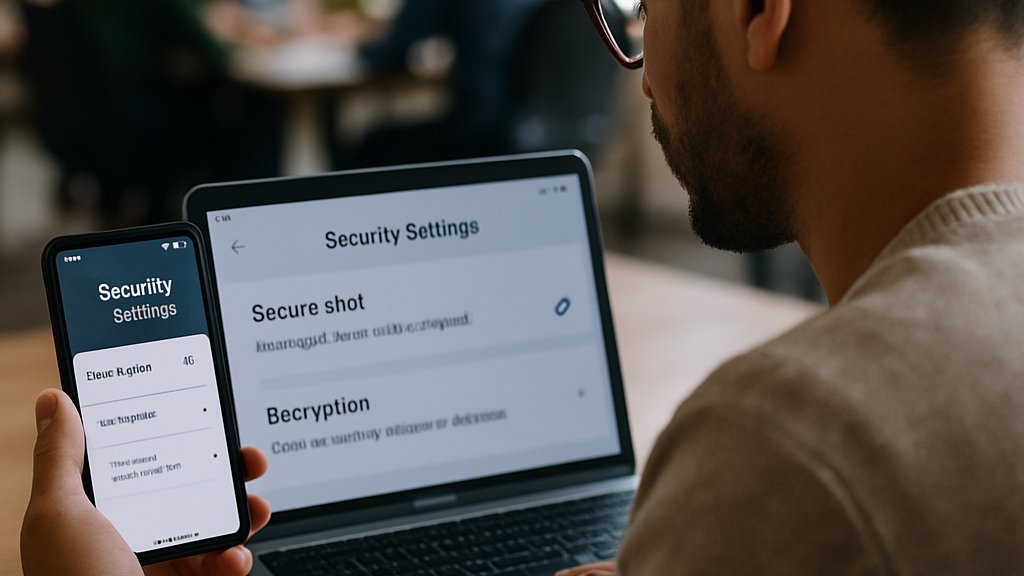
Will Cathcart summarized the shift succinctly during the launch briefing. He noted that users ask intimate life questions they would never email. Consequently, a temporary, non-logged AI mode meets an obvious emotional demand.
Meanwhile, competitive pressure also looms. OpenAI, Anthropic, and Google already support history-disabled chat modes. In contrast, those rivals operate standalone apps, not entrenched messaging clients. By integrating privacy into everyday messaging, Meta hopes for stickier engagement.
Meta’s policy and market realities converge on this single point. However, translating rhetoric into cryptographic proof remains the next hurdle.
Inside WhatsApp Private Processing
Private Processing underpins the new experience. It employs Oblivious HTTP, Remote Attestation TLS, and ephemeral keys for transport encryption. Moreover, a confidential virtual machine hosts Muse Spark and discards state when sessions close.
The architecture claims operators cannot access plaintext or model memory. RA-TLS verifies that the enclave runs approved code before accepting traffic. Therefore, users gain end-to-end protection extending beyond classic message encryption. Ultimately, Privacy First principles guided each architectural choice.
- Launch date 13 May 2026 confirmed by Meta newsroom.
- NCC Group audit published 27 Aug 2025 praised ambitious design.
- WhatsApp serves roughly three billion monthly users worldwide.
- Muse Spark update powers private inference within WhatsApp AI modes.
These points illustrate scale and technical ambition. Subsequently, critics ask how such promises survive real-world attacks.
Private Processing offers strong cryptographic pillars. Nevertheless, hardware limitations introduce fresh risk vectors explored next.
Trusted Execution Environment Risks
Confidential VMs rely on silicon vendors like AMD and NVIDIA. If firmware exploits surface, the supposedly sealed memory could leak. Consequently, NCC Group warns that guarantees hinge on timely patches.
Traffic still passes through third-party CDNs functioning as relays. In contrast, a pure peer-to-peer design would remove that trust anchor. Additionally, side-channel analysis may reveal message lengths and timing metadata. Such metadata, while stripped of content, still represents sensitive data in aggregate.
Consequently, the Privacy First promise remains probabilistic, not absolute. Security teams must monitor attestation logs, firmware advisories, and supply-chain alerts.
Hardware shields raise the difficulty bar for attackers. However, residual data trails demand continuous oversight before confidence matures.
Competitive AI Market Pressures
Global providers now battle for private consumer AI mindshare. Moreover, Apple reportedly readies on-device generative models for iMessage. Google’s Gemini toggles conversation storage off by default in some regions.
By pushing Privacy First ahead of rivals, Meta seeks reputational upside. The move also reframes past controversies about data harvesting. Furthermore, regulatory proposals like the EU AI Act incentivize privacy by design.
- WhatsApp’s existing encryption already commands significant brand recognition.
- Incognito mode operates inside a messaging app many regulators currently trust.
- Muse Spark delivers comparable quality to frontier models.
- Scaled deployment pressure will test confidential compute under heavy consumer load.
These competitive levers could reshape market expectations quickly. Consequently, user experience becomes the decisive factor explored next.
User Experience Design Considerations
Ephemeral chats vanish when users close WhatsApp or lock phones. Therefore, confused users may lose valuable reference points. In contrast, persistent logs aid continuity and accountability.
Meta mitigates this tension by offering parallel, temporary AI chats. However, toggling between modes could introduce cognitive overhead. Clear visual indicators remain essential to uphold the Privacy First claim.
Additionally, disabled context means private sessions forget prior instructions. That design protects data yet reduces personalized responses.
Usability will ultimately decide adoption of private AI. Subsequently, independent verification steps must reinforce perceived safety.
Next Independent Verification Steps
Security researchers already request signed enclave measurements and reproducible build hashes. Moreover, they seek public dashboards showing attestation status across regions. Meta has not yet committed to real-time disclosure schedules.
Legal scholars also question how subpoenas for incognito transcripts will be handled. Meta asserts that no plaintext exists, limiting producible material. Nevertheless, some traffic metadata may still satisfy court orders.
- Which chip revisions underpin active trusted execution?
- Are attestation artifacts published after every update?
- How long are relay logs retained by CDN partners?
Robust audits will convert theoretical Privacy First claims into measurable deliverables. Consequently, professional certifications can prepare teams for responsible deployment.
Certification Pathways For Professionals
Teams implementing confidential AI should strengthen domain skills. Professionals can validate expertise through the AI Security Level 2 certification. Moreover, the curriculum emphasizes threat modeling, attestation review, and modern encryption strategies.
Such structured learning keeps Privacy First objectives grounded in daily engineering decisions. Additionally, certified staff reassure regulators and customers alike.
Deep training complements audits by addressing operational realities. Therefore, organizations should integrate certification plans into rollout timelines.
WhatsApp’s Incognito Chat represents a bold experiment in large-scale private AI deployment. The design merges confidential compute, attested transport, and aggressive log avoidance. Consequently, advocates hail it as a milestone for Privacy First engineering. Nevertheless, residual risks around hardware exploits and metadata persist. Independent audits and transparent disclosure schedules remain non-negotiable.
Teams evaluating adoption should monitor verification artifacts, gather user feedback, and update incident matrices. Meanwhile, upskilling through recognized security certifications builds internal muscle memory. Explore certifications now and keep Privacy First innovation advancing responsibly.
Disclaimer: Some content may be AI-generated or assisted and is provided ‘as is’ for informational purposes only, without warranties of accuracy or completeness, and does not imply endorsement or affiliation.


