

AI CERTS
2 hours ago
Automated Exploitation: Synack AI Slashes Vulnerability Windows
In contrast, typical enterprise patch cycles still span weeks. Therefore, security leaders must rethink processes, priorities, and tooling to keep pace with this unprecedented speed.
Exploit Window Shrinks Fast
Synack measured Time-to-Exploit falling from days to mere hours across critical issues. Furthermore, the report notes 37 percent of assessed weaknesses ranked high or critical. Mark Kuhr, Synack CTO, warns, “Time is now the biggest vulnerability.” Independent Cloud Security Alliance analysis supports his view. The group documents proof-of-concept code emerging 10-15 minutes after CVE publication. Such velocity makes traditional weekly scans obsolete. Automated Exploitation now dictates defensive tempo.
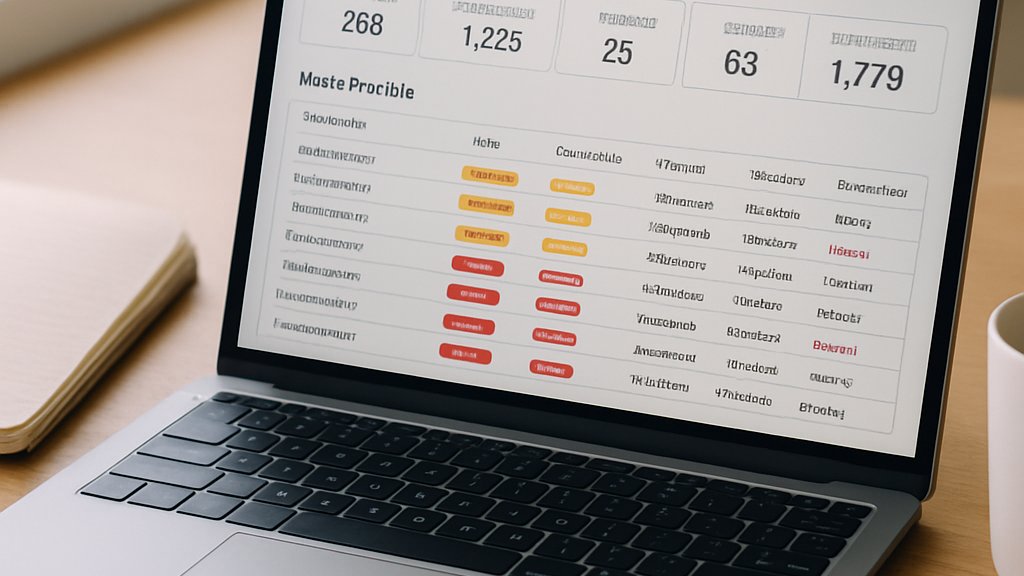
These numbers underline an urgent reality. However, they also provide a benchmark for new controls. Consequently, organizations must monitor disclosure feeds and automate patch pipelines.
AI Tools Drive Speed
Large language models coupled with autonomous agents fuel the rising speed. Additionally, Anthropic and academic teams showcase multi-agent frameworks that search, replicate, and weaponize flaws at scale. CVE-GENIE reproduced 428 vulnerabilities, roughly 51 percent of its test set, for only $2.77 each. Moreover, 70 percent of Sara’s verified findings on a recent Synack engagement rated high or critical. Automated Exploitation therefore grows more affordable every quarter.
Sara Agent In Action
During one six-hour autonomous session, Sara uncovered and exploited SQL injection, stored XSS, and full admin takeover. Consequently, the target’s Mean Time to Remediate dropped 47 percent year-over-year. Meanwhile, human researchers focused on complex chained attacks. Synack highlights this human-plus-machine synergy as the next stage in cybersecurity. Automated Exploitation sits at that partnership’s core.
These demonstrations prove AI can work for defenders, not just attackers. Nevertheless, success requires disciplined integration. The narrative now moves from capabilities to metrics.
Industry Data Highlights Risk
Published CVEs jumped 20 percent in 2025, reaching 48,244 entries. Moreover, organizations still test only 32 percent of their attack surface. The following numbers offer a concise snapshot:
- 11,000+ real-world vulnerabilities analyzed by Synack
- Critical remediation improved from 63 to 38 days
- CVE-GENIE exploit cost averages $2.77 per case
- Sara generated three severe exploits in six hours
Such statistics reinforce market pressure. In contrast, many boards still measure security with annual audits. Automated Exploitation renders that cadence inadequate.
These gaps highlight escalating exposure. However, quantitative insights help prioritize investments. The next section examines defender advantages and remaining hurdles.
Defender Gains And Gaps
Agentic AI can widen assessment coverage at unprecedented speed. Furthermore, continuous validation identifies exploitable pathways before adversaries arrive. Synack customers already reduced MTTR nearly half. Nevertheless, dual-use risk persists. Malicious actors can reuse open models for rapid Automated Exploitation. Additionally, overreliance on AI may create false assurance when human validation lags.
Professionals can enhance their expertise with the AI Learning and Development certification. Consequently, teams gain structured skills to audit model outputs and verify real-world impact.
These advantages empower proactive defense. Yet serious obstacles remain. Therefore, leadership must pair tools with governance.
Key Strategic Mitigation Moves
Organizations should adopt several immediate actions. Firstly, integrate automated CVE monitoring and patch orchestration. Secondly, embed agentic scanning within DevSecOps pipelines. Additionally, track Time-to-Exploit metrics beside MTTR. Moreover, mandate human review for any machine-generated exploit before production changes. Finally, invest in workforce upskilling to manage AI systems securely. Each measure narrows windows exploited by Automated Exploitation.
These steps convert insight into practice. Subsequently, leaders can shift from reactive patching toward anticipatory hardening.
Future Outlook And Actions
Research momentum shows no sign of slowing. In contrast, regulatory pressure is mounting for faster disclosure management. Consequently, security budgets increasingly allocate funds for autonomous testing. Experts predict models will soon simulate full adversary campaigns in real time. Automated Exploitation will therefore become baseline capability, not breakthrough phenomenon.
These projections stress continuous adaptation. Nevertheless, disciplined strategy can harness AI safely. The conclusion distills final imperatives.
Conclusion
AI has compressed exploit timelines from weeks to hours. Moreover, Synack and independent studies confirm the shift. Continuous testing, tighter remediation loops, and skilled oversight offer the best defense. Automated Exploitation will keep evolving, yet informed teams can stay ahead. Consequently, readers should evaluate current processes, adopt agentic tooling, and pursue specialized training. Act today and transform vulnerability management into a competitive strength.
Disclaimer: Some content may be AI-generated or assisted and is provided ‘as is’ for informational purposes only, without warranties of accuracy or completeness, and does not imply endorsement or affiliation.


