

AI CERTS
2 hours ago
Cerebras IPO Rally Reignites AI Infrastructure Investment Frenzy
Market commentators hailed the performance as proof that deep-tech appetite remains robust despite choppy macro conditions. In contrast, skeptics pointed to thin floats and post-lockup volatility in prior cycles. Nevertheless, the buzz around wafer-scale compute is impossible to ignore. This article dissects the debut, technology, numbers, and strategic outlook. Readers will grasp the opportunities and pitfalls shaping tomorrow’s AI Infrastructure landscape.
Historic Market Debut Surge
CBRS priced 30 million shares at $185 before exercising the 4.5 million share greenshoe. Consequently, gross proceeds reached roughly $6.38 billion before fees. Opening indications hovered between $350 and $385 during pre-market auctions.
Trading began with a volatility halt as orders overwhelmed Nasdaq systems. However, the book stabilized and the stock settled near $311 by the close. First-day volume topped 52 million shares, dwarfing the free float.
Analysts framed the 68% pop as the loudest U.S. tech IPO in 2026. Meanwhile, some funds compared the frenzy to 2019’s Beyond Meat listing. The analogy highlights how scarcity can inflate early price discovery.
Debut metrics confirm intense demand for differentiated compute players. However, history shows exuberant IPO moves often retrace once lockups expire. With the fireworks tallied, investors next examine what powers the wafer-scale story.
Wafer-Scale Engine Explained
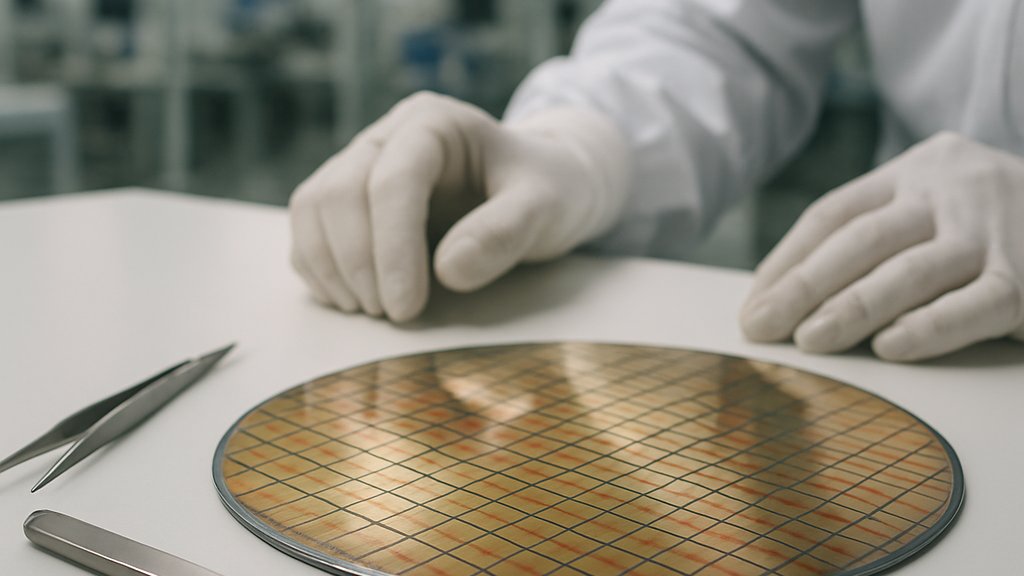
Cerebras' Wafer-Scale Engine 3 fuses an entire 300 mm wafer into one colossal chip. Consequently, workloads access 4 TB-per-second on-chip memory bandwidth without traversing external interconnects. This architecture slashes training time for trillion-parameter models and trims power budgets.
Moreover, the CS-3 system packages the chip with liquid cooling, memory gateways, and compiler software. In contrast, multi-GPU pods rely on network hops that spike latency under heavy inference traffic. Therefore, cloud providers pursuing sovereign model hosting view wafer-scale as an attractive AI Infrastructure alternative.
Wafer-scale delivers bandwidth advantages and simplified programming stacks. However, manufacturing yields and thermal loads remain formidable engineering challenges. Those limits feed directly into the financial discussion analysts now scrutinize.
Financial Numbers Behind Hype
Cerebras posted fiscal 2025 revenue of $510 million, up 76% year over year. However, operating losses persisted despite a one-time accounting gain creating a misleading net profit. Adjusted metrics still showed negative 24% margins, according to Futurum analysis.
Backlog sits near $24.6 billion, anchored by a master agreement with OpenAI valued around $20 billion. Moreover, two UAE customers generated 86% of 2025 sales, heightening concentration risk. Analysts therefore model wide confidence intervals for future valuation scenarios.
Estimates using the fully diluted share count imply a $56 billion valuation at the offer price. Subsequently, the first-day close pushed implied valuation toward $100 billion depending on calculation basis. Nevertheless, lockup expirations and potential secondary offerings could reset valuation multiples over the next year.
Revenue growth is undeniable, yet profitability remains elusive. Consequently, disciplined investors inspect margin trajectories before chasing momentum. That balance of promise and peril shapes the competing bull and bear narratives.
Bullish Momentum And Risks
Proponents argue wafer-scale systems remove networking bottlenecks plaguing traditional AI hardware clusters. Consequently, total cost of ownership improves when models demand extreme parameter counts. Supporters also highlight the massive backlog as evidence of entrenched demand.
In contrast, critics flag steep manufacturing complexity and uncertain supply ramp timelines. They note that the company still depends on Taiwan Semiconductor for every chip slice. Moreover, geopolitical friction could disrupt logistics or licensing for advanced hardware components.
Bearish analysts therefore discount backlog until execution milestones convert orders into revenue. Subsequently, they apply higher risk premiums, producing lower price targets. Nevertheless, momentum funds often dominate early post-IPO trading, limiting immediate downside.
Opportunities and obstacles remain tightly interwoven. Therefore, risk management will prove crucial for AI Infrastructure investors. Market psychology now turns to how valuation holds once the thrill fades.
Investor Sentiment After Day
Post-debut surveys show institutions split on position sizing. Meanwhile, several hedge funds sold into the IPO strength to lock gains before expected volatility. Retail enthusiasm, fueled by social channels, remained elevated through the first week.
Bloomberg data revealed options implied volatility near 110%, underscoring aggressive short-term speculation. Consequently, market-makers widened spreads, increasing transaction costs for late entrants. Some analysts suggested waiting until the first earnings call before reassessing hardware adoption metrics.
- 34.5 million shares floated; 52 million traded Day 1
- 68% Day 1 gain versus $185 offer
- 110% implied volatility on week-one options
- $24.6 billion disclosed backlog
Liquidity conditions therefore favor experienced traders over passive holders near term. However, long-only mandates will likely emerge once guidance clarifies sustainable margins. Next, strategic roadmaps offer clues on future differentiation beyond the initial chip advantage.
Strategic Roadmap Going Forward
Management plans to double manufacturing capacity within 18 months using a new Arizona integration facility. Additionally, the team is expanding software tooling to simplify model migration from CUDA ecosystems. Partnerships with AWS and several sovereign clouds will accelerate deployment pipelines.
Meanwhile, next-generation WSE-4 research targets greater yield through sectional redundancy techniques. The company claims the design will amplify compute density without increasing die area. However, scaling power delivery remains a gating factor for ultradense hardware racks.
Professionals can enhance their expertise with the AI Educator™ certification. Such upskilling prepares teams to exploit emerging AI Infrastructure efficiently. Consequently, organisations align technical talent with rapid roadmap iterations.
Execution against these milestones will determine long-term shareholder returns. Therefore, ongoing monitoring of production, software, and partnerships remains essential. Upskilling considerations deserve focused discussion for industry professionals.
Upskilling For Future Demand
Engineering leaders face intense competition for silicon and algorithm specialists. Therefore, structured learning paths deliver productivity gains faster than ad-hoc experimentation. Vendors increasingly require certification proof during procurement negotiations.
- Standardised vocabulary across cross-functional teams.
- Proven mastery of optimization workflows on novel hardware.
- Credibility when negotiating enterprise AI Infrastructure budgets.
Consequently, certified staff can accelerate deployment while mitigating integration risk. These talent strategies loop back into the broader investment thesis. We now distill the entire discussion into final takeaways.
Cerebras' IPO debut showcased how scarce silicon narratives can electrify AI Infrastructure overnight. However, durable returns hinge on backlog conversion, disciplined costs, and broad AI Infrastructure adoption. Furthermore, investors must weigh price discipline against the competitive pull of diversified AI Infrastructure providers. Therefore, equip your teams now, master AI Infrastructure deployment, and stay ready for the next market wave. Professionals may start by pursuing the linked certification and tracking quarterly updates from Cerebras leadership. Act decisively to transform technical insight into sustainable advantage.
Disclaimer: Some content may be AI-generated or assisted and is provided ‘as is’ for informational purposes only, without warranties of accuracy or completeness, and does not imply endorsement or affiliation.


