

AI CERTS
3 hours ago
Canada’s AI Layoff Debate Signals Why AI Training Is Becoming a Workforce Survival Strategy
A major discussion began after a Chinese court ruled that employers cannot demote or terminate employees solely to replace them with artificial intelligence. The case involved a senior technology worker whose role was targeted for automation before he was eventually dismissed. The ruling emphasized that AI should “promote employment” and improve livelihoods rather than simply eliminate jobs.
The debate has quickly spread beyond China. Canadian labor experts and economists are now questioning whether countries should introduce stronger protections as AI-driven layoffs accelerate globally.
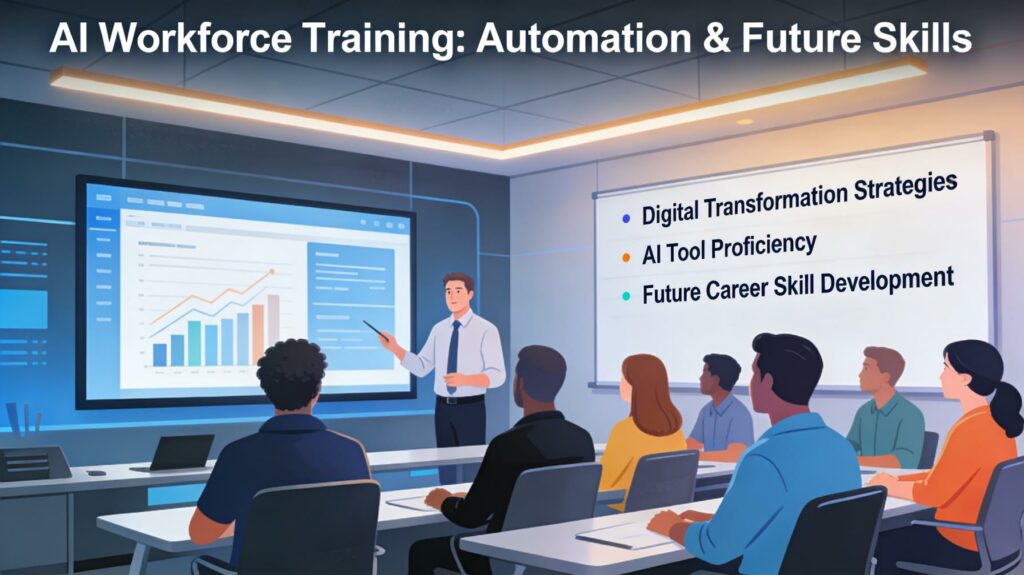
At the same time, the numbers are becoming difficult to ignore.
More than 92,000 tech layoffs have already been reported in 2026, with many companies openly linking workforce reductions to AI efficiencies and automation. Major firms including Meta, Coinbase, Freshworks, and Cloudflare are restructuring teams while increasing investments in AI infrastructure and AI-native operations.
This is not simply a temporary employment shift. It is a structural transformation of how organizations operate.
The Real Problem Is Not AI — It’s Workforce Readiness
The Canadian discussion reveals an important truth: governments may attempt to regulate AI-related layoffs, but regulation alone cannot future-proof careers.
The bigger challenge is workforce readiness.
Even experts involved in the Canadian debate acknowledged that the long-term solution is not resisting AI adoption entirely. Instead, they emphasized creating an “AI-ready future” through broad reskilling and continuous learning initiatives.
That distinction matters.
Organizations are adopting AI because it improves efficiency, reduces repetitive workloads, and accelerates decision-making. Businesses that ignore AI risk falling behind competitors that use automation strategically. However, employees without AI literacy face a growing risk of displacement as workflows evolve around intelligent systems.
This creates a new workplace reality where the most valuable professionals will not necessarily be those competing against AI, but those who know how to work alongside it.
Why AI Training Has Become a Strategic Business Priority
Many companies still approach AI as a technology investment rather than a workforce transformation strategy. That mindset is becoming increasingly risky.
As AI tools become integrated into daily operations, organizations need employees who understand how to use AI responsibly, ethically, and productively. Teams must learn how to manage AI systems, interpret outputs, identify bias, maintain compliance, and combine human judgment with machine intelligence.
Without proper training, businesses create two major problems.
First, employees become fearful of AI because they do not understand how it affects their roles. Second, organizations fail to unlock the full value of their AI investments because teams lack the skills required to use these systems effectively.
This gap between AI adoption and AI capability is now one of the biggest challenges facing employers globally.
The companies thriving in the AI economy are not simply replacing workers. They are building AI-enabled teams.
The Shift from Job Replacement to Job Evolution
The Chinese court ruling sends a broader message that the future of work should involve adaptation, not simple elimination.
Many roles will inevitably change. Routine tasks may disappear. Certain positions may shrink. But entirely new categories of work are emerging around AI governance, prompt engineering, AI compliance, automation strategy, AI ethics, and AI operations.
Even companies conducting layoffs are simultaneously hiring professionals with AI-related skills. Several organizations cutting traditional roles are actively expanding engineering, AI implementation, and AI oversight teams.
That is why AI training has moved beyond optional upskilling.
It is becoming career insurance.
Employees who understand AI systems, automation workflows, and responsible AI usage are positioning themselves for long-term relevance in industries undergoing rapid disruption.
Why Organizations Need Structured AI Education
As AI technologies evolve every few months, informal learning is no longer enough. Businesses need structured frameworks that help teams understand practical AI implementation, compliance, ethics, and business strategy.
This is where authorized AI training ecosystems are becoming essential.
Programs offered through AI CERTs Authorized Training Partner Program help organizations, educators, and training providers equip professionals with industry-relevant AI certifications and practical knowledge.
Instead of reacting to disruption after layoffs occur, organizations can proactively prepare employees to work effectively in AI-driven environments. The goal is not simply teaching people how AI works, but helping them understand how to create value alongside it.
Conclusion
The growing debate around AI-related layoffs in Canada highlights a critical global issue: automation is reshaping work faster than traditional workforce systems can adapt.
Governments may continue discussing regulations and protections, but long-term stability will depend on how quickly organizations and professionals embrace AI learning and reskilling.
Businesses that invest in AI education today will build stronger, more adaptable teams tomorrow. Employees who develop AI literacy will be far better positioned to grow with technology rather than be displaced by it.
Through the AI CERTs Authorized Training Partner Program, organizations can create scalable AI learning ecosystems that prepare professionals for the realities of the evolving workplace while supporting responsible AI adoption across industries.
FAQs
1. Why are companies using AI to reduce workforce sizes?
Many organizations are adopting AI to improve efficiency, automate repetitive tasks, reduce operational costs, and accelerate productivity across departments.
2. Did China completely ban AI-related layoffs?
No. China did not ban AI adoption. However, courts ruled that companies cannot dismiss employees solely because AI can perform their tasks without following proper legal and labor protections.
3. Why is AI training important for employees?
AI training helps professionals adapt to changing job requirements, improve productivity, work effectively with AI systems, and remain competitive in evolving industries.
4. How can businesses prepare employees for AI transformation?
Organizations can prepare teams through structured AI education, certification programs, reskilling initiatives, ethical AI training, and practical implementation workshops.
5. What is the benefit of becoming an AI CERTs Authorized Training Partner?
The program enables organizations and training providers to deliver globally recognized AI certifications, access ready-to-use learning resources, and help professionals build practical AI skills for modern workplaces.
Disclaimer: Some content may be AI-generated or assisted and is provided ‘as is’ for informational purposes only, without warranties of accuracy or completeness, and does not imply endorsement or affiliation.


