

AI CERTS
4 hours ago
Egypt’s AI Literacy Push Signals Why AI Training Is Becoming Essential for Every Workforce
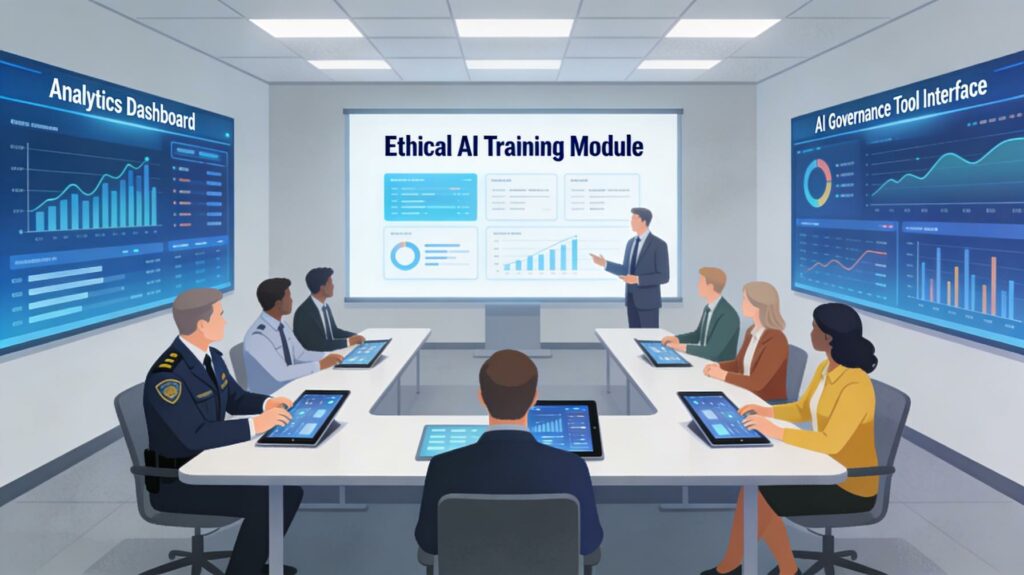
In a major step toward responsible AI adoption, UNESCO recently partnered with Egypt’s Ministry of Communications and Information Technology to train civil servants across multiple ministries in AI literacy, governance, ethics, and practical AI usage. The initiative brought together more than 90 civil servants from 25 Egyptian ministries to help public officials understand how AI can improve policy development, service delivery, and operational efficiency while also addressing concerns around ethics, bias, confidentiality, and data protection.
This development reflects something much larger happening globally: AI adoption is accelerating faster than workforce readiness.
AI Adoption Is Moving Faster Than AI Understanding
For years, organizations viewed AI as a future investment. Today, it has become an operational reality.
Governments are integrating AI into public administration. Businesses are using AI to automate workflows, personalize customer experiences, and optimize decision-making. Educational institutions are embedding AI into learning ecosystems. Healthcare systems are exploring AI-driven diagnostics and patient support.
But the biggest risk is no longer access to AI technology.
It is the lack of AI literacy.
UNESCO’s Egypt initiative directly addressed this issue by focusing not only on how AI works, but also on how to use it ethically and responsibly in real-world situations. Participants were trained to understand AI opportunities while also learning how to identify risks associated with bias, governance failures, and sensitive data handling.
This is a critical distinction because organizations that implement AI without properly trained professionals often create operational, ethical, and reputational vulnerabilities.
Why AI Training Has Become a Strategic Priority
AI is not simply another software tool. It changes how decisions are made, how teams collaborate, and how organizations manage risk.
That means AI implementation without training creates dangerous gaps.
An employee may know how to generate content using AI but may not understand data privacy implications. A manager may use predictive AI systems without recognizing embedded bias. Leadership teams may deploy AI tools without governance frameworks or compliance structures.
Egypt’s initiative demonstrates that countries are beginning to understand this challenge at a national level. Rather than focusing only on infrastructure, they are investing in people first.
That shift matters because successful AI transformation depends less on technology and more on workforce capability.
Organizations now need professionals who understand:
- AI ethics and governance
- Responsible AI deployment
- Data handling and compliance
- AI-assisted decision-making
- Risk mitigation strategies
- Human-centered AI implementation
Without these competencies, AI adoption can quickly become fragmented and unsustainable.
The Global Workforce Is Entering an AI Capability Race
UNESCO’s broader initiatives reveal how serious the global AI skills movement has become.
The organization has already launched international AI literacy and digital transformation programs in collaboration with institutions like Oxford’s Saïd Business School to prepare public-sector leaders worldwide for ethical AI governance.
Meanwhile, countries across the Middle East, Africa, Europe, and Asia are accelerating national AI strategies to remain globally competitive.
Egypt itself has been expanding its innovation and AI ecosystem through initiatives connected to governance modernization, digital transformation, and national AI development.
This creates a new reality for businesses and training providers:
AI skills are becoming a workforce necessity, not a niche specialization.
Companies that fail to train employees risk falling behind competitors that are building AI-ready teams capable of adapting quickly and responsibly.
AI Literacy Is About More Than Technology
One of the strongest lessons from UNESCO’s Egypt initiative is that AI literacy is not purely technical.
It is also about judgment.
Participants were trained to think critically about AI ethics, confidentiality, governance, and human-centered implementation.
This reflects a major shift in how organizations now approach AI readiness.
The future workforce will not simply need coders or AI engineers. It will require professionals across leadership, HR, compliance, operations, marketing, healthcare, finance, and government who understand how AI impacts their decisions and responsibilities.
That is why AI education must expand beyond technical teams into organization-wide capability building.
Why Authorized AI Training Partners Will Play a Bigger Role
As AI adoption accelerates globally, organizations increasingly need structured, credible, and scalable training ecosystems.
This is where authorized AI training partnerships become highly valuable.
Training providers that align with globally recognized AI certification frameworks can help businesses, governments, and professionals build practical AI competencies that support real-world implementation.
The AI CERTs Authorized Training Partner Program helps organizations deliver industry-relevant AI education, expand workforce readiness, and support responsible AI adoption across industries.
As governments like Egypt invest in AI literacy at the national level, businesses and institutions worldwide will increasingly need trusted training ecosystems capable of preparing professionals for the realities of the AI economy.
FAQs
1. Why is AI literacy important today?
AI literacy helps professionals understand how to use AI responsibly, ethically, and effectively in real-world environments. It reduces operational risks and improves decision-making.
2. What was the purpose of Egypt’s AI literacy initiative?
The initiative aimed to train civil servants in AI fundamentals, ethical AI governance, data protection, and practical AI implementation for public-sector services. (UNESCO)
3. Why are governments investing in AI training?
Governments recognize that AI adoption without skilled professionals can create governance, security, and ethical challenges. Training helps build responsible AI ecosystems.
4. How does AI training benefit organizations?
AI training improves workforce readiness, supports innovation, strengthens compliance awareness, and helps organizations adopt AI tools more strategically.
5. How can organizations become AI training providers?
Organizations can join programs like the AI CERTs Authorized Training Partner Program to deliver AI certification programs and workforce training solutions.
Disclaimer: Some content may be AI-generated or assisted and is provided ‘as is’ for informational purposes only, without warranties of accuracy or completeness, and does not imply endorsement or affiliation.


