

AI CERTS
2 months ago
PRSE 2026 Highlights Economic Pressure and AI Innovation Why AI Training Is Now a Business Imperative
At this year’s event, one theme dominates: businesses are being pushed to rethink how they operate under volatile supply chains, rising energy costs, and increasing regulatory demands. At the same time, AI-powered technologies are emerging as a key solution, particularly in areas like sorting systems, material recovery, and digital traceability.
This moment is not just about recycling. It is about how industries adapt to complexity and more importantly, who is equipped to lead that change.
Economic Pressure Is Forcing Smarter Decisions
One of the most striking insights from PRSE 2026 is the growing pressure on businesses to remain competitive while managing rising costs. The cost of virgin materials, fluctuating energy prices, and policy uncertainty are making traditional models unsustainable.
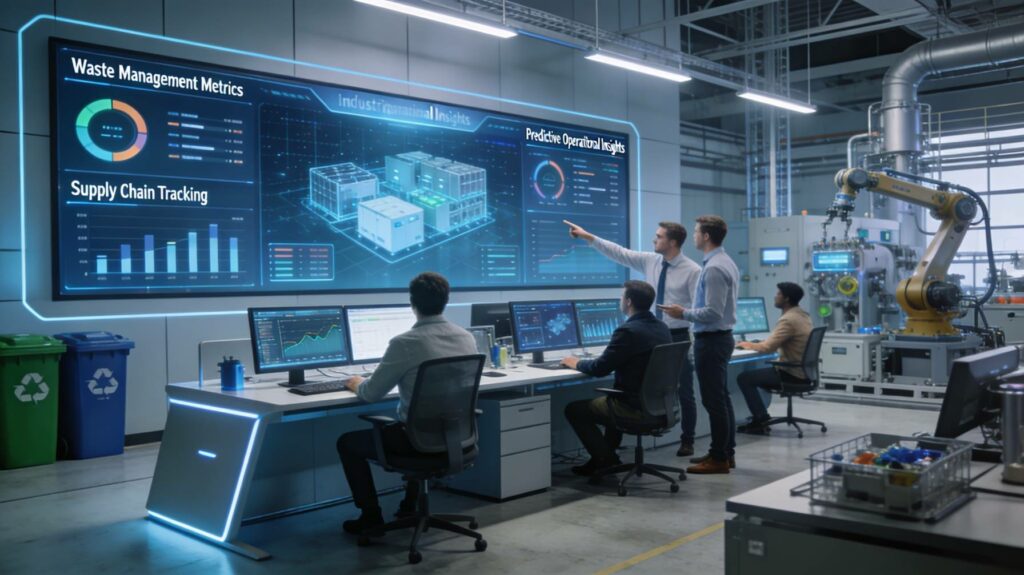
This pressure is doing something interesting. It is forcing companies to move faster toward efficiency, resilience, and smarter systems.
But efficiency today is no longer just about cutting costs. It is about making better decisions using data, automation, and predictive insights. That is where AI becomes central.
Organizations that once relied on manual processes are now exploring intelligent systems that can optimize operations, reduce waste, and improve outcomes in real time. The gap is widening between those who understand these systems and those who don’t.
AI has Become the System Itself
At PRSE 2026, AI is not being discussed as a future concept. It is already embedded in critical processes.
AI-driven sorting technologies are improving accuracy and recovery rates. Digital tracking systems are enabling better transparency across supply chains. Advanced analytics are helping companies manage complex waste streams that were previously difficult to process.
This signals a deeper shift.
AI is no longer just supporting operations—it is becoming the backbone of how industries function.
And this creates a new kind of challenge.
Technology can be implemented quickly, but understanding it, managing it, and scaling it effectively requires a workforce that is trained, confident, and capable.
The Real Gap Is Not Technology It Is Talent
While companies are investing heavily in AI systems, many are struggling with a more fundamental issue: lack of AI-skilled professionals.
You can install AI-powered systems, but without the right expertise, organizations cannot:
- Interpret data effectively
- Make strategic decisions based on insights
- Ensure ethical and responsible AI use
- Scale innovation across departments
This creates a dangerous imbalance where technology exists, but the ability to use it fully does not.
PRSE 2026 highlights innovation as the solution to economic pressure—but innovation without skilled people is incomplete.
Why AI Training Has Become a Strategic Priority
The shift we are witnessing is not limited to packaging or recycling. It reflects a broader transformation across industries.
AI is influencing supply chains, manufacturing, sustainability, customer experience, and decision-making. As systems become more intelligent, the expectations from professionals also evolve.
AI training is no longer a “nice-to-have” skill. It is becoming a core capability for:
- Leaders who need to make data-driven decisions
- Managers who oversee AI-enabled operations
- Professionals who interact with automated systems
- Organizations that want to stay competitive
Without structured learning, companies risk underutilizing the very technologies they invest in.
Bridging the Gap Between Innovation and Execution
What PRSE 2026 makes clear is that innovation alone does not solve problems. Execution does.
And execution depends on people.
AI systems can optimize processes, but humans must define goals, interpret results, and ensure alignment with business objectives. The ability to bridge this gap between technology and strategy is what will define successful organizations.
This is where structured AI education plays a transformative role.
Training enables teams to move from experimentation to implementation. It turns curiosity into capability and technology into measurable impact.
The Road Ahead Requires Prepared Leadership
As industries navigate economic pressure and technological transformation, leadership must evolve.
Leaders today are not just decision-makers. They are enablers of change. They must understand how AI fits into their business, how to deploy it responsibly, and how to build teams that can sustain innovation.
The conversations at PRSE 2026 show that the future will belong to organizations that combine technology, talent, and strategy.
Ignoring any one of these creates risk.
Conclusion How AI CERTs ATP Can Help Organizations Stay Ahead
To truly leverage the opportunities highlighted at PRSE 2026, organizations need more than tools—they need the right ecosystem for learning and growth.
The AI CERTs Authorized Training Partner (ATP) program provides exactly that. It enables businesses and training providers to deliver globally recognized AI certifications, equipping professionals with practical, job-ready skills that align with real industry needs.
By becoming an ATP, organizations gain access to expert-designed curriculum, scalable training models, and globally trusted credentials. This helps bridge the gap between AI adoption and AI capability—ensuring that innovation is not just implemented, but fully utilized.
FAQs
1. What is PRSE 2026 and why is it important?
PRSE 2026 is a major global event focused on plastics recycling, highlighting industry challenges like economic pressure and showcasing innovations such as AI-driven systems.
2. How is AI being used in the recycling and packaging industry?
AI is improving sorting accuracy, enabling digital traceability, and helping companies manage complex materials more efficiently.
3. Why is AI training important for businesses today?
AI training ensures that employees can effectively use AI tools, interpret data, and make informed decisions, maximizing the value of technology investments.
4. What challenges do companies face when adopting AI?
The biggest challenge is the skills gap—many organizations lack trained professionals who can implement and manage AI systems effectively.
5. How does the AI CERTs ATP program help organizations?
The ATP program provides structured AI training, globally recognized certifications, and ready-to-deploy curriculum, helping organizations build skilled teams and stay competitive.
Disclaimer: Some content may be AI-generated or assisted and is provided ‘as is’ for informational purposes only, without warranties of accuracy or completeness, and does not imply endorsement or affiliation.


