

AI CERTS
1 week ago
Singapore’s Bold AI Training Push Signals a Global Reality: Why AI Skills Are No Longer Optional
The message is simple: adapt now or risk being left behind.
What Changes the Conversation Around AI
The NTUC initiative is part of a broader strategy to ensure that AI-driven growth benefits workers rather than replaces them. Leaders emphasized that the goal is not “AI instead of workers,” but AI working alongside people across all industries.
At the same time, the urgency is real. Surveys show that 56% of professionals already feel the need to upskill to keep pace with AI.
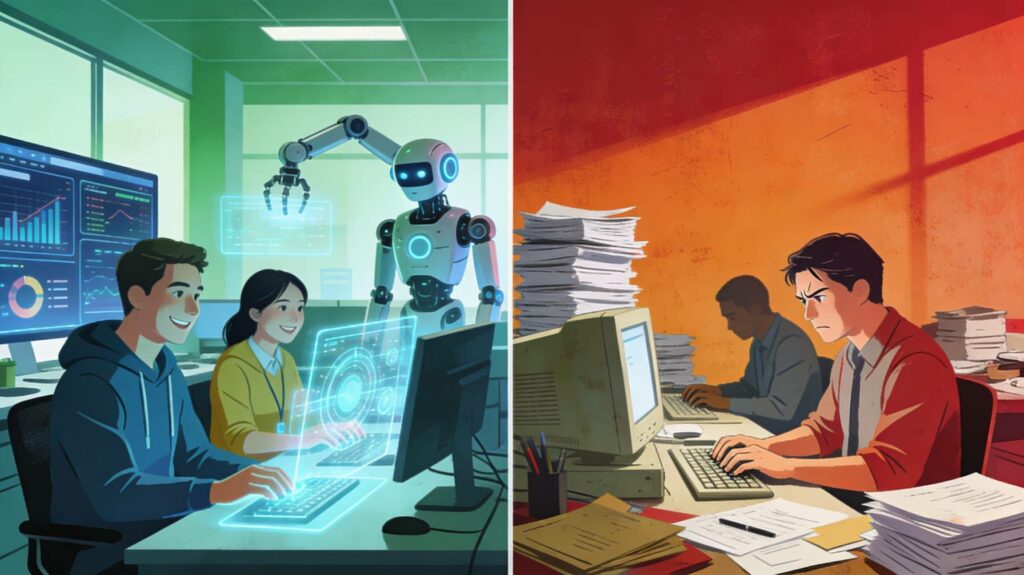
This reveals a critical shift. AI is not just transforming tech roles. It is reshaping finance, marketing, operations, healthcare, logistics, and even creative industries. Governments and organizations are recognizing that without structured training, the workforce risks falling into a gap between old roles and new demands.
And this is where the real challenge begins.
The Growing Gap Between AI Adoption and AI Readiness
Organizations today are rapidly adopting AI tools—automating processes, improving decision-making, and driving efficiency. But there is a hidden problem.
Most professionals are using AI without fully understanding it.
This creates a dangerous imbalance. Companies invest in AI technologies, but employees lack the skills to use them effectively, ethically, and strategically. The result is underutilization, poor decision-making, and even risk exposure.
Singapore’s initiative directly addresses this gap by focusing not just on adoption, but structured, scalable AI training pathways.
It recognizes something many organizations are still ignoring:
AI transformation is not a technology problem. It is a skills problem.
Why AI Training Is Becoming the New Career Insurance
The traditional career model—learn once, work for decades—is no longer relevant. AI is accelerating change so quickly that skills can become outdated within a few years, or even months.
This is why large-scale initiatives like NTUC’s are focusing on continuous learning. Workers are being encouraged to reskill, adapt, and move into new roles as industries evolve.
But beyond job security, AI training offers something even more valuable:
Relevance.
Professionals who understand AI are not just surviving change—they are leading it. They are the ones designing workflows, making data-driven decisions, and identifying new opportunities.
Without AI literacy, even experienced professionals risk becoming disconnected from how modern businesses operate.
AI Is Not Replacing Jobs—It Is Redefining Them
One of the biggest fears surrounding AI is job loss. But the NTUC initiative highlights a more nuanced reality.
The goal is not to preserve old jobs, but to help workers transition into better, more relevant roles.
This aligns with global trends. Jobs are not disappearing—they are evolving. Roles are becoming more strategic, more analytical, and more dependent on human-AI collaboration.
For example, a marketing professional today is expected to understand AI-driven analytics. A finance manager needs to work with predictive models. Even HR professionals are using AI for talent insights.
In this environment, AI training is not just helpful—it is essential for staying employable.
The Real Risk: Falling Behind Silently
What makes this shift particularly challenging is that it often happens quietly.
There is no single moment when a skill becomes obsolete. Instead, professionals gradually find themselves less effective, less confident, and less competitive.
By the time the gap becomes visible, catching up becomes much harder.
This is why proactive training initiatives are critical. They allow individuals to stay ahead of change rather than reacting to it.
Singapore’s approach—offering large-scale, accessible AI training—is a model that other countries and organizations are likely to follow.
Why Organizations Must Take Ownership of AI Learning
AI readiness is not just an individual responsibility. Organizations play a crucial role in enabling their workforce to adapt.
The NTUC model emphasizes collaboration between workers and enterprises, ensuring that training aligns with real business needs.
Companies that invest in AI training gain multiple advantages. They improve productivity, reduce risk, and build a workforce that can innovate rather than just execute.
More importantly, they create a culture of learning—one that is essential in an era of constant change.
From Awareness to Action with AI CERTs ATP
The NTUC initiative makes one thing clear: the future belongs to those who are prepared.
But awareness alone is not enough. What professionals and organizations need now is structured, credible, and industry-relevant training.
This is where programs like the AI CERTs Authorized Training Partner (ATP) come in. By offering globally recognized AI certifications, practical learning pathways, and industry-aligned training, ATP helps bridge the gap between AI adoption and real-world capability.
It empowers professionals to build in-demand skills and enables organizations to create AI-ready teams—turning uncertainty into opportunity.
If the AI era is inevitable, then being trained for it should be intentional.
FAQs
1. Why is AI training becoming so important in 2026?
AI is rapidly transforming industries, and professionals need new skills to stay relevant. Without training, there is a growing gap between technology adoption and workforce capability.
2. What does the NTUC AI training initiative aim to achieve?
It aims to provide over one million AI training opportunities to help workers reskill, adapt to changing roles, and ensure inclusive growth in an AI-driven economy.
3. Can non-technical professionals benefit from AI training?
Yes. AI is now used across functions like marketing, HR, finance, and operations, making it essential for both technical and non-technical roles.
4. How does AI training improve career growth?
It enhances decision-making, increases productivity, and opens up new career opportunities by aligning skills with emerging job requirements.
5. How can AI CERTs ATP help individuals and organizations?
AI CERTs ATP provides structured, industry-recognized training programs that help individuals build practical AI skills and enable organizations to develop AI-ready teams efficiently.
Disclaimer: Some content may be AI-generated or assisted and is provided ‘as is’ for informational purposes only, without warranties of accuracy or completeness, and does not imply endorsement or affiliation.


