

AI CERTS
1 week ago
AI Trailblazers in Insurance Are Winning Big but Here’s What Everyone Is Missing
At its core, AI is not just another technology upgrade. It represents a fundamental shift in how businesses operate, make decisions, and deliver value. From underwriting and claims processing to fraud detection and customer engagement, AI enables insurers to process massive volumes of data, identify patterns, and make faster, more accurate decisions—something humans alone cannot achieve at scale.
But while the headlines celebrate revenue growth, the deeper story is about capability.
The Real Reason Behind the 21% Revenue Gap
The success of AI trailblazers in insurance is not accidental. It stems from their ability to integrate AI into core business functions rather than treating it as a side experiment. These organizations are leveraging AI to automate workflows, enhance risk assessment, and personalize customer experiences.
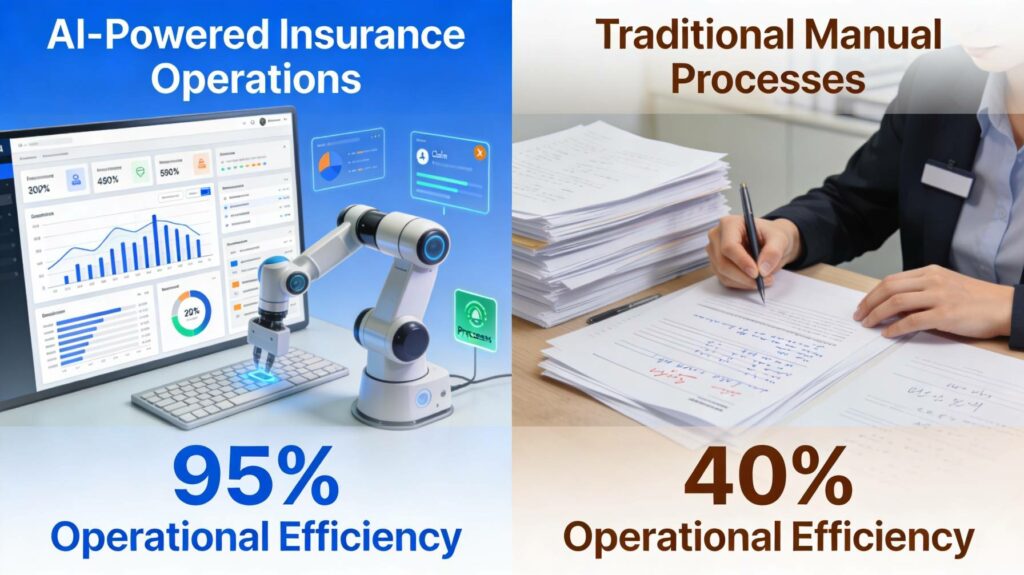
Recent industry developments reinforce this trend. Insurance firms are increasingly using AI and automation to improve operational efficiency and drive growth, with companies reporting significant increases in profits and commissions as a result of these technologies.
At the same time, AI-powered platforms are transforming insurance workflows—from processing documents to handling claims—making operations faster and more scalable.
What emerges is a clear pattern:
AI is no longer optional—it is becoming the foundation of competitive advantage.
From Adoption to Impact: Where Most Companies Fall Behind
Despite the growing adoption of AI, not every organization is seeing the same results. The gap between AI leaders and laggards continues to widen.
Why?
Because implementing AI tools is not the same as building AI capability.
Many companies invest in AI technologies but fail to align them with business strategy. Others struggle with data quality, lack of internal expertise, or resistance to change. The result is fragmented adoption—AI exists in pockets but does not drive measurable impact.
AI trailblazers, on the other hand, take a different approach. They invest in people as much as they invest in technology. They focus on building internal knowledge, cross-functional collaboration, and a culture that embraces data-driven decision-making.
In short, they understand that AI success is not about tools—it’s about talent and training.
The Talent Gap Driving the AI Divide
As AI becomes central to business growth, a critical challenge is emerging: the shortage of skilled professionals who can effectively implement and manage AI systems.
This is particularly evident in industries like insurance, where domain expertise must be combined with technical understanding. It’s not enough to know AI; professionals must understand how to apply it to underwriting, claims, compliance, and customer experience.
The demand for “AI-ready” talent is rising across sectors. Even industries outside insurance—such as finance and analytics—are seeing strong growth driven by AI adoption, with companies reporting increased revenue and efficiency gains from AI-powered solutions.
This creates a new reality for organizations:
The winners will not just be those who adopt AI first, but those who build the strongest AI-skilled workforce.
Why AI Training Is No Longer Optional
The 21% revenue advantage seen by AI trailblazers is not just a statistic—it’s a warning.
Organizations that fail to build AI capabilities risk falling behind not only in efficiency but also in innovation and customer relevance. As AI continues to evolve, the gap will only widen.
Training becomes the bridge between potential and performance.
It enables teams to understand how AI works, where it can be applied, and how to use it responsibly. It helps leaders make informed decisions about AI investments. It empowers employees to move from manual processes to intelligent automation.
Most importantly, it ensures that AI is not just implemented but fully utilized.
Bridging the Gap Between AI Potential and Business Reality
The insurance industry’s transformation offers a broader lesson for every sector.
AI is redefining how value is created. It is reshaping business models, customer expectations, and competitive dynamics. But technology alone cannot drive this transformation.
What truly matters is how organizations prepare their people.
Companies that invest in structured AI education and training are better positioned to:
- Understand emerging AI use cases
- Integrate AI into business strategy
- Mitigate risks and ethical concerns
- Drive measurable ROI from AI initiatives
Without this foundation, even the most advanced tools can fail to deliver results.
How the ATP Model Can Help Organizations Lead the AI Shift
As industries race toward AI-driven growth, the need for structured, scalable, and globally recognized training has never been greater.
This is where the Authorized Training Partner (ATP) model becomes critical.
The AI CERTs Authorized Training Partner program enables organizations to access industry-aligned AI certification programs, standardized curriculum, and global recognition. Instead of building training from scratch, businesses can leverage proven frameworks that are continuously updated to match the pace of AI innovation.
Through the ATP model, organizations can equip their workforce with the skills needed to move from AI awareness to AI execution—bridging the gap between technology adoption and real business impact.
In a world where AI trailblazers are already seeing 21% higher revenue, the question is no longer whether to invest in AI training.
It is how quickly you can start.
Explore the Authorized Training Partner Program
FAQs
1. Why are AI-driven insurance companies seeing higher revenue?
AI helps insurers automate processes, improve risk assessment, and deliver personalized services, leading to higher efficiency and better customer outcomes.
2. What is the biggest challenge in adopting AI in insurance?
The biggest challenge is not technology but the lack of skilled professionals who can effectively implement and manage AI systems.
3. How does AI improve insurance operations?
AI enhances underwriting accuracy, speeds up claims processing, detects fraud, and improves customer engagement through data-driven insights.
4. Why is AI training important for organizations?
AI training ensures that employees understand how to use AI tools effectively, align them with business goals, and maximize return on investment.
5. What is the benefit of the Authorized Training Partner (ATP) model?
The ATP model provides access to standardized, globally recognized AI training programs, helping organizations quickly build AI capabilities without developing training internally.
Disclaimer: Some content may be AI-generated or assisted and is provided ‘as is’ for informational purposes only, without warranties of accuracy or completeness, and does not imply endorsement or affiliation.


