

AI CERTS
2 months ago
Scout AI Expands With AI Military Contracts Surge
Scout AI's Rapid Rise
Founded in 2024, Scout AI moved quickly from demo range to battlefield sandbox. Furthermore, the firm secured roughly $11 million in Defense Department development awards over 18 months. DARPA, Army Applications Laboratory, and an Unmanned Systems OTA all tapped the company. Consequently, Scout plans soldier-operated trials this May under the Army’s UxS program.
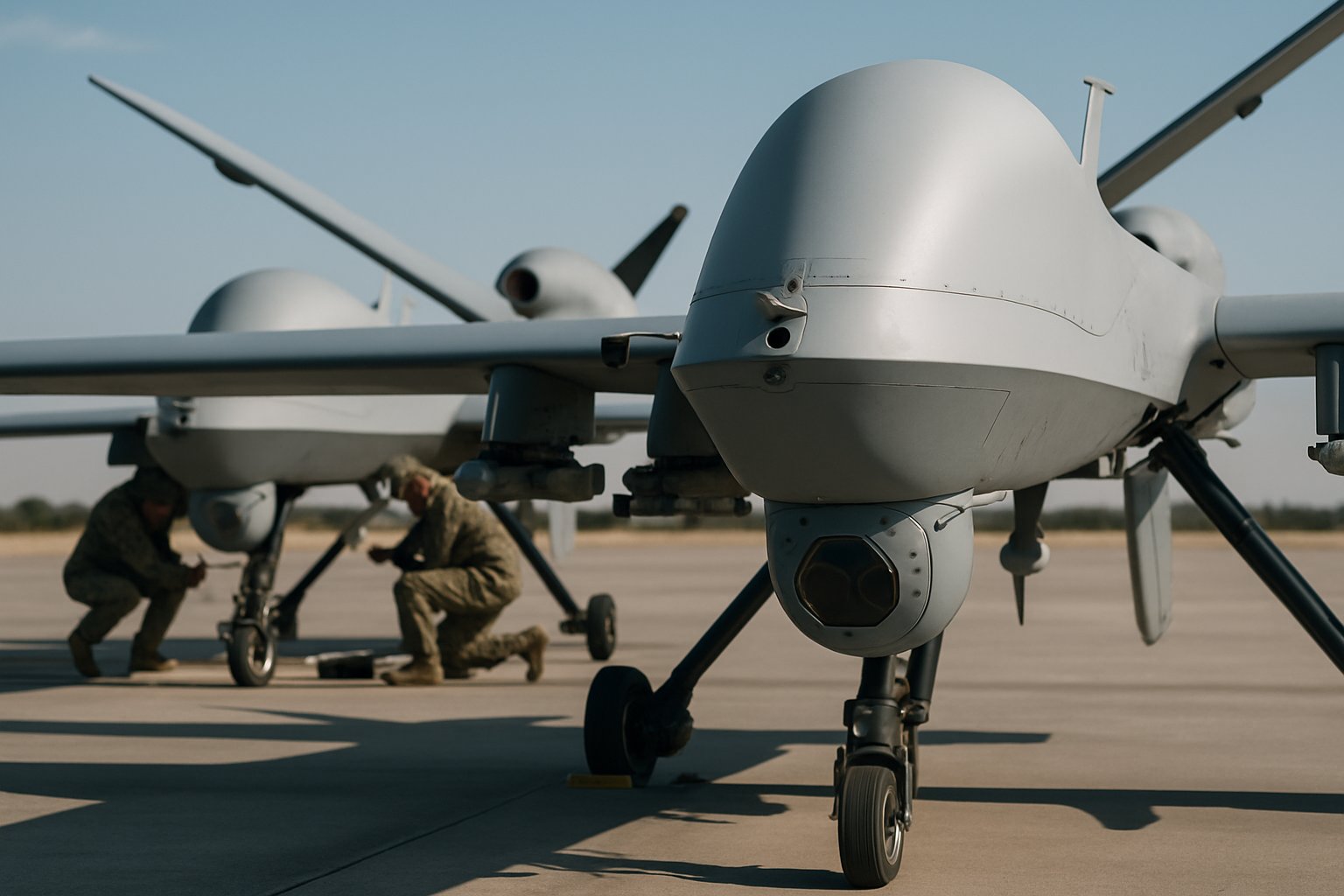
These milestones underscore momentum. However, scale will demand expanded compute, data, and safety validation. The fresh capital aims to meet those hurdles. Scout executives insist the money accelerates model training and real-world evaluations under new AI Military Contracts.
Momentum breeds scrutiny. Nevertheless, the firm’s 34-person team now faces expectations common to larger primes. These pressures set the context for the next section.
Series A Funding Surge
Align Ventures and Draper Associates co-led the oversubscribed round. Moreover, Booz Allen Ventures, Decisive Point, and BVVC joined. Public documents confirm the full $100 million figure released on April 29. Earlier, a $15 million seed supported initial field tests.
Why did investors pile in? In contrast to consumer AI, defense autonomy ties revenue to long-term government budgets. Additionally, Replicator and similar initiatives promise multibillion-dollar procurement over the decade. Therefore, funds flow toward platforms positioned for rapid scaling under AI Military Contracts.
Key numbers at a glance:
- $100 million Series A announced April 29 2026
- $11 million in current DoD awards, per company data
- Army OTA cohort value ≈ $15.5 million across three vendors
- DARPA RACER contract ceiling ≈ $2.5 million
These statistics highlight investor confidence. Subsequently, attention shifts to contract performance and field validation.
Contract Wins Broader Context
Scout is negotiating additional Pentagon work reportedly worth $225 million. Meanwhile, public registries list DARPA, SBIR, and Army orders that feed its pipeline. Moreover, the Army’s 1st Cavalry Division will evaluate the Fury orchestrator on off-road vehicles this spring.
Competitors such as Anduril and Shield AI chase the same opportunities. Nevertheless, Scout differentiates through a pure VLA software stack that only needs cameras. That design promises cheaper attritable Assets and GPS-denied resilience. The strategy resonates with commanders seeking many low-cost Drones under flexible AI Military Contracts.
These wins illustrate early traction. However, technical merit must still overcome ethical resistance, our next focus.
Vision Language Model Edge
Fury blends vision, language, and action into one foundation model. Additionally, an Ox command-and-control tablet translates squad intent into multi-agent maneuver. Google DeepMind’s RT-2 research inspired the approach, yet Scout tailors it for armored rovers, quadcopters, and supply Drones.
Collin Otis, CTO, likens model pretraining to “boot camp for robots.” Meanwhile, real-world reinforcement learning at the company’s Foundry range refines behaviors. Consequently, a single operator could steer a swarm, multiplying force while reducing human exposure.
These capabilities excite tacticians. In contrast, ethicists warn of automation creep. We explore those critiques next.
Ethical Autonomy Debate Intensifies
TIME magazine documented Scout demonstrations simulating end-to-end strike chains. Moreover, human-rights scholars caution that removing humans from lethal loops erodes accountability. Bonnie Docherty notes a “slippery slope” toward unregulated Warfare.
Scout stresses that humans remain on the trigger. Nevertheless, VLA speed compresses decision windows, raising safety questions. Therefore, independent validation and robust rules of engagement become prerequisites for future AI Military Contracts.
These debates shape policy ceilings. Subsequently, we consider broader market dynamics.
Market And Competitive Field
Verified Market Reports places autonomous military vehicle spend in the low tens of billions today. Furthermore, compound annual growth estimates sit near mid-teens. Consequently, venture capitalists view autonomy as a durable defense growth theme.
Key ecosystem players include:
- Scout AI – VLA orchestrator focus
- Anduril – sensor-rich counter-UAS systems
- Shield AI – combat pilot neural networks
- Overland AI – off-road navigation stack
- Legacy primes – platform integration strength
Each firm fights for limited procurement slots. Moreover, policymakers debate how to sustain startup diversity while managing risk. Therefore, certification and talent pipelines gain importance, as covered next.
Practical Professional Upskilling Paths
Defense programs now demand managers fluent in multimodal models, safety, and acquisition. Professionals can enhance their expertise with the AI Project Manager™ certification. Furthermore, the credential bridges technical fluency and program oversight, core skills for stewarding AI Military Contracts.
Employers increasingly list foundation model governance on requisitions. Consequently, certified leaders can navigate funding cycles, asset integration, and drone fleet compliance. Warfare transformation thus becomes an interdisciplinary exercise.
These upskilling avenues empower stakeholders. However, lasting success still depends on transparent testing and sustained capital access.
Scout’s trajectory illustrates how venture backing, government demand, and technical ambition converge. The Series A Funding fuels unmanned Assets that promise to redefine Warfare tactics. Yet, as AI Military Contracts proliferate, society must weigh speed against safety. Ultimately, balanced oversight and skilled professionals will determine if autonomous Drones serve defense goals responsibly.
Conclusion
Scout AI’s $100 million raise signals investors’ faith in autonomous weapons software. Moreover, existing and pending AI Military Contracts show tangible buyer interest. The company’s VLA model, ethical debates, and crowded market highlight both promise and peril. Consequently, leaders should pursue continuous learning and independent validation. Explore certifications today and stay prepared for the next wave of defense innovation.
Disclaimer: Some content may be AI-generated or assisted and is provided ‘as is’ for informational purposes only, without warranties of accuracy or completeness, and does not imply endorsement or affiliation.


