

AI CERTS
3 hours ago
Humanitarian Aid Turns to AI as Crises Outpace Capacity and Why AI Training Now Matters More Than Ever
A recent feature by Rest of World highlights how the International Rescue Committee’s Signpost initiative is using purpose-built AI tools to support refugees and vulnerable communities. This shift sends a clear message to every sector: AI without training is risky, but AI with training can transform lives.
Why Humanitarian Organizations Are Embracing AI
Traditional aid systems rely heavily on human teams answering thousands of urgent questions every day. Refugees and displaced families often need immediate answers about food access, shelter, legal documents, education, and health services. As demand increased, staff were overwhelmed by repetitive but high-stakes requests.
The Signpost program, founded by the International Rescue Committee and Mercy Corps, has already provided verified and localized information to more than 20 million people across 30 countries through websites, WhatsApp, Facebook, and other channels. AI is now helping expand that reach while maintaining quality and safety standards.
AI With Boundaries Is the Real Innovation
What makes this story important is that humanitarian organizations are not deploying generic chatbots. Instead, they are building specialized AI agents trained only on verified local information with clear boundaries and escalation paths to human staff when cases become sensitive or complex.
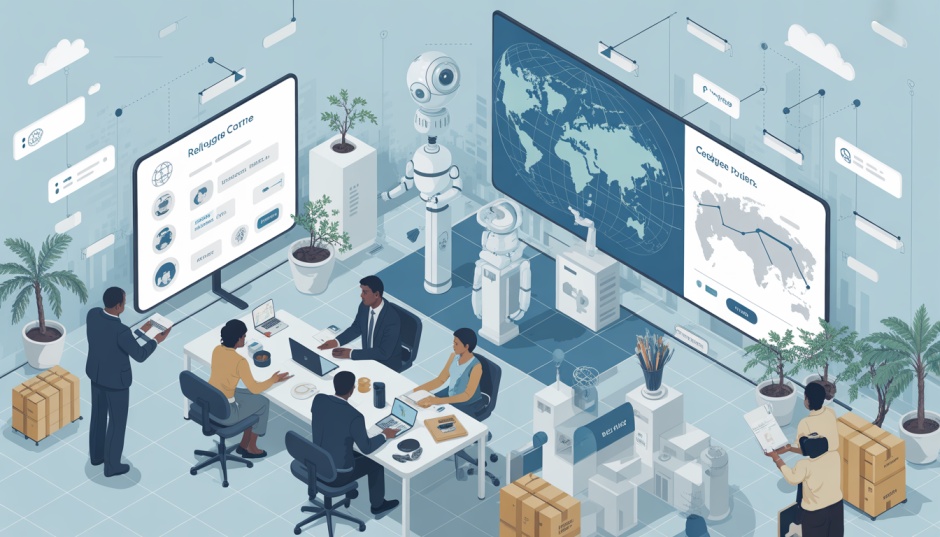
That model matters for every industry. The future of AI is not random automation. It is structured AI systems designed for specific tasks, monitored carefully, and aligned with human decision-making. This is the kind of AI implementation businesses need to understand if they want real value without reputational or operational risk.
Real Impact Beyond the Hype
One example from Bangladesh showed how a refugee mother who had lost access to food assistance was able to get help through InfoSheba, a local Signpost platform. Her case was quickly escalated to a human caseworker, and her food support was restored the same day.
This is where AI proves its value. It is not replacing compassion. It is accelerating access to it. By handling common requests, organizing information, and identifying urgent cases, AI allows human experts to focus where empathy and judgment matter most.
What Businesses Should Learn From Humanitarian AI
Many companies still approach AI as a trend instead of a capability. They experiment with tools but fail to build systems, governance, or workforce readiness. Humanitarian organizations operating in some of the world’s most difficult environments are showing a smarter path.
They are prioritizing trust, explainability, responsible deployment, and human oversight. If aid agencies can do this under crisis conditions, businesses can certainly do it in sales, HR, operations, finance, healthcare, logistics, and customer service.
The real competitive gap in 2026 is no longer access to AI tools. It is access to AI-ready talent.
Why AI Training Has Become Non-Negotiable
Organizations now need professionals who understand implementation, ethics, prompt design, governance, automation workflows, and strategic AI adoption. That is why structured training matters more than ever.
For businesses, training teams internally through certified partners is one of the fastest ways to scale AI skills across departments. Programs like the AI CERTs Authorized Training Partner (ATP) network help organizations and training providers deliver globally recognized AI certifications, practical learning paths, and workforce upskilling solutions aligned with real business needs. This creates a direct path from AI curiosity to AI capability.
Explore the ATP model here: https://www.aicerts.ai/authorized-training-partner/
The Bigger Message Behind This News
The humanitarian sector is often forced to innovate because the stakes are life-changing. When these organizations adopt AI carefully and successfully, the rest of the world should pay attention.
AI is no longer just about productivity gains or marketing automation. It is becoming infrastructure for decision-making, service delivery, and human support at scale. Those who train now will lead tomorrow.
FAQs
What is the Signpost program?
Signpost is a humanitarian information platform led by the International Rescue Committee that helps crisis-affected people access verified information on food, shelter, legal aid, healthcare, and education through digital channels.
How is AI being used in humanitarian aid?
AI is being used to answer common questions faster, organize requests, guide people to services, and escalate complex or sensitive cases to trained human staff.
Why is AI training important for companies?
AI tools alone do not create results. Teams need training in responsible use, workflows, implementation strategy, and governance to turn AI into measurable business value.
What is an Authorized Training Partner (ATP)?
An ATP is a certified training provider that delivers recognized AI certification programs, helping businesses and professionals gain job-ready AI skills through structured learning.
What is the biggest lesson from this news?
The biggest lesson is that AI works best when paired with human oversight, domain expertise, and proper training. Technology alone is not enough.
Disclaimer: Some content may be AI-generated or assisted and is provided ‘as is’ for informational purposes only, without warranties of accuracy or completeness, and does not imply endorsement or affiliation.


