

AI CERTS
3 hours ago
Chip Wars, AI Power Plays, and the Urgent Need for Global AI Training
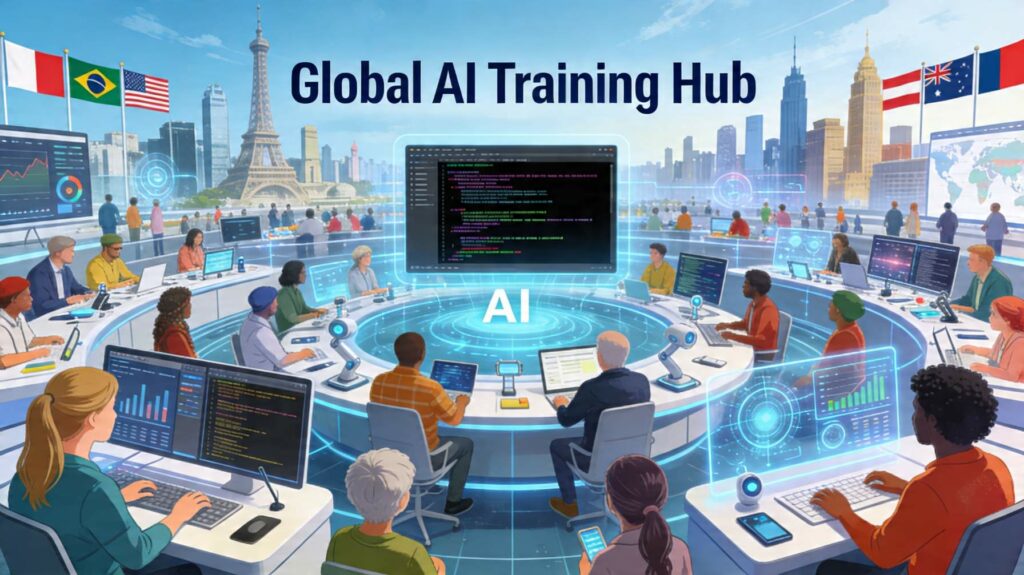
What emerges from this escalating rivalry is a stark realization AI leadership is no longer optional. It demands not only infrastructure and policy but also a workforce equipped with the right skills. In this evolving landscape, AI training is becoming the true differentiator between nations, organizations, and professionals.
The New Battlefield: AI Chips as Strategic Assets
Artificial intelligence runs on semiconductors, and today’s most advanced AI systems depend on highly specialized chips. These chips are not just tools they are strategic assets. Governments now view them as critical to national security, economic resilience, and technological leadership.
The United States has taken aggressive steps to restrict China’s access to advanced chips and manufacturing technologies. These export controls aim to slow China’s progress in AI, particularly in areas with military or surveillance applications.
However, the strategy is far from straightforward. While restrictions have disrupted China’s semiconductor ecosystem in the short term, they have also triggered an intensified push toward self-reliance. China is investing heavily in domestic chip production, accelerating innovation, and exploring alternative pathways to remain competitive.
At the same time, the global semiconductor supply chain remains deeply interconnected. Taiwan, for instance, produces the majority of the world’s most advanced chips, making it a geopolitical focal point in this technological rivalry.
A Race That No One Can Fully Control
Despite the U.S. efforts to maintain a technological edge, the reality is more complex. China is adapting quickly. Even with limited access to cutting-edge tools, it is leveraging older chip technologies, large-scale infrastructure, and cost efficiencies to build competitive AI systems.
One striking development has been China’s ability to train advanced AI models using less powerful hardware, challenging assumptions about the necessity of top-tier chips. This signals a broader shift: innovation is no longer solely dependent on access it is also about ingenuity and optimization.
Moreover, attempts to control the flow of technology are proving difficult. Chips can be smuggled, rerouted through third countries, or accessed via cloud infrastructure. The global nature of technology makes complete containment nearly impossible.
This creates a paradox. While restrictions aim to maintain dominance, they may also accelerate competition by forcing alternative innovation pathways.
The Real Bottleneck: Talent, Not Technology
Amid this high-stakes competition, one factor stands out as the ultimate bottleneck human capital.
Advanced chips and infrastructure can only deliver value when paired with skilled professionals who understand how to design, deploy, and scale AI systems. Without a trained workforce, even the most powerful technology remains underutilized.
This is where the narrative shifts. The AI race is not just about hardware supremacy; it is about building a talent ecosystem that can sustain innovation over time.
Countries that invest in AI education, upskilling, and professional training will hold a long-term advantage. Organizations that prioritize workforce readiness will outperform those that rely solely on technology acquisition.
Why AI Training Is Now a Strategic Imperative
The implications of the U.S.-China AI rivalry extend far beyond governments and tech giants. Businesses, institutions, and professionals are all impacted by this transformation.
AI is rapidly becoming embedded in every industry from healthcare and finance to manufacturing and marketing. As a result, the demand for AI-skilled professionals is skyrocketing.
However, there is a significant gap between adoption and expertise. Many organizations are implementing AI tools without fully understanding their capabilities or limitations. This leads to inefficiencies, missed opportunities, and increased risks.
Bridging this gap requires structured, industry-relevant training programs that go beyond theory and focus on practical application.
This is where initiatives like the Authorized Training Partner (ATP) program by AI CERTs play a crucial role. The ATP program enables training providers, institutions, and organizations to deliver globally recognized AI certifications, ensuring that professionals are equipped with real-world skills.
By partnering with ATP, organizations can not only upskill their workforce but also position themselves as leaders in AI education, contributing to a more resilient and future-ready ecosystem.
The Global Ripple Effect of the AI Chip War
The chip war is not confined to the United States and China it is reshaping the global economy.
Countries are reevaluating their supply chains, investing in domestic semiconductor production, and forming strategic alliances. Policies like the CHIPS and Science Act in the U.S. highlight the scale of investment required to remain competitive.
Meanwhile, businesses are navigating a rapidly changing landscape where access to technology, regulatory compliance, and geopolitical risks are becoming increasingly intertwined.
For professionals, this means one thing: adaptability is key. The ability to understand AI, interpret its implications, and apply it effectively will define career success in the coming years.
From Competition to Capability: The Way Forward
While the narrative often focuses on rivalry and competition, there is an equally important dimension—collaboration.
Historically, collaboration between global AI researchers has led to more impactful outcomes. Restricting knowledge flows may slow progress in the short term, but it could also limit the collective potential of innovation.
The challenge, therefore, is to strike a balance between competition and cooperation ensuring security while fostering progress.
For organizations and individuals, the path forward is clear. Investing in AI training is no longer optional; it is essential.
The winners of the AI era will not be those who simply adopt technology, but those who understand it, innovate with it, and continuously evolve alongside it.
FAQs
What is driving the AI competition between the U.S. and China?
The competition is largely driven by control over advanced semiconductor chips, which are essential for developing and deploying powerful AI systems. Both countries see AI as a critical factor in economic growth and national security.
Why are semiconductor chips so important for AI?
AI models require massive computational power, which is provided by specialized chips. The more advanced the chip, the faster and more efficiently AI systems can be trained and deployed.
Can export controls stop China’s AI progress?
Export controls can slow progress but are unlikely to stop it entirely. China is investing heavily in domestic innovation and finding alternative ways to develop AI capabilities.
How does AI training impact businesses?
AI training helps businesses maximize the value of AI technologies by ensuring employees have the skills to implement, manage, and innovate with these tools effectively.
What is the role of AI CERT's Authorized Training Partner (ATP) program?
The ATP program enables organizations to become authorized providers of AI training and certifications, helping them build skilled talent pipelines and stay competitive in the AI-driven economy.


