

AI CERTS
4 hours ago
SMRSC 2026: New Delhi Advances in Robotic Surgery
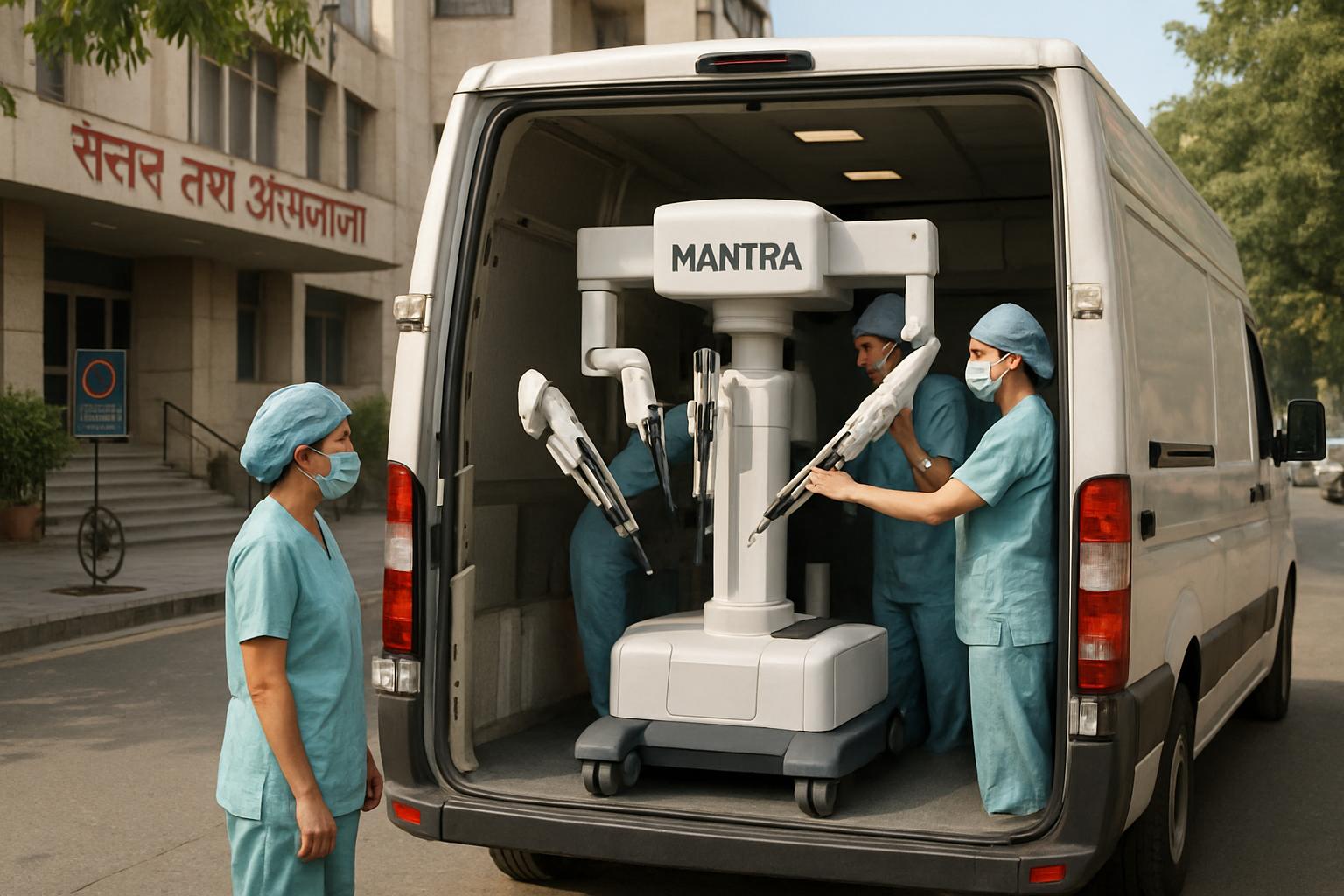
Moreover, SS Innovations will unveil portable Mantra consoles, a mobile operating bus, and even a drone-deployed trauma solution. These demonstrations aim to prove that advanced surgery need not remain confined to metropolitan centers.
Consequently, telecom providers, regulators, and cybersecurity experts are watching closely. Each group wants evidence that remote intervention can scale without compromising patient safety. Therefore, opening day conversations already explore network redundancy, encryption, and medicolegal responsibility.
Conference Highlights And Scale
SMRSC has grown rapidly since its 2024 debut. In 2025, Gurugram welcomed 1,400 in-person delegates and 600 virtual participants. This year, organizers forecast even higher attendance in New Delhi thanks to expanded specialty tracks.
Furthermore, the agenda lists 20 live telesurgeries, streamed through 5G and private fiber links. Surgeons will pilot the SSi Mantra system across cardiac, urology, and general surgery rooms. Consequently, the program promises a dense proof set for multi-specialty Robotic Surgery.
Meanwhile, company filings indicate a steady climb in telesurgery volumes. The firm logged 100 procedures by December 2025, 120 by year-end, and over 150 by March 2026.
These metrics underscore the conference’s strategic scale. However, technology infrastructure must match the clinical ambition. The next issue therefore centers on network performance and resilience.
Telecom Backbone Under Scrutiny
Low latency remains the lifeblood of remote Robotic Surgery procedures. Peer-reviewed studies warn that delays beyond 150 milliseconds erode surgeon dexterity. Moreover, jitter spikes can turn precise motions into unsafe tissue trauma.
SS Innovations claims sub-100-millisecond round trips during recent inter-hospital sessions. Engineers attribute this figure to redundant fiber rings, private 5G slices, and smart compression codecs. Nevertheless, on-site observers will monitor packet loss and failover in real time.
Academic literature recommends keeping round-trip delays below 100 milliseconds for intricate cardiac cases. Therefore, conference engineers will publish detailed telemetry after each session.
Telecom partners include Bharti Airtel and Reliance Jio for domestic circuits, plus a Starlink gateway for redundancy. Moreover, a portable microwave backhaul kit stands ready should fiber routes fail.
Consequently, each of the 20 live cases will double as a stress test for commercial networks. A single frozen frame could challenge investor confidence. In contrast, flawless feeds would validate the company’s scaling narrative.
Robust connectivity therefore underpins every promise made onstage. Yet security threats can undermine even perfect bandwidth. The conversation now turns to patient safety and cyber defense.
Cybersecurity And Patient Safety
Medical robots qualify as cyber-physical systems with direct human risk. Attackers could hijack instrument control, exfiltrate videos, or crash vital endpoints. Therefore, encryption, segmentation, and continuous monitoring are mandatory safeguards.
Company executives state that Mantra software undergoes third-party penetration testing twice annually. Additionally, device commands travel through TLS 1.3 tunnels with hardware root-of-trust validation. Independent auditors, however, have not yet published public summaries of those tests.
Independent researchers flag several credible attack vectors:
- Man-in-the-Middle packet injection
- Denial-of-service flooding of control channels
- Unauthorized firmware modification during updates
Clinicians can upskill on secure robotics protocols through the AI + Robotics™ certification. The coursework covers encryption standards, incident response, and medico-legal documentation.
Nevertheless, regulators in Indonesia and the Philippines granted tele-use clearance after reviewing internal safety data. Indian authorities likewise continue post-market surveillance through mandatory adverse event reporting. Consequently, real-world Robotic Surgery outcomes will inform future approvals.
Cyber defense therefore remains a moving target requiring industry transparency. The focus subsequently shifts to mobility and battlefield ambitions.
Mobile And Drone Concepts
SMRSC attendees examined the MantraM bus parked beside the venue. The vehicle houses a compact OR, telepresence cameras, and satellite backup links. Moreover, rural hospitals can lease the unit for scheduled outreach surgery days.
Meanwhile, the Vimana Aero drone concept drew mixed reactions. It carries miniature manipulators intended for field trauma stabilization before evacuation. Critics question whether autonomous flight can guarantee sterile conditions or stable bandwidth under fire.
Company founder Sudhir Srivastava argues that such platforms decentralize life-saving Robotic Surgery beyond static facilities. However, ethicists caution against normalizing combat deployments without multilateral oversight. These debates feed directly into regulatory deliberations.
Mobile and aerial options could expand access dramatically. Yet regulators must balance innovation with oversight. Therefore, legal frameworks deserve closer inspection next.
Regulatory And Ethical Landscape
Cross-border Robotic Surgery blurs traditional jurisdiction lines. Surgeons licensed in one country may operate on patients in another within seconds. Consequently, liability, consent, and data privacy rules need harmonization.
Indian authorities currently classify remote procedures as extensions of hospital practice agreements. Meanwhile, ASEAN regulators issue device rather than practitioner approvals. In contrast, the FDA still requires on-site console presence during clinical studies.
Furthermore, drone-based interventions introduce battlefield law and humanitarian protocols. Experts urge early collaboration with defense ministries and international bodies. Battlefield surgery scenarios complicate credentialing even further.
The World Health Organization is drafting guidelines on cross-border consent and data ownership for teleinterventions. Such recommendations could inform national statutes during 2027 licensing reviews.
Ethical clarity therefore underpins sustainable growth. Market forces now influence adoption trajectories and investor sentiment.
Market Impact And Outlook
SS Innovations reports 168 installed Robotic Surgery systems and 7,885 cumulative procedures. Production capacity sits near 20 units monthly, supporting aggressive geographic expansion. Moreover, tele-enabled features differentiate the platform from higher-priced incumbents.
Additionally, board member Dr. Fred Moll lends legacy credibility. Analysts observe that his presence tempers skepticism about a newcomer challenging entrenched leaders. Nevertheless, long-term success hinges on independently verified clinical outcomes.
Several investment funds based in New Delhi dispatched analysts to gauge traction. Meanwhile, public hospitals negotiate volume-based leasing plans rather than upfront purchases. Consequently, SS Innovations may experiment with per-procedure subscription tiers.
Key Numbers To Watch
- Surpassing 200 installed Mantra systems by Q3 2026
- Achieving 10,000 cumulative procedures before year end
- Publishing peer-reviewed outcomes comparing Robotic Surgery with open alternatives
- Securing FDA clearance for teleoperation in rural America
Consequently, each indicator offers investors quantitative proof of traction. These signals also guide hospitals evaluating capital budgets.
Professionals seeking to influence these metrics can enhance their expertise with the AI + Robotics™ certification. The curriculum covers data pipelines, control algorithms, and compliance best practices.
Market momentum appears promising yet contingent on sustained execution. The discussion therefore circles back to overarching lessons.
SMRSC 2026 has delivered ambitious demonstrations, rigorous debate, and hard numbers. Consequently, many stakeholders now view decentralized Robotic Surgery as an approaching standard rather than a distant vision. Nevertheless, sustained success will depend on audited outcomes, reliable networks, and clear ethics. Clinicians, engineers, and investors should therefore track published data throughout 2026. For readers seeking deeper involvement, consider earning the AI Robotics certification to gain technical and regulatory insight.


