

AI CERTS
3 hours ago
TCL’s Guangzhou AI Plant Redefines Smart Manufacturing
Consequently, annual capacity reaches an impressive eight million units. Yet questions about cost recovery and market demand persist among analysts. This article unpacks technology, economics, and sustainability behind the Guangzhou smart facility. Additionally, we outline broader implications for global manufacturers navigating the next automation wave.
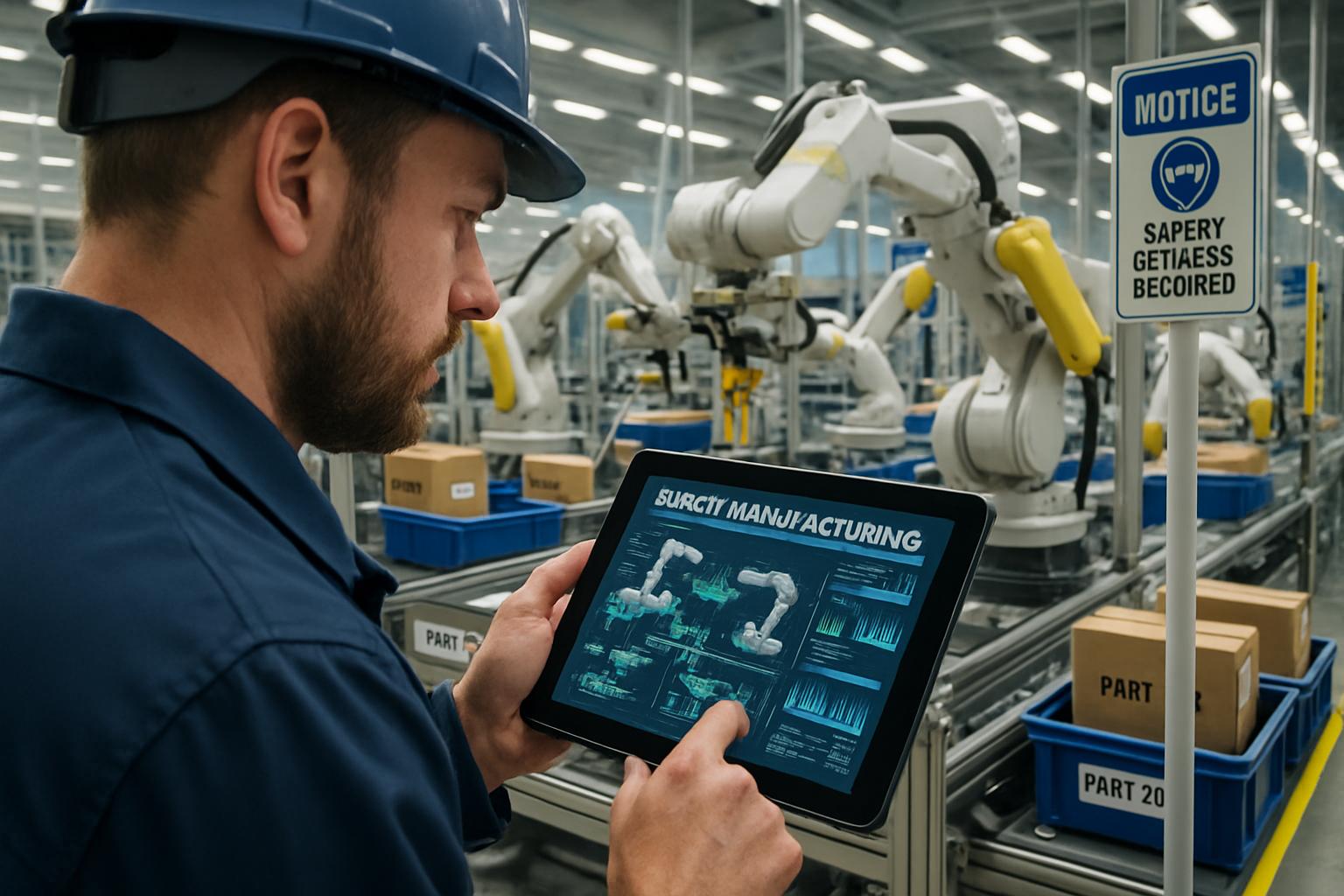
In contrast, rival appliance makers unveiled smaller lines over the past year. Therefore, Guangzhou sets a new regional benchmark for automated capacity. Stakeholders now assess lessons for upcoming investments worldwide. Future policies may hinge on the project's measured outcomes.
AI Factory Launch Details
Guangzhou officials welcomed the new factory as part of the city's advanced industrial cluster. Furthermore, TCL confirmed that three lights-out workshops run 24 hours through interconnected robots and AI agents. An on-site AI data center orchestrates over 2,000 agents, coordinating material flow, inspection, and packaging.
Therefore, the company positions the park as a Smart Manufacturing showcase that blends autonomy with scalable volume. In contrast, earlier TCL plants required larger human crews, underscoring the step change in Smart Manufacturing maturity. Machine vision cameras capture 100,000 images daily to refine detection models. Subsequently, data feeds train incremental models without halting the line.
These launch facts highlight unprecedented automation depth. However, market forces will determine ultimate success. Next, we examine the broader market context shaping this investment.
Strategic Global Market Context
Global air-conditioner demand sits near 140 billion dollars, according to Fortune Business Insights. Consequently, TCL's eight-million-unit capacity represents roughly six percent of projected 2026 shipments. Moreover, peers like Midea and Gree are expanding automated lines, intensifying Smart Manufacturing competition.
Analysts suggest premiumization drives margins as consumers seek healthier indoor air and connectivity. In contrast, North American demand shows slower growth as retrofit cycles lengthen. Nevertheless, rising temperatures in emerging markets contribute to sustained volume expansion. Currency fluctuations and tariffs could influence margin projections for exporters.
- Global shipments 130-185 million units, 2025 estimates
- TCL ranks third by sales volume worldwide
- Premium FreshIN models priced 15-20% above midrange peers
These figures contextualize Guangzhou capacity against global supply. Now, we turn to the plant's technical backbone.
Advanced AI Infrastructure Insights
Inside the campus, an AI supercomputing center runs digital twins, production schedules, and energy forecasts. Additionally, more than 2,000 AI agents inspect visual defects, optimize routes, and balance workloads. Consequently, the system adapts line speeds in real time, reducing unplanned stops.
Meanwhile, latency optimized networks connect sensors using the Time Sensitive Networking standard. Edge controllers process vibration data locally, reducing bandwidth needs to the core. TCL engineers report a 41.7 percent efficiency boost on the heat-exchanger line. Therefore, Smart Manufacturing algorithms underpin measurable gains in throughput and consistency.
Technical architecture shows scalable intelligence across stages. However, efficiency alone does not guarantee profitability. Efficiency metrics lead naturally to quality outcomes.
Efficiency And Quality Gains
Heat-exchanger accuracy improved via vision systems that guide micro-meter welding arms. Moreover, predictive maintenance models flag anomalies hours before failure, minimizing scrap and downtime. Company data claim one air-conditioner leaves the line every seven seconds under peak production. Meanwhile, the factory throughput sets a new internal record.
In contrast, older lines needed twenty seconds per unit, illustrating the gap. Such acceleration reflects Smart Manufacturing principles focused on lean flow and agile changeovers. Quality laboratories validate refrigerant charge levels using infrared spectroscopy within seconds. Additionally, barcode tracking links every compressor to material certificates for warranty analytics.
Throughput and defect reduction enhance gross margin potential. Next, sustainability credentials deserve equal attention.
Sustainability At Scale Effort
The park installs 50,000 square meters of rooftop solar panels. Additionally, an AI energy platform shifts loads to match photovoltaic output, cutting grid dependence. Consequently, the company estimates near-zero waste and significant carbon reduction compared with legacy factory layouts.
Smart Manufacturing standards increasingly incorporate environmental metrics, aligning efficiency with responsibility. Rainwater harvesting supplements process cooling, further reducing municipal water draws. Moreover, waste heat is reclaimed to run on-site absorption chillers for offices.
Green design bolsters brand equity and regulatory compliance. Nevertheless, financial risks remain.
Risks And Analyst Views
Independent analysts applaud automation yet caution about capital payback timelines. Moreover, concentrated capacity in Guangzhou exposes the firm to supply shocks and geopolitical friction. Labor unions also note potential displacement because lights-out cells require fewer operators.
Digital workforce programs reskill displaced operators into robotics maintenance within six months. Furthermore, academic partnerships with Guangzhou universities aim to replenish the AI talent pipeline. Analyst Victoria Chen warns utilization below 70 percent would stretch the balance sheet. Consequently, market acceptance of premium FreshIN features remains critical.
Risk factors temper the optimistic narrative. Therefore, industry peers must study lessons carefully.
Implications For Global Manufacturers
Competitors face mounting pressure to match AI orchestration and flexible production. Furthermore, suppliers may need digital twins to integrate smoothly with the Guangzhou ecosystem. Government planners could replicate similar parks to accelerate regional Smart Manufacturing adoption.
- Invest early in AI talent and upskilling
- Adopt modular lines for rapid model changes
- Collaborate on carbon accounting frameworks
Case studies from Japanese plants suggest payback accelerates when suppliers share real-time demand signals. Professionals can enhance expertise with the AI Supply Chain™ certification. Such credentials align with Smart Manufacturing capability expectations across advanced facilities.
Consequently, early adopters often secure preferential contracts as ecosystem standards mature. Collectively, these steps shorten adoption cycles. Meanwhile, strategic learnings circulate within global supply networks. Finally, we summarize key insights.
The Guangzhou launch illustrates Smart Manufacturing gains in scale, efficiency, and sustainability. Moreover, the AI backbone showcases real-time orchestration of agents, robots, and energy systems. Nevertheless, financial and employment risks warrant ongoing scrutiny from industry observers. Consequently, leaders should blend cautious investment with skill development and credible efficiency validation.
Download our market brief and explore relevant certifications to stay ahead in the AI manufacturing race. Moreover, continued collaboration between firms, academia, and regulators will refine governance frameworks. Such alignment accelerates technology diffusion while safeguarding workers and consumers. Stakeholders should monitor utilization metrics quarterly to gauge execution health. Regular audits will also validate environmental claims reported to investors.


