

AI CERTS
2 days ago
Microsoft’s Push Toward AI Self-Sufficiency Gains Steam
Bloomberg projects $650 billion in 2026 industry capex, with Microsoft contributing heavily. Therefore, stakeholders question the balance of risk and reward. This report unpacks Microsoft’s pivot, its superintelligence roadmap, and why "AI Self-Sufficiency" could redefine enterprise AI.
Microsoft Strategic Pivot Unfolds
OpenAI’s recapitalization granted Microsoft fresh flexibility. Subsequently, the firm created a dedicated MAI Superintelligence Team. Suleyman directs that elite group while Satya Nadella provides board-level cover. Furthermore, legal filings confirm Microsoft now holds roughly 27% of OpenAI PBC, valued near $135 billion. Nevertheless, executives insist control still demands homegrown models. "AI Self-Sufficiency" appears eight times in recent earnings calls, highlighting urgency. April 2026 demos of speech, transcription, and image models proved momentum.
These releases mark tangible progress. However, small engineering squads delivered them using fewer GPUs than rivals, according to VentureBeat. These early wins motivate additional investment. Consequently, observers expect faster cadence before year-end.
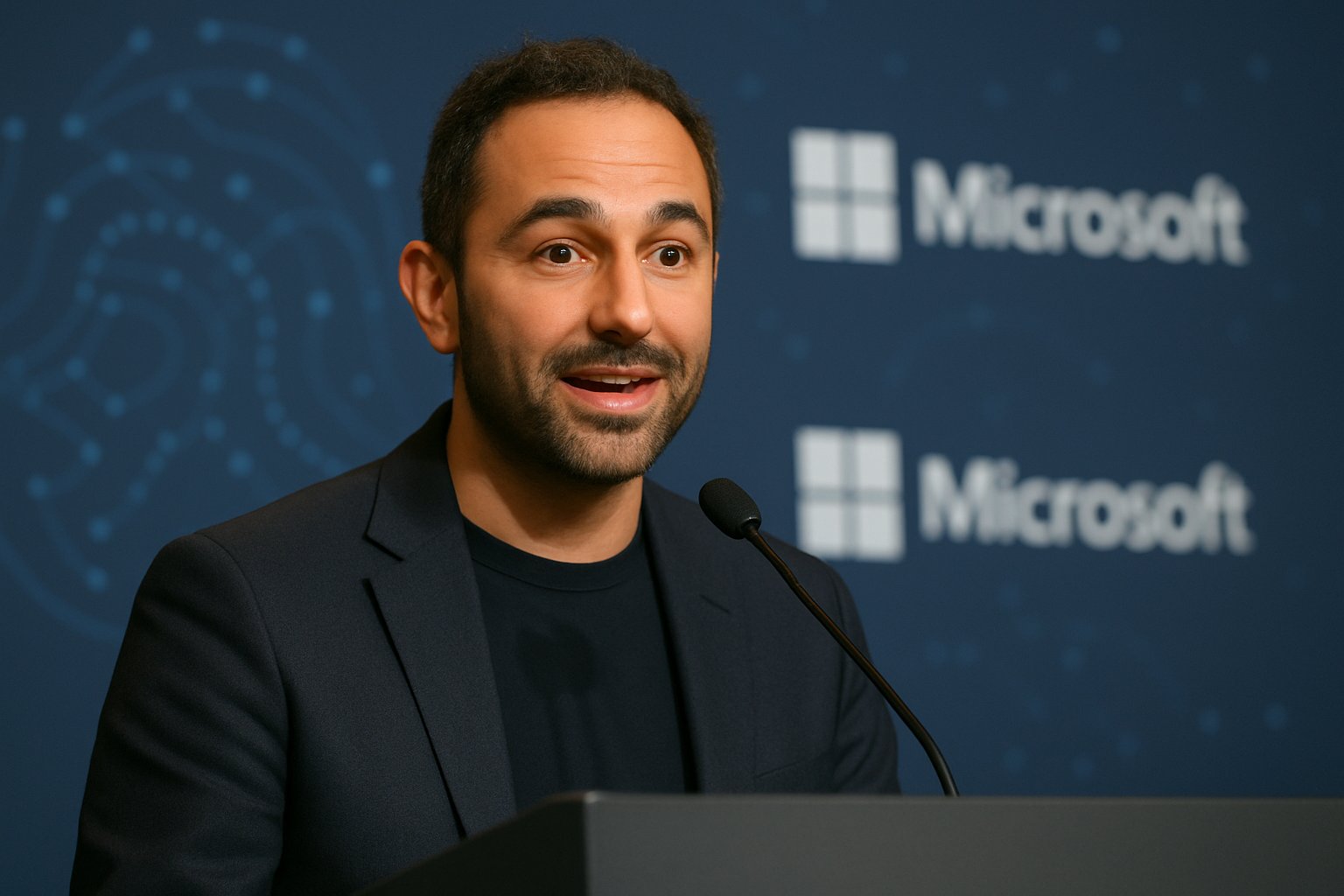
These milestones illustrate breakneck execution. Nevertheless, sustaining pace will test talent pipelines. The next section explores Suleyman’s guiding philosophy.
Superintelligence Vision Explained Clearly
Suleyman brands the target “Humanist Superintelligence.” In contrast to dystopian narratives, he emphasizes alignment and transparency. Moreover, Microsoft pledges independent audits and provenance tracking. "AI Self-Sufficiency" underpins that pledge by reducing external dependencies. Superintelligence, in company literature, simply means performance beyond general human capability. However, leadership insists models must remain steerable. Consequently, safety work receives equal billing with capability research. Suleyman told the Financial Times that gigawatt compute will be useless without public trust. His remarks frame ethics as competitive advantage.
Core Vision Pillars
- Containment: Systems must remain controllable under stress.
- Provenance: Training data requires lawful, auditable licensing.
- Governance: Enterprise clients want policy-grade controls.
- Self-sufficiency: Internal teams own every training stage.
Professionals can deepen expertise through the AI Foundation certification. These principles clarify strategic intent. However, executing them demands unprecedented infrastructure, discussed next.
Gigawatt Compute Ambitions Rise
Microsoft describes upcoming clusters as “gigawatt-scale.” Consequently, the firm negotiates multiyear power contracts and H100-class GPU allocations. Bloomberg notes the four largest U.S. tech firms plan $650 billion in 2026 capex. Furthermore, Azure regions continue expanding near low-carbon energy sources. "AI Self-Sufficiency" appears in internal memos describing those buildouts. Suleyman argues gigawatt capacity guarantees training freedom. Nevertheless, critics warn electricity costs could compress margins. Additionally, talent scarcity for large-scale optimization increases delivery risk. Microsoft counters by touting small, agile subteams that iterate quickly.
The following figures contextualize the scale:
- 27% stake in OpenAI worth roughly $135 billion.
- Three in-house MAI models launched April 2026.
- Industry-wide $650 billion capex forecast for 2026.
- Undisclosed GPU counts, yet described as “gigawatt-scale.”
These statistics reveal ambition and exposure. Consequently, investors track quarterly capex guidance closely. Next, we examine customer-facing benefits.
Benefits For Enterprise Customers
Latency, licensing, and governance dominate boardroom discussions. "AI Self-Sufficiency" lets Microsoft promise end-to-end control over each variable. Moreover, enterprise clients gain predictable pricing when cloud provider and model owner align. Consequently, regulated industries can demand stronger compliance guarantees. In contrast, reliance on external labs complicates audits. Additionally, Microsoft integrates MAI models directly into existing developer tooling. VentureBeat observes faster onboarding compared with competitor offerings. Finally, containment research reassures risk-averse buyers.
These advantages strengthen Microsoft’s cloud moat. However, they also intensify regulator interest. The following section explores emerging challenges.
Risks And Regulatory Scrutiny
Capital requirements pose the first hurdle. Nevertheless, investor appetite remains uncertain amid volatile tech valuations. Furthermore, GPU supply bottlenecks could delay model milestones. Antitrust authorities also watch Microsoft’s expanding control across stack layers. "AI Self-Sufficiency" may be framed as vertical integration, inviting probes. Moreover, safety advocates question whether commercial pressure eclipses ethical commitments. Semafor warns that containment promises demand independent verification. Suleyman acknowledges the tension yet argues transparency will mitigate backlash.
These concerns could slow deployments. However, clear milestones offer early warning signals, reviewed next.
Roadmap Indicators To Watch
Quarterly SEC filings reveal hardware leasing obligations and power contracts. Consequently, analysts parse those documents for signal. Product velocity offers another indicator. Moreover, external audits of alignment performance will show whether safety keeps pace. "AI Self-Sufficiency" should appear in upcoming Azure marketing during Ignite 2026. Additionally, talent flows from DeepMind, Anthropic, and academia will influence schedule reliability.
Tracking these metrics grants stakeholders foresight. The concluding section considers wider ecosystem impacts.
Implications For AI Ecosystem
Rivals now weigh similar independence moves. Consequently, hardware vendors anticipate fierce bidding wars. Moreover, cloud customers may enjoy diversified offerings as labs disentangle. "AI Self-Sufficiency" thus reshapes bargaining power across the supply chain. Suleyman’s narrative also pressures competitors to foreground safety. In contrast, smaller startups might differentiate through specialization rather than scale. Finally, regulators could standardize audit frameworks, leveling expectations globally.
These dynamics suggest accelerating fragmentation. However, informed professionals can adapt through continuous learning.
Consequently, Microsoft’s campaign for "AI Self-Sufficiency" reaches beyond corporate strategy. It redefines capital allocation, safety governance, and customer expectations. However, execution risks remain material. Professionals should monitor capex disclosures, audit results, and talent moves. Meanwhile, acquiring foundational knowledge becomes essential. Therefore, consider pursuing the AI Foundation certification to stay competitive in an increasingly self-sufficient AI landscape.


