

AI CERTS
5 hours ago
Hardware Supply Crunch Delays High-Memory Mac mini Shipments
This situation exposes a fragile Hardware Supply chain where even the world’s richest device maker lacks leverage. Meanwhile, TrendForce notes conventional DRAM contract prices jumped about 60 percent quarter-over-quarter. Therefore, analysts warn the squeeze could persist well into 2027. Professionals planning deployments, creative workflows, or always-on agents must understand the root causes, market signals, and practical workarounds. The following analysis unpacks the timeline, commercial impact, and potential paths forward.
Memory Crisis Key Timeline
January 2026 delivered the first warning shots. Moreover, viral growth of OpenClaw local-AI agents triggered a spike in compact Mac demand. Apple order pages initially slipped by days, then weeks. Subsequently, March headlines revealed the 512 GB Mac Studio option quietly vanished. By early April, high-memory Mac Studio configurations displayed four-to-five-month windows.
Similarly, upgraded Mac mini variants reported six-to-eighteen-week waits. Meanwhile, Apple’s January earnings call admitted rising memory costs would pressure gross margins this quarter. Industry tracker TrendForce later confirmed DRAM contract prices soaring by about 55 percent. Consequently, the timeline shows a rapid escalation from isolated bottlenecks to systemic Hardware Supply disruption.
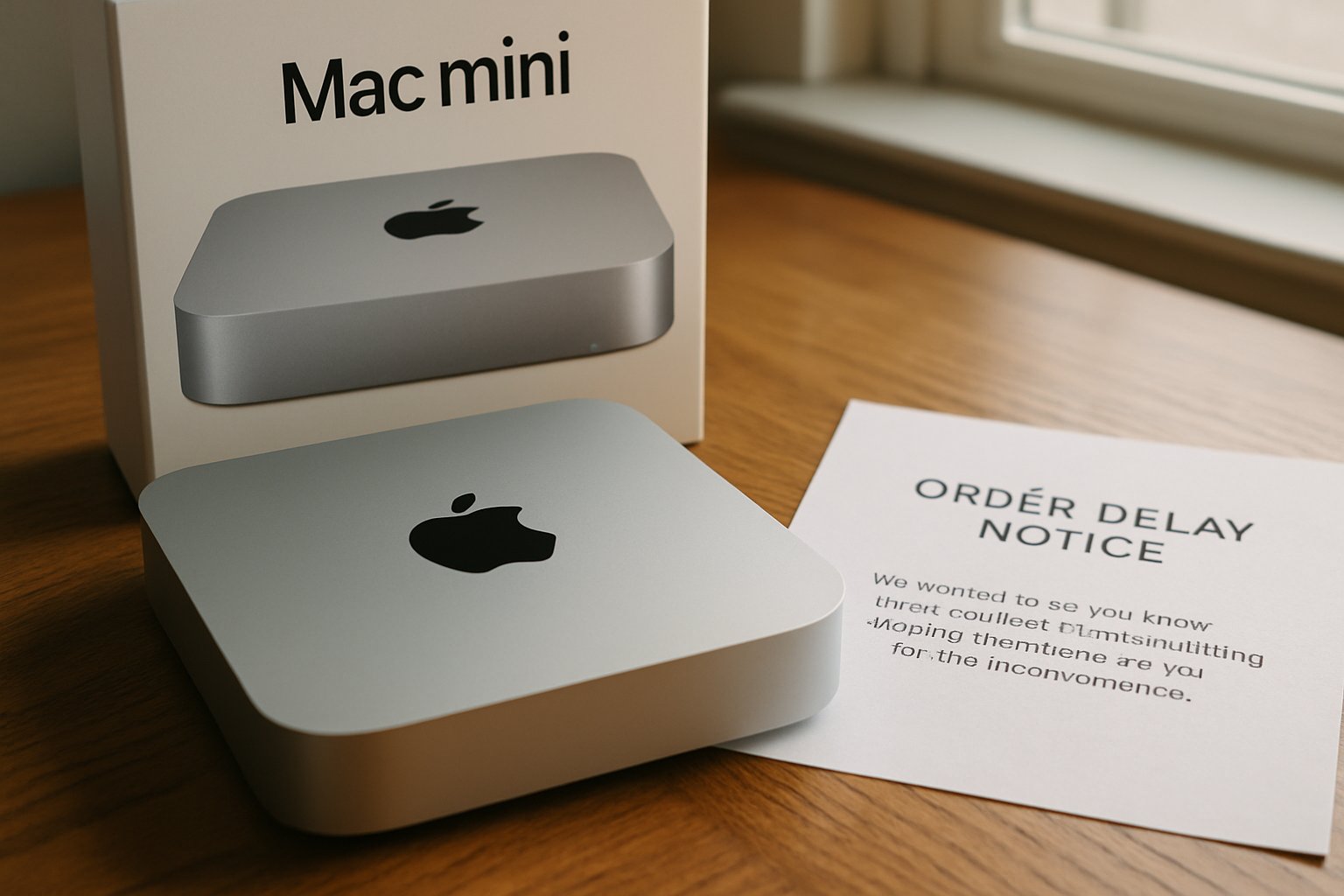
These milestones document accelerating constraints. However, deeper drivers explain why relief remains elusive.
AI Demand Driving Crunch
Artificial intelligence workloads reshape semiconductor priorities. Consequently, Samsung, SK hynix, and Micron are diverting wafer capacity toward lucrative High-Bandwidth Memory for hyperscaler accelerators. Conventional DRAM, the lifeblood of Apple’s unified memory, receives fewer production slots. In contrast, consumer notebooks lack bargaining strength compared with cloud giants locking multi-year contracts. Furthermore, every compact Mac ships with soldered memory, preventing aftermarket upgrades and magnifying the pinch.
OpenClaw users insist on 32 GB or 64 GB builds to host multiple local models, intensifying orders for premium SKUs. Therefore, limited die output meets explosive niche enthusiasm, producing a cascading Hardware Supply mismatch.
The AI pivot siphons fabrication capacity. Consequently, Apple’s strategy faces mounting execution risks outlined next.
Apple Strategy Under Strain
Apple touts tight vertical integration. Nevertheless, memory packaging choices now restrict flexibility. Each M-series SoC bonds RAM directly to the substrate. Consequently, Apple cannot retrofit capacity when chips exit the foundry. Moreover, dropping the 512 GB Mac Studio option suggests internal rationing. Retail partners also see scattered stock patterns, indicating allocation triage.
Tim Cook conceded that memory prices had “minimal impact” last quarter but signaled wider margin erosion ahead. Meanwhile, extended customer delays risk reputational harm and defer revenue recognition. Therefore, analysts expect Apple to renegotiate supply contracts or even pre-pay for critical Hardware Supply guarantees.
Apple’s design brilliance meets supply reality. However, market data quantifies the challenge more clearly.
Market Data And Forecasts
Numbers paint a stark picture. TrendForce projects traditional DRAM contract prices climbing another 30 percent next quarter. Additionally, inventory weeks hover near record lows. Spot prices for standalone RAM modules already mirror the jump. The firm believes scarcity may linger until new fabs ramp in 2027. Meanwhile, Apple’s top Mac Studio memory configuration now shows 120- to 150-day lead times on the US store. Upgraded small desktops average 60 days, although anecdotal reports stretch longer. Furthermore, many regional resellers impose surcharge premiums approaching 25 percent. Consequently, procurement teams confront unprecedented Hardware Supply volatility and cost swings.
- DRAM contract prices: +55-60 percent QoQ (Q1 2026).
- HBM allocation share: ~35 percent of total memory wafer starts.
- Mac Studio 128 GB delivery: 4-5 months.
- Mac mini 32 GB delivery: 6-18 weeks.
- Average resale premium: 15-25 percent over list.
These figures underscore systemic pressure. Nevertheless, consumers still possess tactical options covered below.
Consumer Options And Workarounds
End-users facing urgent projects can sidestep part of the gridlock. Firstly, selecting lower-memory SKUs often reduces Apple.com delays from months to weeks. Secondly, checking physical Apple Stores or authorised dealers can reveal stray inventory. Moreover, short-term rental services now market pre-configured Mac mini nodes for OpenClaw workloads. Professionals can also optimise models to run within 16 GB RAM when feasible, lowering immediate hardware needs. Additionally, capacity planning teams should forecast higher utilisation to justify fewer units. Professionals can enhance their expertise with the AI Supply Chain™ certification, gaining insight into resilient Hardware Supply strategies.
Practical steps ease individual pain points.
In contrast, analysts still debate root-cause weighting, explored next.
Diverging Analyst Risk Views
Experts interpret the crunch through different lenses. Some view it as a pure supply-side shortage born of fab reallocation. Others highlight demand timing, noting Apple may purposely cool channels before new model launches. Furthermore, social-media hype can trigger panic purchases, amplifying perceived delays and feeding reseller dynamics. Nevertheless, TrendForce maintains that structural under-investment in commodity DRAM lines remains decisive. Consequently, consensus suggests relief will require both capacity additions and softer AI server demand. Until then, Hardware Supply fragility will persist.
Debate clarifies possibilities yet action remains necessary.
Therefore, we examine the long-term outlook.
Long Term Supply Outlook
New memory fabs demand billions and at least eighteen months of construction. Meanwhile, hyperscalers still issue purchase orders for 2027 HBM allocations. Moreover, Samsung and SK hynix prioritise those contracts, leaving consumer DRAM investors cautious. TrendForce believes supply-demand balance may normalise late 2027, barring macro shocks. Therefore, procurement leaders should institutionalise multi-source contracts and consider pre-payment clauses.
Apple may also negotiate strategic stockpiles to shield future desktop launches. Additionally, platform engineers could redesign enclosures to accept modular RAM, although that conflicts with performance goals. Consequently, sustained planning remains the only antidote to repeated Hardware Supply crises and associated shortage fears.
Long-range measures promise eventual stability.
Nevertheless, current buyers must navigate uncertainty until equilibrium returns.
The RAMpocalypse reveals intricate links among AI innovation, commodity memory economics, and Apple’s design choices. Consequently, high-memory Mac mini and Mac Studio units face extended delays and price premiums. However, careful SKU selection, rentals, and workload optimisation can soften near-term impacts. Moreover, professionals should monitor TrendForce price data and Apple order pages weekly to adapt procurement. Strategic learning, including the previously mentioned certification, empowers teams to anticipate Hardware Supply turbulence.
Proactive policies safeguard future Hardware Supply ecosystems. Ultimately, thorough planning and continuous market intelligence transform a daunting shortage into a manageable risk. Explore further insights and certification pathways today to stay ahead.


