

AI CERTS
5 hours ago
Seestar S30 Pro: Consumer AI Optics Revolution
Furthermore, buyers pay under $600, undercutting larger rivals drastically. This article unpacks specifications, software, market context, and early field reports for technical readers. Additionally, it assesses strengths, limitations, and growth signals driving the smart telescope segment. Stay until the end for professional development resources and next steps.
Consumer AI Optics Market
Global demand for accessible astrophotography keeps rising. Therefore, vendors race to combine cameras, mounts, and processors in seamless bundles. The phrase Consumer AI Optics describes a growing niche that merges imaging hardware with edge computing. Analysts estimate double-digit growth through 2030, although unit figures remain scarce. Moreover, traditional optics brands now chase startups that tested the waters first.
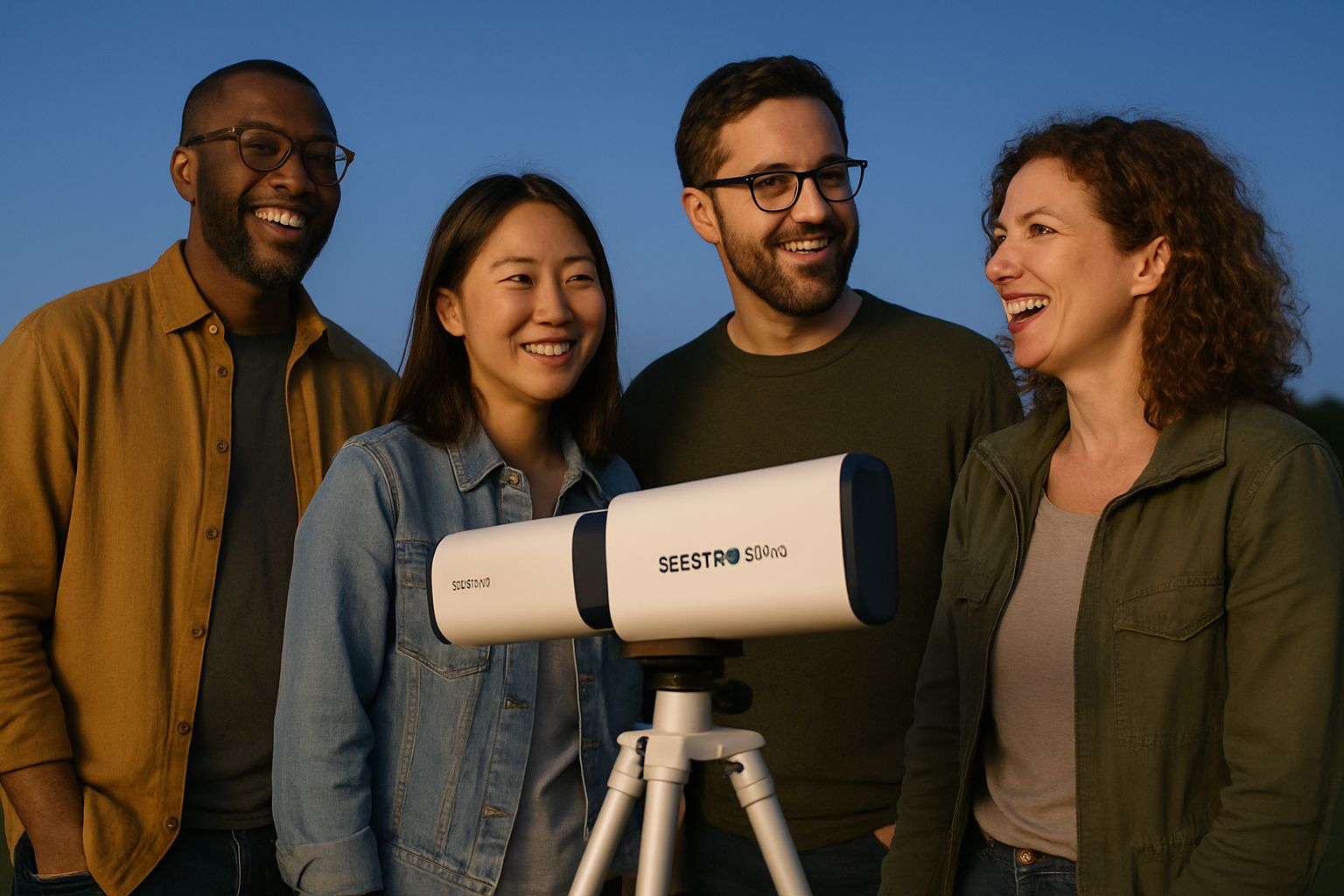
ZWO, Unistellar, Vaonis, and DWARFLAB occupy distinct price tiers. In contrast, Celestron and Sky-Watcher integrate smartphone control into classic tubes. Consequently, buyers enjoy unprecedented choice, yet confusion follows. Smart telescope definitions vary, while marketing exaggerations persist.
Market momentum appears solid, yet data gaps hinder exact forecasts. Nevertheless, product diversity signals sustained innovation ahead.
With market context framed, attention now shifts to the hardware underpinning the S30 Pro.
Hardware And Optics
Hardware choices determine real-world results. Furthermore, component prices dictate margins in this value segment.
- Optics: 30 mm aperture, 160 mm focal length, f/5.3, ED quadruplet design.
- Cameras: Telephoto Sony IMX585, Wide Sony IMX586, both output 4K resolution.
- Field of view: Tele 4.6°, Wide 63°, supporting 8K Milky Way mosaics.
- Mount: Integrated alt-az with GoTo; optional wedge enables equatorial tracking.
- Storage and power: 128 GB eMMC, 6,000 mAh battery delivering 5–6-hour sessions.
The hardware foundation supports Consumer AI Optics methods that rely on silent, embedded processors. Moreover, the entire assembly weighs just 1.65 kg, easing travel and setup. Seestar engineers balanced portability against light-gathering compromises. Consequently, the small aperture limits faint-object reach compared with larger rigs.
The spec sheet confirms a careful cost-performance balance. However, software now drives most practical gains.
The next section explains how onboard algorithms upgrade each captured frame.
Imaging Software Enhancements
Sophisticated firmware transforms modest optics into credible imaging systems. Subsequently, automatic plate solving aligns the Seestar telescope within seconds. Live stacking then combines dozens of 10-second exposures, boosting signal without guiding hardware. Additionally, the app offers one-tap 8K Milky Way panoramas by mosaicing wide-field tiles. This Consumer AI Optics workflow removes manual calibration overhead.
Reviewers from Digital Camera World praise the updated denoise pipeline. Meanwhile, AstroBackyard finds equatorial mode essential for round stars in longer shots. In contrast, earlier S30 firmware lacked these refinements.
Software efficiency offsets hardware limits to a large extent. Therefore, user experience depends on both code quality and update cadence.
Consequently, competitive analysis helps gauge whether those advantages hold against rival platforms.
Competitive Position Analysis
The S30 Pro lists at $599, disrupting higher brackets. Moreover, Consumer AI Optics principles keep recurring cost low because processing happens onboard, not in cloud servers.
Unistellar Odyssey boasts a 114 mm mirror and deeper reach, yet costs several thousand. Vaonis Vespera sits between, trading aperture for style. Meanwhile, DWARFLAB promotes extreme portability but sacrifices resolution. Therefore, Seestar positions itself as an advanced entry step for hobbyists wanting pro touches without debt.
Community posts indicate backorder delays and minor firmware glitches. Nevertheless, buyers praise value, especially when early-bird coupons applied. Retail feedback shows steady demand that strains initial production runs.
Price leadership offers a powerful lure, though supply challenges may erode goodwill. However, user impressions still trend positive overall.
Understanding field impressions requires diving into actual deployment stories.
User Experience Insights
Hands-on testers highlight quick setup taking under three minutes. Additionally, NFC pairing eliminates manual Wi-Fi passwords. AstroBackyard measured five-hour sessions before battery warnings emerged, validating manufacturer claims.
However, small 2.9 µm pixels demand careful exposure balancing to avoid clipped highlights. Early firmware produced faint halos around bright stars; ZWO patched the issue within weeks. Subsequently, equatorial mode delivered crisp ten-minute stacks that rivaled larger scopes in social media posts.
Professionals can deepen expertise with the AI+ Researcher™ certification. Moreover, the curriculum covers algorithm evaluation methods that mirror techniques used inside Consumer AI Optics devices.
User reports confirm strong ease-of-use and rapid firmware support. Consequently, technical buyers gain confidence despite minor launch hiccups.
Next, we weigh the unit's leading strengths against unavoidable trade-offs.
Strengths And Limitations
Advantages center on portability, price, and dual-sensor flexibility. Furthermore, Consumer AI Optics processing reduces dependence on external computers. Live stacking and automatic mosaicing save hours of manual editing.
Limitations relate to physics. In contrast, a 30 mm aperture gathers far less light than 4-inch telescopes. Therefore, very faint nebulae remain challenging targets. Additionally, equatorial mode introduces alignment steps that break the one-button promise.
Nevertheless, reviewers still call the S30 Pro the best smart telescope for budget conscious enthusiasts. Seestar benefits from ZWO’s imaging pedigree, ensuring future firmware refinement.
Strengths outweigh drawbacks for many hobbyists. However, informed buyers should match expectations to aperture realities.
Finally, broader market forecasts reveal where innovation could head next.
Future Growth Outlook
Analysts predict rising integration between mobile chips and optical blocks. Consequently, future Consumer AI Optics systems may leverage neural accelerators for real-time deconvolution.
ZWO hinted at modular accessories, including larger lenses that could mount onto the existing base. Meanwhile, rivals explore subscription services for deep-sky databases. Moreover, educational partnerships might bundle certifications like the AI+ Researcher™ to build ecosystems.
Smart telescope growth ties into wider STEM outreach trends. Therefore, price pressure will remain intense, favoring producers with agile supply chains.
Innovation seems poised to accelerate through both hardware and curriculum links. Subsequently, buyers should monitor firmware roadmaps and accessory releases.
Seestar’s S30 Pro illustrates how Consumer AI Optics democratizes astrophotography through clever silicon and software. The device merges dual sensors, plate solving, and stacking inside a travel-friendly chassis. Moreover, competitive pricing broadens access while retaining upgrade paths like equatorial tracking. Nevertheless, limited aperture caps ultimate depth, and early shipping pains surfaced. Consequently, professionals evaluating the platform should weigh project requirements against its sweet-spot strengths.
Additionally, continued firmware updates and community feedback promise refinement. Interested readers can reinforce technical acumen through the earlier linked AI+ Researcher™ certification. Embrace these tools now, and capture the next clear sky with confidence.


