

AI CERTS
4 hours ago
Infrastructure Finance: PIMCO’s $14B Oracle Data Center Bet
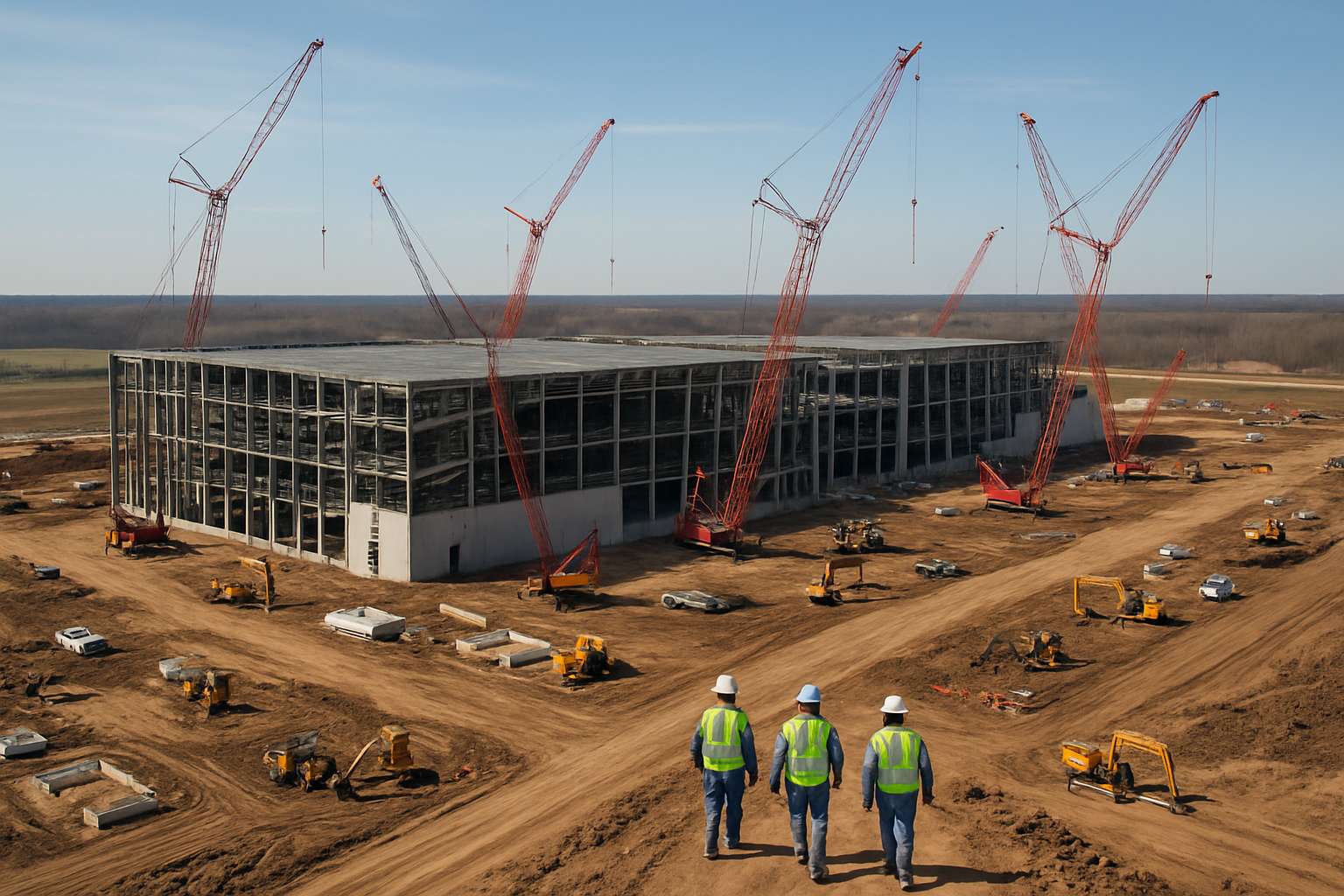
Investors have seen rising volumes of similar offerings since 2025.
However, the Michigan campus would still rank among the top five single-asset data-center financings ever recorded.
Market observers therefore view the talks as a barometer for private credit appetite.
Moreover, local regulators and community groups are watching water and power impacts.
This article unpacks the mechanics, motivations, and risks behind the possible transaction.
Readers will gain a clear map of players, structures, and emerging legal questions affecting future Infrastructure Finance deals.
Mega Debt Deal Details
Analysts say the contemplated facility would dwarf most recent bond prints.
The $14 billion slice would likely sit inside a special purpose vehicle created by Related Digital.
Moreover, Bank of America may act as initial purchaser, distributing tranches among insurance companies and pension funds.
Consequently, PIMCO could retain a large anchor position while selling smaller tickets to peers.
The instrument may qualify as Rule 144A, allowing faster execution than a registered offering.
In contrast, Meta’s Hyperion package used a similar route yet totaled almost twice the size.
Nevertheless, the Michigan campus would still command one of the decade’s largest Infrastructure Finance allocations.
Key statistics illustrate the scale:
- Reported PIMCO commitment: $14 billion
- Total Saline Township financing: $16 billion
- Comparable Meta Hyperion debt: $27 billion
These numbers confirm unprecedented momentum for private credit in digital infrastructure.
Therefore, stakeholders perceive the proposed issuance as a watershed test for liquidity.
The magnitude also influences pricing power and covenant negotiations.
Collectively, the figures signal rising private credit appetite.
However, the structural mechanics deserve closer attention.
Funding Structure Mechanics Overview
Project sponsors typically create a bankruptcy-remote SPV to issue securities.
Consequently, Oracle keeps the liabilities off its consolidated balance sheet while committing to long-term lease payments.
Meanwhile, investors gain collateral in the physical facility and contracted cash flows.
The proposed Michigan financing would likely start as a short construction loan, often called a mini-perm.
Subsequently, once servers reach steady utilization, the loan can be refinanced into longer-term bonds.
Moreover, a Rule 144A placement offers speed because it targets Qualified Institutional Buyers who accept lighter disclosure.
Therefore, arrangers can close multi-billion offerings in weeks, not months.
However, the securities remain less liquid than fully registered bonds, which could raise exit risk for PIMCO.
SPV Bankruptcy Shield Explained
The SPV structure shields Oracle from construction liabilities.
In contrast, lenders rely on a mortgage over the campus and a direct pledge of rental income.
Consequently, credit ratings depend less on Oracle’s unsecured profile and more on lease tenor and termination clauses.
Infrastructure Finance analysts review booked but not billing commitments to forecast coverage ratios.
Nevertheless, inaccurate load predictions can force borrowers to refinance before stabilization, triggering covenant stress.
These structural nuances cap off the section.
They underscore why documentation matters for yield and risk distribution.
Next, market trends show how similar terms gained popularity.
Broader Market Context Trends
Since early 2025, hyperscaler expansions have pushed private credit volumes to record highs.
Furthermore, one legal brief tallied at least $121 billion in AI data-center bond issuance during 2025 alone.
Moreover, banks arranged packages of $38 billion and $18 billion to fund separate Oracle sites last year.
Consequently, Infrastructure Finance has become a competitive arena for asset managers seeking fixed yields tied to digital assets.
PIMCO previously participated in Meta’s $27 billion Hyperion facility, reportedly booking paper gains near $2 billion.
In contrast, BlackRock, Apollo, and Blue Owl have focused on mezzanine tranches with higher coupons.
Therefore, investor composition now spans mutual funds, insurance accounts, and opportunistic private equity vehicles.
Debt ratings range from investment grade to single-B, depending on lease coverage and power contracts.
Nevertheless, agencies have flagged concentration risk when a single borrower dominates a portfolio.
These market dynamics establish context for evaluating the pending Michigan issuance.
Yet, specific risk factors warrant isolated scrutiny, which we examine next.
Key Risks Under Scrutiny
Legal advisers caution that off-balance SPV liabilities may obscure true leverage.
Furthermore, residual value guarantees can force tenants to cover gaps if equipment becomes obsolete earlier than expected.
Moreover, construction delays or grid constraints could trigger cost overruns and covenant breaches.
Debt investors therefore monitor booked-but-not-billing utilization metrics each quarter.
In Michigan, water consumption and community opposition remain active regulatory flashpoints.
Nevertheless, project documents reviewed by Bloomberg suggest long-term supply contracts with DTE Energy secure initial capacity.
Rating agencies may still impose downgrade triggers tied to completion tests and refinancing milestones.
Consequently, PIMCO could demand step-up coupons or cash sweeps if performance lags.
Infrastructure Finance veterans warn that liquidity dries quickly once secondary spreads widen.
These risk vectors frame critical due-diligence questions.
Next, community perspectives illuminate additional hurdles.
Local Impact Debate Intensifies
Saline Township officials fast-tracked zoning last winter, citing economic development priorities.
However, environmental groups argue the campus could strain regional water tables and raise carbon intensity.
Moreover, local residents have sought detailed disclosure of power contracts and tax abatements.
Consequently, the township board scheduled additional hearings before issuing the final building permit.
Oracle representatives emphasize long-term job creation and broadband improvements.
In contrast, skeptics note that construction employment wanes after the initial phase.
Nevertheless, a forthcoming community benefits agreement may incorporate funding for road upgrades and training programs.
These negotiations illustrate how Infrastructure Finance intersects with social license considerations.
Such alignment efforts set the stage for the final strategic assessment.
Strategic Takeaways Moving Forward
Deal participants are racing to close before rate volatility returns.
Furthermore, early execution secures construction slots and power interconnection windows.
Consequently, the lead lender must balance speed with diligence around completion tests.
Analysts suggest locking in longer tenor coupons if Treasury yields decline later this year.
Moreover, diversification across multiple tranches could mitigate concentration risk for credit funds.
In that scenario, Infrastructure Finance proves most resilient when structures include ample cash sweeps and covenant headroom.
Nevertheless, secondary liquidity remains thinner than traditional corporate bonds.
Therefore, investors should demand transparency on lease break clauses and residual value caps.
These strategic themes summarize the transaction’s larger implications.
Next, the article concludes with key reminders and actions.
Conclusion
Today’s mega campus illustrates how private credit now underwrites critical AI infrastructure.
Moreover, the Saline Township deal displays unprecedented ticket sizes.
Nevertheless, layered SPV and 144A structures demand meticulous diligence from investors, lawyers, and regulators.
Market precedent shows that timelines, power availability, and community sentiment can pivot outcomes quickly.
Therefore, professionals should continually refresh project-finance skills and regulatory awareness.
Ambitious readers can deepen their knowledge through the AI Cloud Architect™ certification.
Take action now and position yourself at the forefront of next-generation capital projects.


