

AI CERTS
5 hours ago
AI Growth Limits: Karen Hao’s Scale Debate
Consequently, debates about resource use, labor rights, and governance have intensified worldwide. This article unpacks Hao's argument, surveys supporting evidence, and presents counterpoints from industry leaders. Furthermore, it outlines practical steps toward responsible innovation without stalling technical progress. Readers will leave informed about environmental, human, and geopolitical stakes surrounding the current scale race.
Meanwhile, fresh statistics clarify why revisiting AI Growth Limits has become a boardroom imperative. The following sections examine costs, alternatives, and governance proposals in depth.
Rising Costs Of Scale
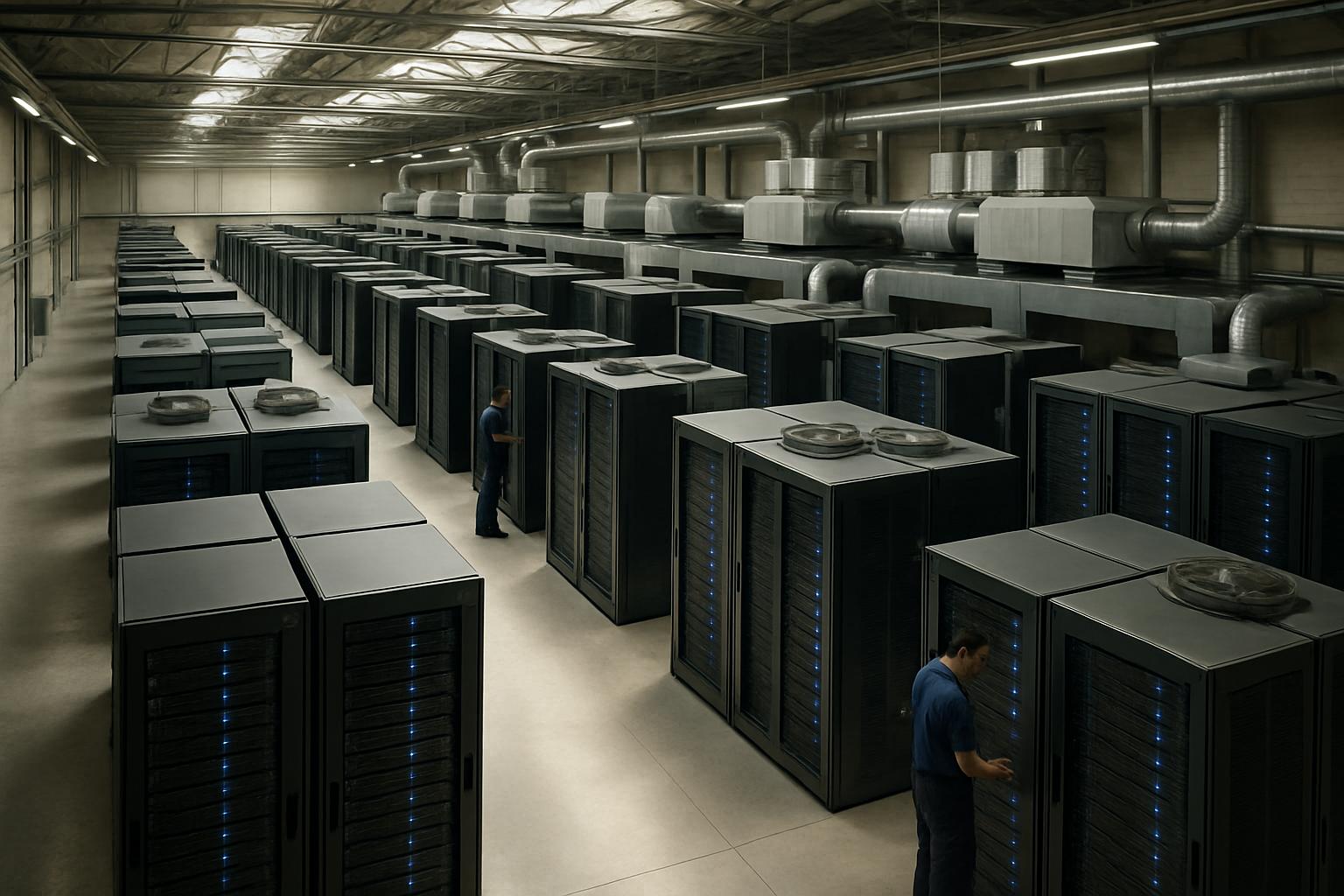
Scaling laws promise predictable gains by increasing parameters, compute, and data volume. Scale remains the organizing mantra for OpenAI, Google, Meta, and their cloud backers. Moreover, the author's reporting lists trillion-dollar infrastructure visions and multi-gigawatt compute targets.
IEA figures place current data center electricity near 400 TWh, about two percent of global supply. Consequently, additional gigawatt campuses would deepen grid stress unless paired with massive renewable investments. Tim Wu's New York Times review labels these ambitions "mega-hyperscale", highlighting concentration risks.
Operating costs also extend to water, minerals, and local tax incentives that shift burdens onto communities. Therefore, financial returns accrue centrally, while environmental costs disperse globally.
These figures underscore heavy physical demands behind the glossy software narrative. However, resource intensity foreshadows harder AI Growth Limits if unchecked. Meanwhile, labor impacts reveal equally pressing human costs.
Hidden Human Labor Toll
Ghost work keeps conversational agents polite, safe, and marketable. However, the people delivering that invisible service often earn under two dollars an hour. The author cites Kenyan annotators who reviewed disturbing content for less than thirteen dollars daily.
Privacy International corroborates such accounts with worker surveys across multiple platforms, including Remotasks and Sama. Moreover, annotated data flows northward while wages stay south, reinforcing colonial dynamics. Consequently, psychological trauma compounds financial precarity.
Critique of this labor pipeline sits at the heart of Hao's book and tour. She argues that ignoring these realities accelerates approaching AI Growth Limits through social backlash. Therefore, any sustainable roadmap must factor human well-being.
Low wages and trauma expose the hidden subsidy propping current deployments. Nevertheless, executives claim the system offers opportunity and scale. Environmental metrics offer another lens on that dispute.
Environmental Footprint Numbers Explained
IEA, LBNL, and other researchers document rising electricity and water demand from AI workloads. Furthermore, projections suggest server electricity demand could triple by 2030 if current growth persists. Such expansion risks breaching regional drought thresholds, especially in Chile and the American Southwest.
- 400 TWh: estimated 2025 server electricity consumption worldwide.
- 1-2%: share of global power the sector already consumes.
- 3x: projected demand growth by 2030 without major efficiency gains.
One modeled scenario adds an extra 1.5 percent to global emissions, according to independent energy analysts. Moreover, Greenpeace warns that fossil electricity still powers many hyperscale hubs despite corporate neutrality pledges.
Experts advise integrating on-site renewables, heat reuse, and demand response before approving new permits. In contrast, some vendors push ahead without comprehensive impact studies.
Energy and water metrics indicate environmental ceilings already in sight. Therefore, technical success alone cannot override planetary budgets. Industry viewpoints attempt to counter these warnings.
Arguments From Industry Executives
Executives at OpenAI and Microsoft emphasize benefits delivered by large language models. However, they argue that scaling remains the clearest engineering path to safer, more capable systems. They cite empirical scaling laws showing error reductions as parameters and data grow.
Moreover, spokespeople highlight efficiency gains from custom silicon and immersive cooling. Consequently, they predict carbon intensity per inference will fall even as total volume rises. Critique of those forecasts centers on rebound effects, where relative savings spur absolute growth.
Executives also point to educational, medical, and accessibility advances unlocked by generative tools. Nevertheless, they seldom disclose full lifecycle numbers, citing competitive confidentiality.
Industry leaders defend expansion as a public good aligned with shareholder duty. However, unanswered questions about labor and environment persist. Alternative technical strategies illustrate possible compromise paths.
Smaller Models Alternative Path
The author repeatedly cites AlphaFold as evidence that task-specific systems can deliver outsized impact. Moreover, such focused models train on curated data sets, reducing compute and annotation overhead. Researchers at DeepMind and nonprofit labs echo that approach, emphasizing domain knowledge over raw scale.
Consequently, smaller architectures demand fewer GPUs, less water, and lower electricity budgets. Critique of this route notes potential brittleness outside the chosen domain. Nevertheless, supporters argue modular combinations of small models could match broad tasks while respecting AI Growth Limits.
Evidence suggests leaner models offer meaningful capabilities without hyperscale baggage. Therefore, diversified research agendas can hedge systemic risk. Governance proposals seek to embed those insights into policy.
Governance And Worker Protections
Policymakers across the EU and United States debate mandatory impact assessments before green-lighting new compute clusters. Furthermore, civil society coalitions push for living wage floors in annotation contracts. Several draft bills reference AI Growth Limits as justification for moratoria when energy or labor thresholds breach set levels.
Meanwhile, emerging certification schemes promise transparency and accountability. Professionals can enhance their expertise with the AI Writer™ certification. Consequently, buyers could favor vendors that meet audited social and environmental criteria.
Labour advocates also demand whistle-blower protections for contractors inside annotation supply chains. In contrast, some governments propose tax incentives tied to renewable performance metrics. Effective enforcement remains a moving target, yet momentum is building.
Robust regulation and market standards can slow harmful acceleration. Nevertheless, coordinated action across borders will prove decisive. A strategic outlook is therefore essential.
Moving Forward With Responsibility
Technical ambition need not wane under tighter constraints. Moreover, aligning incentives around efficiency, fairness, and transparency can unlock durable prosperity. Companies that recognize imminent AI Growth Limits will adapt early and avoid costly retrofits.
Investors should request audited lifecycle disclosures before approving budget expansions. Meanwhile, researchers can widen method portfolios, pairing scaling laws with small-model experimentation. Consequently, society can enjoy innovation while honoring planetary and human boundaries.
In summary, environmental strain, hidden labor, and political backlash converge to define looming AI Growth Limits. Nevertheless, diversified research, stringent governance, and ethical procurement can redirect the sector. Therefore, decision-makers should assess capacity needs honestly, invest in renewable infrastructure, and compensate annotators fairly. Professionals ready to lead that transition can validate their capabilities through the AI Writer™ credential. Act now, adopt responsible principles, and channel innovation toward shared prosperity.


