

AI CERTS
2 days ago
Predictive Analytics Validates Telematics Crash Scores
Consequently, fleet managers hope earlier warnings will lower crash risk and unlock cheaper premiums. The concept excites every mobility stakeholder, from OEMs to ESG officers. However, independent analysts still question whether the underlying model performs as advertised. This article examines the product mechanics, commercial evidence, and validation gaps that now define the debate. Furthermore, we outline strategic considerations for fleets investing in AI scoring tools. Each insight draws on public filings, partner statements, and industry research reviewed in April 2026.
Telematics Market Momentum
Telematics adoption already spans personal lines, commercial fleets, and shared mobility platforms. Moreover, insurers now embed real-time data feeds into dynamic underwriting cycles. Market reports from Juniper Research predict over 100 million connected commercial vehicles by 2030. Consequently, competitive advantage shifts toward vendors who transform raw coordinates into actionable scores. Predictive Analytics delivers that transformation by linking historic driving patterns with future loss probabilities. In contrast, traditional actuarial pricing relies on coarse proxies like postcode or age bands. Greater Than positions itself within this momentum, promoting a scoreboard that scales across 106 countries.
Subsequently, partnerships with Geotab, ABAX, and Fuse Fleet extend reach into diverse geographies. Industry observers note that global applicability appeals to multinational risk managers facing multiple regulatory environments. Nevertheless, geographic breadth does not automatically guarantee statistical robustness. External validation remains essential when algorithms migrate across traffic cultures. These market forces create fertile ground; however, they also heighten scrutiny over proof of effectiveness.
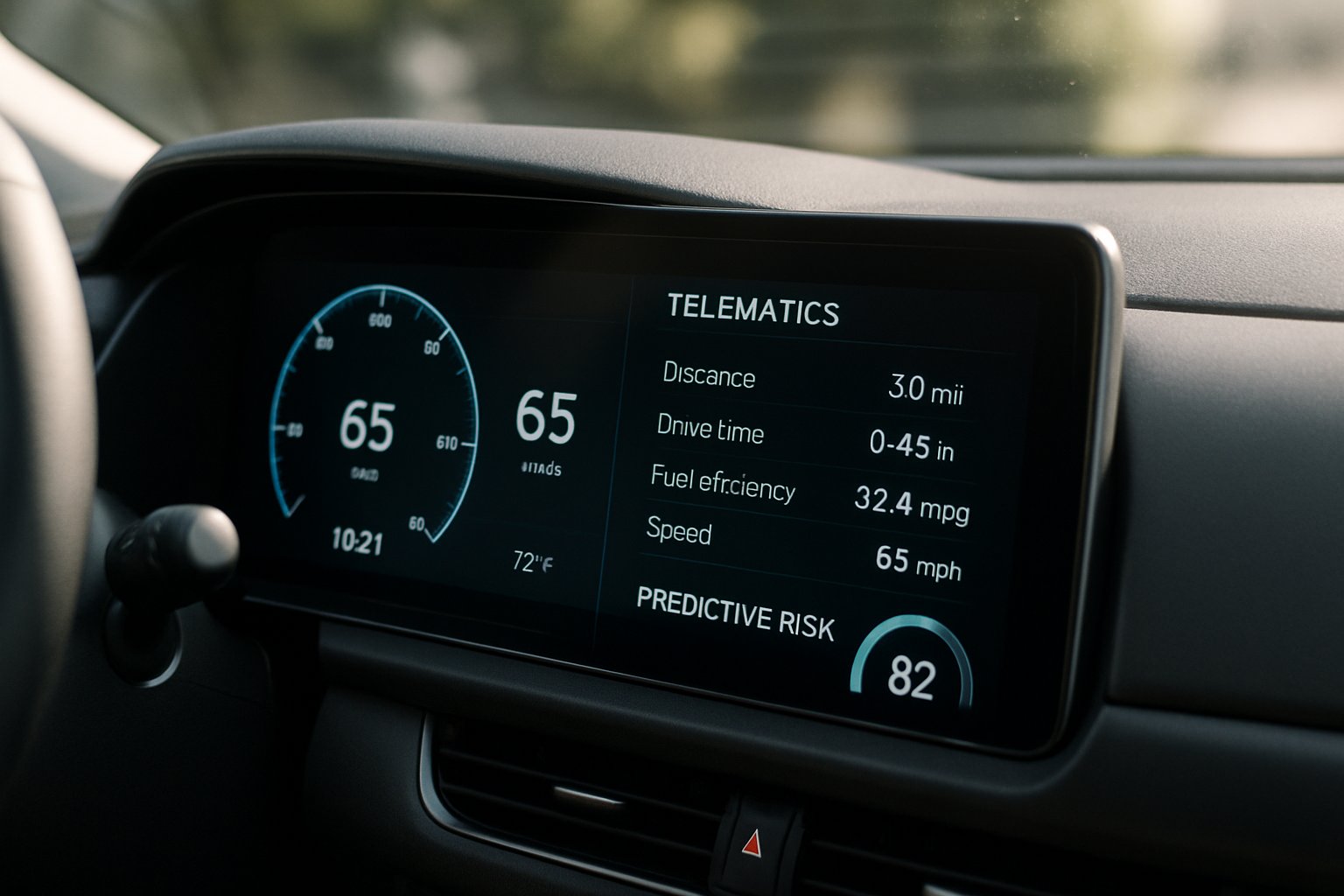
In short, telematics demand is soaring while expectations for scientific evidence climb in parallel. The next section dissects how Greater Than converts a single trip into a numeric warning.
Scoring Model Mechanics
The Crash Probability Score operates on second-by-second GPS traces. Firstly, proprietary pattern recognition segments each trip into maneuvers like harsh braking or aggressive cornering. Secondly, those segments match a library of seven billion historical driving patterns. Consequently, similarity metrics assign a risk percentile before mapping that value onto a 1–15 scale. Scores above 11 indicate elevated crash risk, while scores below five suggest safer behavior. Greater Than asserts that global average clusters around nine to ten. Moreover, the company touts an ability to produce reliable numbers after only one kilometre of data.
Predictive Analytics underpins this rapid inference, compressing high-frequency signals into representative embeddings. Meanwhile, a newly launched AI Coach surfaces real-time tips when thresholds are breached. Partners report driver engagement rises when feedback appears within minutes. However, the vendor has not published AUC or calibration plots that typically accompany mature scoring models. Without those metrics, outside experts cannot confirm whether probabilities align with observed crash frequencies. Standard practice demands holdout datasets and external cohorts to measure generalization.
Therefore, the scoring pipeline looks sophisticated yet still resembles a black box to independent reviewers. The following cases explore commercial outcomes claimed by early adopters.
Commercial Deployments Evidence Overview
Real-world partnerships provide the strongest marketing ammunition for Greater Than. Fuse Fleet in Australia claims collision frequency dropped roughly 50% after rollout. Additionally, press coverage states that 70% of paid claims involved drivers with high scores. ABAX created a connected insurance brand named Fair that embeds the score into pricing. Waylens integrates video telematics to contextualize risky maneuver alerts. Consequently, fleet managers receive combined visual and numerical insights.
Industry articles attribute lower loss ratios to prompt coaching and policy incentives. However, confounding factors complicate the narrative. Fleets often introduce parallel safety programs, adjust maintenance schedules, or replace vehicles during pilots. In contrast, rigorous impact studies would randomize exposure and control for selection biases. Predictive Analytics can deliver measurable value, yet only controlled designs can isolate its contribution. Nevertheless, commercial stories illustrate growing confidence among early adopters.
- 7 billion driving patterns in training database
- 106 countries represented in historical data
- 1–15 numeric scale for driver score
- 15% of drivers linked to 50% of crashes
- Reported 50% collision reduction at Fuse Fleet
Predictive Analytics Market Role
Collectively, these anecdotes attract attention from mobility insurers and regulators alike. Next, we evaluate whether published validation matches the marketing narrative.
Validation Transparency Key Questions
Independent validation decides whether sophisticated mathematics translates into trustworthy predictions. Therefore, actuarial bodies demand disclosure of discrimination and calibration metrics. Commonly reported values include ROC-AUC, Brier scores, and lift charts. Greater Than references extensive testing but withholds numerical details from public documents. Moreover, no peer-reviewed paper evaluates the algorithm on an external holdout cohort. Consequently, insurers cannot benchmark performance against rival risk vendors. Crash risk models often drift when traffic laws, weather, or vehicle mixes shift.
External audits help detect such degradation before loss ratios spike. Nevertheless, the company promotes endorsements from European research grants and motorsport programs. Stakeholders still require hard numbers to satisfy regulators and board committees. Professionals can enhance their expertise with the AI Customer Service™ certification, gaining skills to interrogate algorithmic claims. Eventually, transparent reporting may become a prerequisite for procurement in safety-critical mobility services.
Validation remains the unresolved centerpiece of the debate. The following section assesses ethical and regulatory dimensions connected to opaque scoring.
Regulatory And Ethical Stakes
Governments increasingly scrutinize algorithmic underwriting for fairness and privacy compliance. GDPR grants drivers the right to explanation when automated scores influence coverage. Predictive Analytics systems must therefore document features, training data lineage, and bias controls. In contrast, legacy rating factors already undergo decades of judicial review. Telematics introduces high-resolution mobility traces that reveal work locations and personal habits. Consequently, data minimization and encryption become non-negotiable safeguards. Ethicists also warn of socioeconomic bias when exposure proxies correlate with income or ethnicity.
Crash risk scores could inadvertently penalize urban couriers facing dense traffic. Moreover, calibration drift across vehicle classes may disadvantage electric vehicle adopters. Regulators may require third-party audits similar to solvency stress tests. The vendor might pre-empt mandates by voluntarily releasing performance dashboards. Nevertheless, early dialogue with policymakers often eases adoption curves.
Ethical compliance now intertwines with competitive positioning. Operators must translate these high-level principles into concrete procurement checklists, explored next.
Strategic Takeaways For Fleets
Fleet managers evaluating AI scoring should begin with clear outcome definitions. Subsequently, request AUC, calibration, and subgroup statistics covering at least one recent year. Benchmark those numbers against internal loss data before piloting subscriptions. Predictive Analytics implementations succeed when integrated with coaching, maintenance, and incentive programs. Moreover, assign accountability by naming champions in operations, safety, and finance.
Use small controlled trials to isolate contribution and avoid confounding variables. In contrast, rolling out to every driver immediately masks causal relationships. Crash risk insights should feed directly into training schedules and policy deductibles. The best pilots iterate thresholds weekly, keeping communication transparent. Finally, compare vendor performance annually to guard against model stagnation.
These tactics convert enthusiasm into measurable returns. They also prepare organizations for emerging standards on algorithmic disclosure.
The telematics boom shows no sign of slowing. Nevertheless, vendors must pair marketing claims with rigorous science. Predictive Analytics proves powerful only when transparent, calibrated, and externally verified. Improved fleet safety demands more than glossy dashboards and press releases. Consequently, buyers should insist on published metrics before embedding Predictive Analytics scores into premiums.
Professionals ready to challenge vendors can deepen their AI governance skills through the earlier linked certification. Take action now, request the data, and drive evidence-based adoption across your organization.


