

AI CERTS
3 hours ago
Speech Recognition War: Microsoft MAI Challenges Whisper
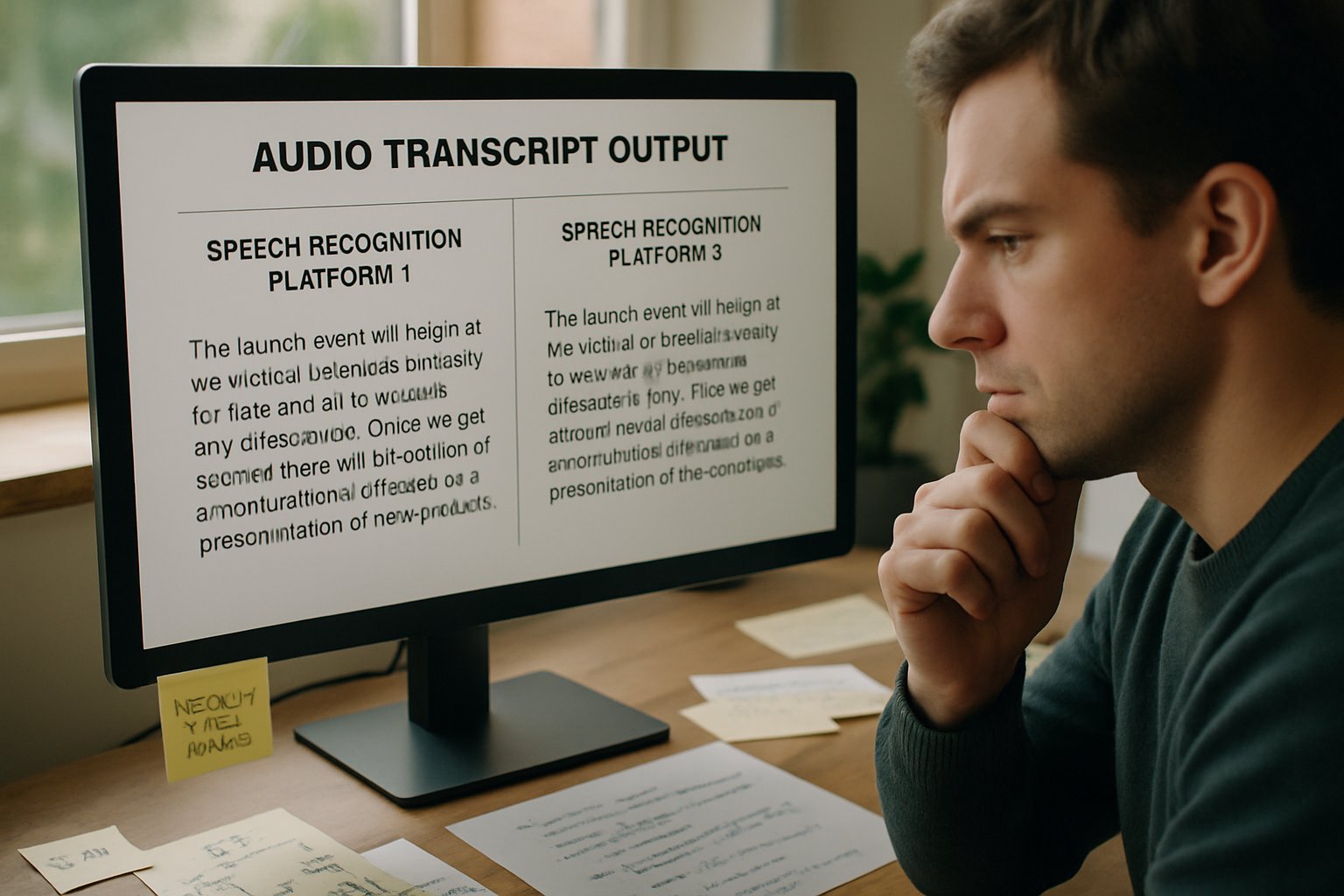
Microsoft positions its release as both efficient and affordable, promising $0.36 per audio hour at 2.5× previous speeds. Benchmarks cite a 3.8% average Word Error Rate on the FLEURS Benchmark, yet experts urge caution.
In contrast, independent tests report slightly different scores, showing dataset influence. Therefore, technical buyers must understand metrics, hidden costs, and roadmap gaps before switching vendors.
This article dissects the unfolding Speech Recognition War, compares claims to evidence, and offers a practical action plan for enterprise teams.
Global Market Stakes Intensify
Global transcription spend already tops billions annually. Moreover, hybrid work and multilingual media push demand higher each quarter.
Microsoft wants that volume routed through Azure, locking workloads into its cloud. Simultaneously, OpenAI, Google, and startups chase the same prize.
Mustafa Suleyman asserts that MAI models deliver top accuracy while using half the GPUs of rivals. In contrast, Whisper’s open weights still lure developers seeking flexibility.
Consequently, pricing pressure grows. The 0.36-dollar rate undercuts many legacy vendors and signals an aggressive move in the Speech Recognition War.
These dynamics reveal huge revenue at stake and rapid vendor jockeying. However, raw numbers require careful validation before procurement.
Vendor rivalry fuels innovation; still, measurement standards decide winners. Transitioning to performance claims, we examine Microsoft’s data next.
Microsoft Performance Claim Details
Microsoft’s launch materials feature dense tables and bold graphics. Additionally, the model card spotlights three headline metrics: accuracy, speed, and cost.
The company’s framing positions MAI-Transcribe-1 as a decisive weapon in the Speech Recognition War.
- Average 3.8% WER on the FLEURS Benchmark across 25 languages
- Batch throughput reportedly 2.5× faster than previous Azure Fast tier
- Price fixed at $0.36 per audio hour during preview
Furthermore, ArtificialAnalysis recorded a 3.0% AA-WER and 69× real-time throughput during independent tests. Nevertheless, metric definitions differ, making direct comparison tricky.
Microsoft also touts GPU efficiency, crediting an optimized Text Decoder that runs mixed-precision kernels on recent hardware. Consequently, Azure can transcribe more minutes per GPU hour than before.
Additionally, the revised Text Decoder shortens latency during complex acoustic spans.
Supporters argue these figures place Microsoft ahead in the Speech Recognition War. Yet critics warn that read-speech datasets exaggerate performance.
Benchmarks do suggest leadership, yet nuanced evaluation matters. Real speed gains look promising across lab setups. Moving on, we contrast hype with messy real-world audio.
Benchmark Hype Versus Reality
Academic literature repeatedly shows that clean corpora mislead buyers. For instance, the FLEURS Benchmark uses scripted, studio-grade recordings.
Therefore, enterprise meeting audio with crosstalk and compression often produces double or triple the reported WER.
Independent researchers exposed similar gaps for Whisper and MAI alike. Nevertheless, vendors continue headline marketing.
In contrast, some firms now run small pilots before full migration. Teams score WER, latency, and Text Decoder stability on their own samples.
Such disciplined testing neutralizes noise around the ongoing Speech Recognition War.
Accuracy varies by language, domain, and microphone quality. Consequently, buyers must measure what matters. Next, we explore cost calculus.
Enterprise Cost Impact Analysis
Pricing often decides tooling choices once models reach comparable accuracy. Microsoft leverages Azure billing to simplify procurement.
Moreover, the $0.36 rate lowers archival transcription budgets for media houses and call centers.
GPU efficiency amplifies savings because infrastructure scales linearly with minutes processed. Consequently, enterprises processing millions of hours may save seven figures annually.
However, hidden costs remain. Network egress, storage, and compliance reviews can erode headline savings.
Many finance leaders now model three scenarios: peak season volume, multilingual expansion, and regulatory audits.
Such exercises keep spending predictable during the protracted Speech Recognition War.
Cost analysis clarifies budget impact. Hidden charges can still surprise finance teams. Subsequently, we examine how integration accelerates adoption.
Strategic Product Integration Paths
Microsoft controls channels where transcription surfaces. Copilot Voice, Teams, and Outlook all sit inside Azure identity walls.
Therefore, MAI-Transcribe-1 can ship to millions without separate contracts. Moreover, Microsoft promises streaming and diarization updates soon.
Partner developers access the same backend through Foundry APIs. Consequently, migration from Whisper to MAI involves a single endpoint swap for many workflows.
Integration breadth reinforces Microsoft’s stance in the Speech Recognition War.
These built-in pathways reduce friction significantly. Nevertheless, vendor lock-in worries persist. Finally, we outline practical selection steps.
Choosing The Right Model
Engineering leaders face multiple variables when selecting an ASR engine. FLEURS Benchmark scores offer an initial filter, yet they remain insufficient.
Entering the Speech Recognition War without data invites regret.
Experts recommend a structured pilot following this checklist:
- Collect 10-50 hours of representative, noisy audio
- Run MAI, Whisper, and another contender through the same Text Decoder layer
- Measure WER, latency, cost, and qualitative hallucinations
- Document per-language gaps and security constraints within Azure environments
Subsequently, teams should align results with downstream analytics and regulatory needs. Moreover, professionals can enhance evaluation skills with the AI Prompt Engineer™ certification.
Those steps equip teams to navigate the Speech Recognition War with evidence rather than hype. Additionally, they prepare negotiators to secure favorable terms.
Methodical pilots settle debates faster than press releases. Therefore, disciplined testing concludes our analysis.
These best practices empower informed choices. Nevertheless, continuous monitoring ensures performance remains acceptable after deployment. We now distill core lessons.
Key Takeaways Moving Forward
MAI-Transcribe-1 advances multilingual accuracy, boosts speed, and cuts price. However, benchmark wins require contextual verification.
Consequently, enterprises should validate on representative audio and weigh integration benefits against potential lock-in.
Moreover, disciplined pilots safeguard budgets and reduce downstream rework. Continuous monitoring remains vital because speech domains evolve.
Professionals seeking deeper evaluation skills can pursue the AI Prompt Engineer™ credential.
Adopt evidence-based processes, build transparent scorecards, and revisit metrics quarterly. These habits convert competitive marketing into measurable value.
Act now: design your pilot, gather data, and lead your organization confidently into the next era of voice technology.


