

AI CERTS
2 months ago
Bloomberg’s Financial AI Tools Redefine Analyst Workflows
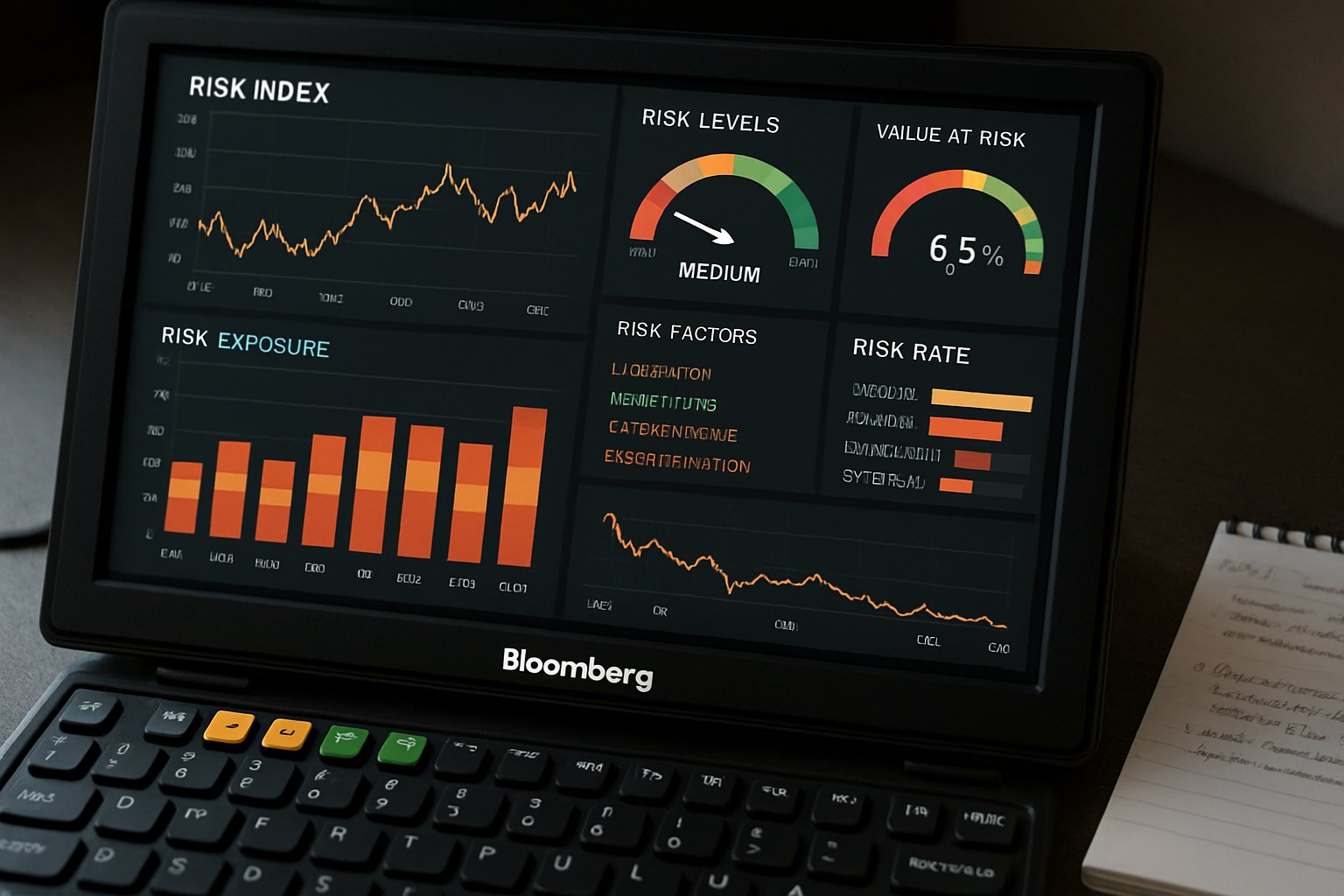
Market Adoption Shift Accelerates
April 2025 marked the first wave of deployment. Meanwhile, Bloomberg announced AI-Powered Document Insights on 7 April. That release covered more than 200 million company documents plus daily News stories. Subsequently, buy-side testers claimed dramatic time savings.
Magdalena Richardson cited tariff research that previously lasted thirty minutes but now ends in seconds. In June, Bloomberg doubled corpus claims to 400 million items with Document Search & Analysis. Such scale highlights fierce momentum in Financial AI Tools adoption. However, headline metrics invite scrutiny because figures shifted within two months.
Industry News outlets flagged the inconsistency yet applauded transparency. These adoption signals confirm rising demand. Consequently, analysts need context on how the technology actually works.
Inside Bloomberg Rollout Details
The rollout integrates directly into the iconic Terminal workspace through the latest Terminal Update. Users type questions inside the DOCS<GO> function. The system then presents a conversational panel with summary, citations, and audio clips.
Additionally, comparative mode lets traders query multiple filings at once. Thymen Rundberg of ING reported saving hours during earnings season. Bloomberg staffer Suzanne Szur said responsible design was reviewed by domain experts.
Moreover, outputs export to Excel, BQL, and IB chat, streamlining Analyst Workflows. Early beta feedback echoed the sentiment that Financial AI Tools reduce rote tasks. Nevertheless, adoption hinges on trust created through transparent snippets and replay links. These design features set the stage for technical discussion.
Technical RAG Backbone Explained
At its core, the solution applies Retrieval-Augmented Generation. First, a retriever selects passages from Bloomberg’s licensed corpus. Then, a large language model crafts concise answers while referencing the passages.
Consequently, grounded responses lower hallucination risk compared with vanilla chatbots. Bloomberg also mentions emerging agentic pipelines that coordinate several tools. In contrast, competitors often still rely on single-step RAG systems.
Audio replays supplement text grounding, which strengthens audit trails. Technical guardrails filter sensitive data before prompts reach the model. Furthermore, analyst review loops continuously refine prompts and outputs.
Such architecture exemplifies how Financial AI Tools can maintain compliance in high-stakes finance. Key components deserve quick reference: we will list them next. Meanwhile, internal latency targets stay below two seconds, according to engineering staff.
- Retriever engine indexing 400+ million documents
- Domain-tuned language model reviewed by Bloomberg Intelligence
- Transparency layer linking every sentence to source text and audio
- Export bridge to BQL, Excel, RMS, and chat
- Responsible-AI guardrails with continuous human evaluation
Industry observers say such low lag is crucial during volatile trading windows. These elements combine to accelerate Analyst Workflows while preserving auditability. Therefore, technical choices feed directly into market competition.
Competitive Landscape Rapidly Shifts
Bloomberg is not alone in this race. FactSet, LSEG, AlphaSense, and S&P have announced similar Terminal Update style enhancements. Moreover, startups like Finster push niche document assistants.
Competitive advantage now rests on content licensing and grounding fidelity. Many buy-side desks hold multiple terminals, yet switching costs stay high. In contrast, AlphaSense markets cloud pricing, courting smaller funds.
McKinsey projects several hundred billion dollars of value across banking from generative systems. Consequently, vendors see opportunity to upsell Financial AI Tools across research desks. Trade News coverage frames the battle as inevitable commoditization.
Nevertheless, Bloomberg’s deep proprietary corpus remains a formidable moat. This competitive tension leads naturally into risk analysis. Consequently, platform stickiness remains strong despite emerging alternatives. User surveys by WatersTechnology reveal 68% plan to expand generative search budgets this year.
Key Risks And Challenges
Even sophisticated models still hallucinate occasionally. Therefore, finance users demand verifiable citations for every figure. Data governance also matters because internal notes may leak if mishandled.
Additionally, vendor lock-in concerns compliance officers. Pricing opacity of the Terminal Update complicates budgeting. Some funds test hybrid stacks to avoid single-vendor dependency.
However, integrating disparate APIs introduces separate security reviews for each vendor. Budget committees therefore weigh integration overhead against potential savings. Moreover, security teams audit prompt logs to meet regulatory standards.
Regulators increasingly monitor how Financial AI Tools influence market decisions. Independent analysts argue agentic systems may create new attack surfaces. Nevertheless, transparent design and human oversight mitigate many issues.
These challenges highlight critical gaps. However, targeted upskilling can bridge knowledge deficits.
Upskilling For AI Advantage
Analysts cannot rely solely on vendors to manage risk. Consequently, education on AI governance becomes essential. Professionals can enhance expertise with the AI Product Manager™ certification.
That program covers model lifecycle, audit requirements, and strategic deployment of Financial AI Tools. Moreover, certification holders learn to evaluate Terminal Update features critically. Coursework also explores Analyst Workflows optimization with practical exercises.
In contrast, generic courses ignore the nuance of domain grounding. Graduates can propose guardrail improvements and quantify ROI. Subsequently, teams gain confidence when rolling out new Financial AI Tools at scale.
These capability boosts prepare firms for the next product wave. Market leaders already assign dedicated AI stewards to manage model drift and policy updates.
Bloomberg’s Document Insights and Document Search & Analysis mark a decisive evolution. Furthermore, scaled retrieval, grounded responses, and workflow integration redefine research speed. Competitors race to match depth, while adoption hurdles remind firms that caution remains vital.
Nevertheless, disciplined governance and skilled staff can unlock the promised productivity. Therefore, Financial AI Tools will likely become standard research infrastructure within two years. Readers seeking strategic advantage should evaluate certifications and run controlled pilots now.
Explore the AI Product Manager™ pathway today and position your team ahead of the curve.
Disclaimer: Some content may be AI-generated or assisted and is provided ‘as is’ for informational purposes only, without warranties of accuracy or completeness, and does not imply endorsement or affiliation.


