

AI CERTS
3 hours ago
Space Based Compute: SpaceX’s Trillion-Dollar Orbital Bet
This article dissects the proposal through the lens of Space Based Compute economics and governance. It draws on FCC documents, market data, and expert commentary. Subsequently, you will gain a concise yet comprehensive briefing for boardroom discussions.
Space Based Compute Vision
SpaceX positions orbital hardware as the next compute frontier. According to its FCC narrative, continuous sunlight will power solar arrays while radiative cooling dumps waste heat into space. Furthermore, optical inter-satellite links create a mesh network without constant ground relays. The company argues this topology can slash Data Latency for global users. Consequently, deep learning models could run closer to end devices than terrestrial clouds allow.
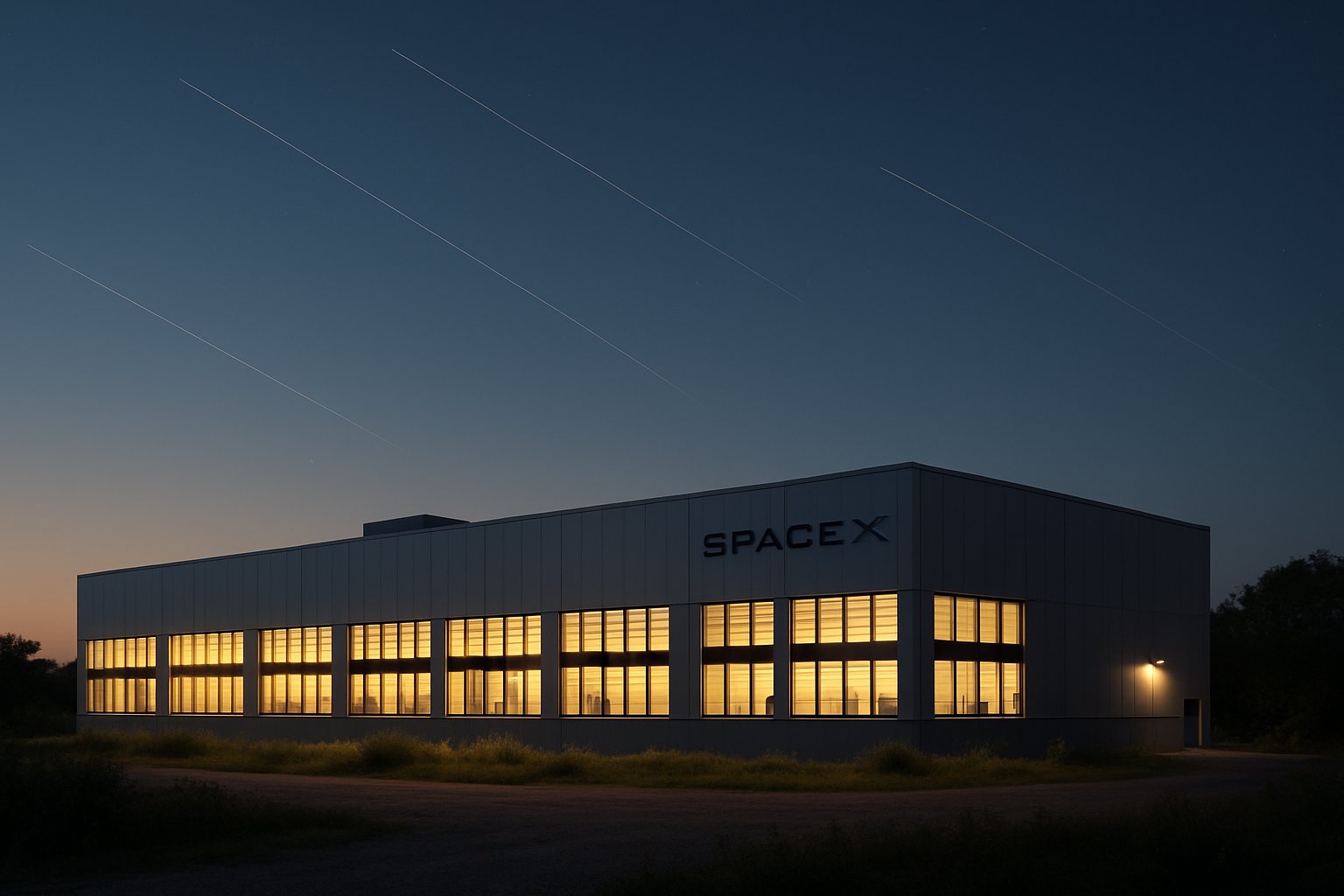
Executives also frame Space Based Compute as a civilisation-advancing milestone. Nevertheless, the filing leaves unresolved details on per-satellite mass, GPU type, and radiation shielding. In contrast, competitors like Blue Origin promise tens of thousands of nodes, indicating an emerging race. These strategic claims set the scene for ferocious market speculation. However, valuation momentum deserves its own review next. SpaceX touts energy and latency gains yet omits many engineering specifics. Consequently, investors study valuation signals to judge feasibility.
Valuation Timeline Highlights Emerge
Private share sales reveal a breathtaking climb. Bloomberg pegged SpaceX at $350 billion in December 2024. Moreover, December 2025 transactions valued the firm near $800 billion. Subsequently, February 2026 saw xAI consolidated, pushing the internal mark to $1.25 trillion. Meanwhile, TechCrunch News reports indicate IPO targets above $1.5 trillion.
- Dec 2024: $350B secondary sale; valuation baseline.
- Following Dec 2025: $800B insider tender, 128% annual jump.
- Feb 2026: xAI merger lifts Space Based Compute figure to $1.25T.
- Apr 2026: IPO chatter targets $1.75T peak.
Consequently, market watchers attribute half the valuation surge to Space Based Compute narratives. TechCrunch News notes investors crave growth stories beyond launch revenue. Nevertheless, some analysts warn of hype decoupled from engineering reality. Valuation history shows aggressive multiples driven by orbital compute optimism. Therefore, technical feasibility merits close examination next.
Key Technical Hurdles Ahead
Deploying one million satellites dwarfs any prior aerospace project. Furthermore, manufacturing must reach smartphone-like volumes to meet cadence goals. Each unit needs radiation-tolerant chips, large radiators, and optical links. Consequently, unit mass will likely exceed current Starlink designs. Starlink appears around 300 kilograms; heavier craft stress launch economics. Yet Starlink heritage alone cannot deliver full Space Based Compute performance.
Thermal management remains another hurdle. In vacuum, radiative panels must scale with processor heat. Moreover, on-orbit servicing strategies stay vague. Analysts interviewed by TechCrunch News estimate CapEx above $250 billion before positive cash flow. These realities pressure the Space Based Compute timeline. Engineering unknowns cast long shadows over financial projections. However, regulation could impose even sharper constraints.
Regulatory Landscape Rapidly Shifts
The FCC accepted SpaceX’s application on 4 February 2026. Public comments now flood the docket from astronomers, rivals, and environmental groups. Moreover, several petitioners demand comprehensive environmental impact statements. International regulators must also coordinate spectrum and debris mitigation rules. Consequently, scheduling uncertainty could hinder fundraising plans.
Meanwhile, SpaceX seeks rule waivers for frequency and altitude flexibility. In contrast, OneWeb and Amazon urge strict conditions to protect existing bands. Regulators have extended comment periods twice already. Therefore, decision dates may slip beyond initial expectations. Space Based Compute advocates argue delay erodes American leadership. Regulatory drag introduces material schedule risk for investors. Next, scientific objections add further complexity.
Astronomers Voice Major Concerns
Ground telescopes track thousands of Starlink streaks nightly. A million bright nodes might overwhelm observation windows. Therefore, the Royal Astronomical Society filed protests with the FCC. Space.com quotes scientists calling the scheme "intolerable". Consequently, public sentiment could shift against large constellations.
Additionally, executives claim improved Data Latency justifies moderate sky interference. Nevertheless, astronomers remain unconvinced without peer-reviewed mitigation studies. These objections amplify the regulatory debate reviewed earlier. Scientific pushback threatens project legitimacy with the public. However, financial logic still drives many boardroom conversations.
Business Case Fully Unpacked
Proponents highlight three revenue pillars. First, premium AI inference delivered through Starlink downlinks. Second, wholesale compute leases to governments needing classified workloads above national borders. Third, internal xAI training that sidesteps terrestrial power constraints. Moreover, supportive economics cite near-constant solar generation and passive cooling savings.
In contrast, skeptics tally launch, fabrication, and replacement costs against projected tariffs. One analyst modeled breakeven requiring less than $0.12 per gigaflop-hour, a tough threshold. TechCrunch News observes similar pressures facing terrestrial hyperscalers. Professionals can enhance their expertise with the AI Architect™ certification. Consequently, financial literacy remains essential for anyone advising on Space Based Compute investments. Economic viability hinges on scaling costs falling faster than market rates. Finally, we assess future outlook and actions.
Concluding Insights
SpaceX’s Orbital Data Center filing signals unprecedented ambition. Valuations have tripled in two years as narratives migrate toward Space Based Compute scale. However, massive technical, regulatory, and scientific hurdles remain unresolved. Moreover, reliable Data Latency metrics will decide enterprise adoption. Consequently, investors should model capital needs under several delay scenarios. Professionals seeking strategic roles may validate skills through the linked AI Architect™ credential. Act now to deepen expertise, monitor FCC dockets, and shape the next frontier.


