

AI CERTs
3 hours ago
Biometric Estimation Risk: AI Models Shaping Human Futures
Autonomous cars, digital avatars, and social robots now lean on algorithms that predict how humans move and choose. However, that progress introduces Biometric Estimation Risk, a multidimensional concern spanning privacy, safety, and fairness. Readers need a clear map of the technology, the market, and the exposed pressure points.
Consequently, this report distills recent academic breakthroughs, commercial deployments, and governance debates in predictive human modeling. Moreover, we examine how transformer-diffusion stacks, multi-sensor Data, and parametric bodies converge to unlock profit and peril. The next sections unpack drivers, architectures, and defenses in a concise, engineering-oriented style.
Market Drivers And Stakes
Enterprises chase lower costs and richer interaction loops. Consequently, analyst forecasts peg the digital human avatar market at roughly USD 3.5 billion for 2024, expanding sharply this decade. These projections rely on motion capture, foundation models like Centaur, and fast synthesis pipelines. For executives, Biometric Estimation Risk already influences procurement checklists.
Moreover, autonomous vehicle programs demand sub-second predictions of pedestrian trajectories to pass safety audits. Biometric Estimation Risk surfaces whenever surveillance cameras, LiDAR, and radar fuse into persistent behavioral profiles. DeepNude style controversies remind investors that provocative applications can trigger backlash and regulation.
- 64% decision prediction accuracy reported by Centaur in 2025.
- 3.5 B digital human market size estimated for 2024.
- Up to 5-second egocentric pose forecasting showcased at WACV 2025.
These numbers reveal surging investment and scrutiny. Nevertheless, technical foundations deserve equal consideration before strategy decisions. Therefore, we next dissect the engine room of predictive modeling.
Core Technical Building Blocks
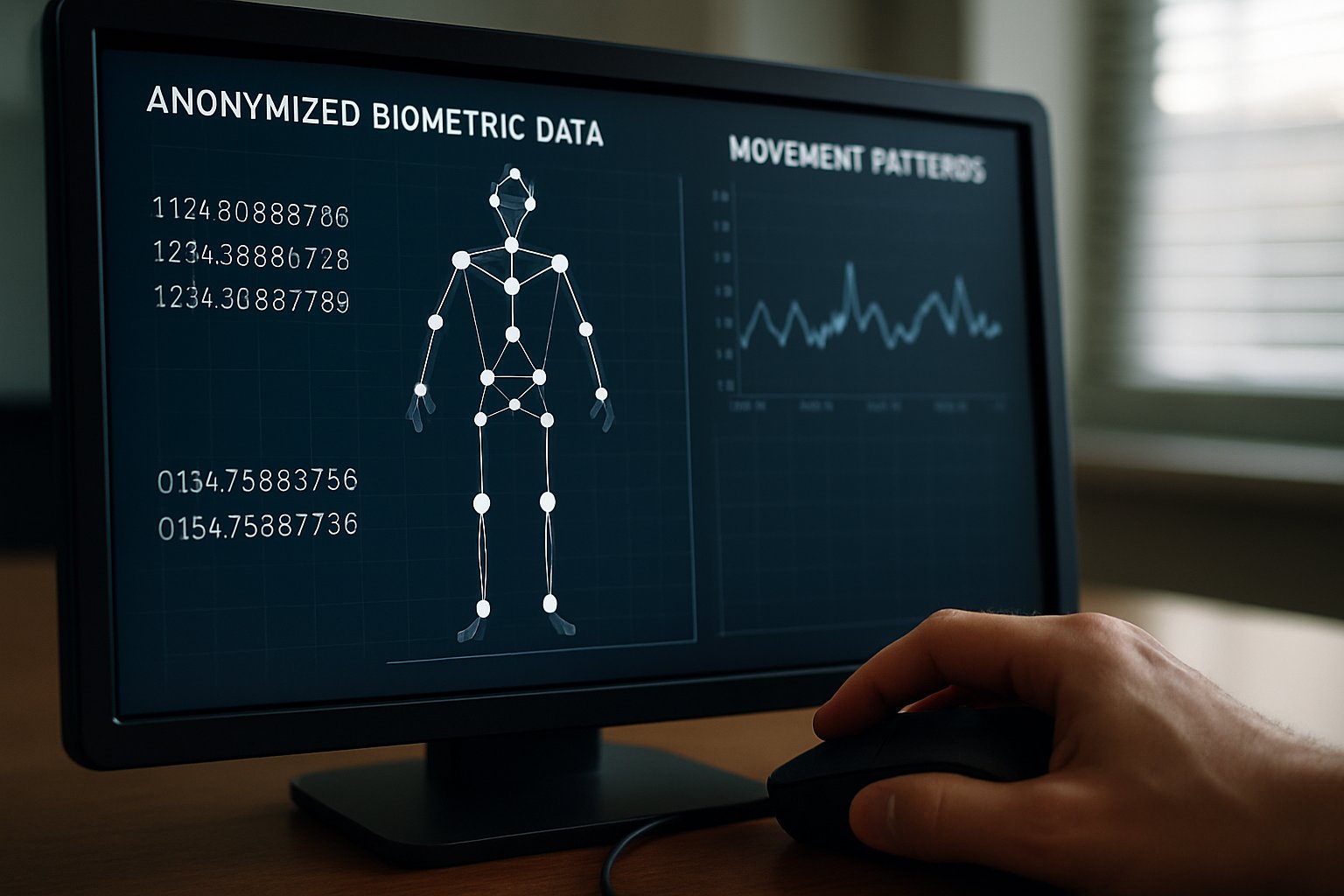
Modern stacks start with sensor ingestion across RGB, depth, LiDAR, and radar modalities. Subsequently, algorithms extract keypoints, fit SMPL or SMPL-X meshes, and encode temporal context with transformers. Diffusion samplers then draw plausible motion futures, while conformal prediction wraps calibrated confidence intervals.
Furthermore, training pipelines rely on vast Data corpora such as Human3.6M and AMASS. In contrast, production deployments prune weights and quantize parameters to meet sub-100 ms latency budgets. Shadows, occlusions, and noisy Textures remain stubborn perception challenges, forcing fallback heuristics.
Biometric Estimation Risk heightens when learned representations generalize poorly across body types. Moreover, biased Textures and lighting can skew downstream forecasts and safety margins.
These components form the technical spine of predictive avatars. However, applications determine whether value or harm dominates. The next section explores concrete industry rollouts.
Emerging Enterprise Use Cases
NVIDIA, Ubitus, and telecom partners demoed real-time customer-service avatars at GTC 2025. Additionally, hospitals pilot fall-prevention tools that forecast gait instability seconds ahead. Digital production studios exploit Shadows rendering to match predicted body motion with synthetic scene lighting.
Consequently, enterprises gain smoother interactions, reduced mocap costs, and proactive safety margins. Biometric Estimation Risk lurks, though, whenever user consent for downstream modeling remains ambiguous. DeepNude scandals illustrate reputational fallout when avatar pipelines cross ethical boundaries.
Automotive groups also integrate LiDAR-aware human forecasting to refine braking trajectories. Moreover, conformal bounds help compliance teams log statistical guarantees for regulators.
Industry pilots confirm commercial momentum across sectors. Nevertheless, each deployment widens the attack surface and liability exposure. Hence, we assess the looming threats and policy gaps.
Threats And Governance Gaps
Privacy advocates warn that persistent 3D meshes turn cameras into biometric fingerprints. Meanwhile, datasets like Human3.6M underrepresent disabled bodies and darker Textures, amplifying bias. Weaponization concerns also arise as military planners eye decision-forecasting stacks.
Biometric Estimation Risk intensifies when predictions inform autonomous lethal systems without human oversight. In contrast, consumer settings trigger GDPR class-action threats if consent trails fail. Shadows in legal guidance leave companies guessing jurisdictional scope across borders.
Bias, Privacy, Safety Traps
Researchers outline three recurrent traps. Firstly, biased Data skews decision thresholds. Secondly, domain shifts from lab Textures to wild illumination degrade accuracy. Thirdly, overconfident interfaces mask uncertainty, encouraging dangerous reliance.
These traps crystallize regulatory and engineering headaches. Therefore, organizations seek concrete mitigation measures. The following section surveys emerging defenses.
Mitigation Tools And Certifications
Technical safeguards begin with rigorous uncertainty calibration using conformal prediction. Additionally, privacy-by-design pipelines anonymize raw captures before modeling. Biometric Estimation Risk lessens when teams simulate failure cases within digital twins.
Moreover, workforce upskilling aligns controls with business timelines. Professionals can enhance their expertise with the AI Security Level 1™ certification. The syllabus covers threat modeling, incident response, and audit logging for predictive systems.
Consequently, audit committees receive clearer evidence chains, and regulators gain measurable compliance artifacts. DeepNude reactions taught firms that early audits avert brand erosion. Continuous drills keep Biometric Estimation Risk within acceptable thresholds.
These measures anchor trust and resilience. Nevertheless, the strategic horizon still evolves rapidly. We close with forward-looking implications.
Outlook For Decision Forecasters
Market analysts expect larger multimodal foundation models that span motion, gaze, and spoken intent. Subsequently, federated learning may emerge to keep Data local while sharing gradients. Shadows of geopolitical rivalry could accelerate defense funding for predictive cognition stacks.
Biometric Estimation Risk will persist as accuracy improves. Therefore, stakeholders must balance faster rollout with deeper safeguards.
Strategic winners will integrate privacy, calibration, and oversight from day one. Consequently, transparent benchmarks will separate hype from durable value.
Conclusion And Action Steps
Predictive modeling of human shapes promises safer robots, immersive media, and scientific insight. Nevertheless, unchecked expansion elevates Biometric Estimation Risk across privacy, bias, and weaponization fronts. DeepNude uproars, biased Data, and opaque Textures underscore vigilance needs.
Therefore, leaders should pair conformal calibration with robust consent governance and certified talent. Engage regulators early, publish benchmark reports, and invest in the linked AI Security Level 1™ pathway. Acting today converts looming threats into sustainable competitive edges.


