

AI CERTS
4 hours ago
India’s Liability Shield Shift Redefines Safe Harbour
This Liability Shield Shift threatens immunity if duties slip. Moreover, Section 79 protection now depends on consistent due diligence. Global companies serving nearly 900 million Indians face compressed compliance cycles and steep penalties.
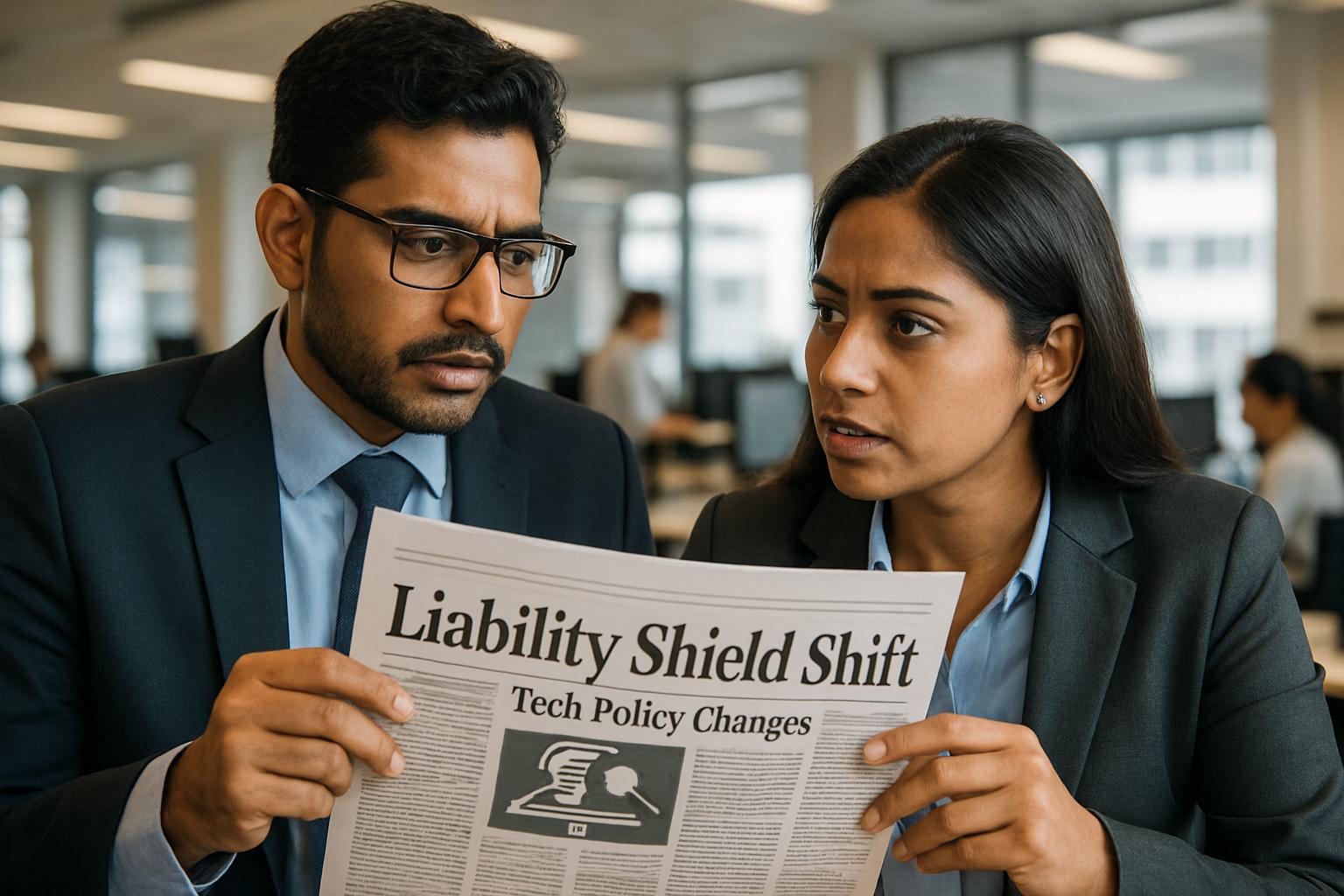
Meanwhile, civil society fears over-removal and automated censorship. Industry lawyers expect fresh court challenges against ambiguous requirements. However, MeitY defends the Law as essential for user safety and democratic integrity. The following analysis unpacks obligations, timelines, and strategic responses.
Rules Alter Safe Harbour
India’s amendment inserts a formal definition for Synthetically Generated Information, or SGI. Platforms must provide clear labels and, where feasible, embed persistent Metadata within every SGI file. Failure triggers the Liability Shield Shift that removes automatic immunity.
Previously, Section 79 offered blanket protection if takedowns happened within 24 hours. Now, compliance duties are explicitly baked into the Law, not optional best practice. Therefore, any slip can reclassify an intermediary as a publisher before Indian courts.
Moreover, user declarations at upload become mandatory for significant social media intermediaries. Consequently, internal workflows must verify submissions, store audit trails, and surface them during Litigation. These structural shifts redefine platform risk; however, further complications emerge with timelines.
In short, legal immunity now depends on provable diligence. Labels, Metadata, and swift takedowns form the compliance tripod. Next, timing pressures amplify these obligations.
Compliance Clock Ticks Faster
The amended rules compress takedown windows to two or three hours. Consequently, moderation teams must operate around the clock with local escalation authority. Delayed action risks breaching duties and undermining Section 79 defences.
Interpreting urgent notices also demands legal review within minutes. However, smaller startups lack the 24/7 counsel that global giants maintain. Automation helps, yet false positives invite unnecessary withdrawal and future Litigation headaches.
Moreover, MeitY indicated special categories, like non-consensual sexual imagery, require the fastest response. Therefore, content classifiers must detect context, not only visuals. Accuracy determines whether the Liability Shield Shift is avoided or triggered.
- 2 hours: Deepfake sexual violence imagery
- 3 hours: Other unlawful SGI declared by authority
- 24 hours: Legacy timeline for non-SGI content
Faster clocks magnify operational costs and decision risk. Every missed minute could jeopardize Section 79 coverage. Technical provenance requirements compound this urgency.
Provenance Tech Hurdles Persist
Embedding tamper-proof Metadata sounds simple, yet reality differs. Screenshots, re-encoding, or transcoding often strip hidden information. Moreover, no single global standard dominates, although C2PA gathers momentum.
Platform engineers must ensure provenance survives reposting across heterogeneous device stacks. Meanwhile, regulators provided only broad guidance on “technical feasibility.” Therefore, compliance teams fear subjective enforcement if labels appear insufficient.
Industry security leads advise combining watermarking, cryptographic hashing, and visible notices. However, each approach introduces latency and bandwidth overhead. The Liability Shield Shift leaves little tolerance for technical excuses.
Persistent provenance remains an unresolved engineering frontier. Platforms must innovate quickly or face amplified liability. Growing industry dissent underscores that urgency.
Industry Pushback Intensifies
Large platforms publicly support user safety yet question feasibility. Consequently, lobby groups urge phased rollouts and clearer Metadata specifications. Meta, Google, and X evaluate India-specific compliance stacks to retain Section 79 immunity.
Startups consider disabling SGI uploads altogether. In contrast, some propose geo-fencing deepfake tools outside India. However, that step hinders Indian creators and dampens innovation.
Additionally, compliance costs may drive market consolidation around well-capitalised incumbents. The Liability Shield Shift therefore reshapes competitive dynamics alongside legal exposure. Investors now demand detailed risk disclosures before closing deals.
Operational burden meets strategic calculus for every digital firm. Costly pivots appear inevitable without regulatory leniency. Yet civil rights advocates raise distinct alarms.
Civil Rights Concerns Rise
Internet Freedom Foundation warns of algorithmic overreach and chilled speech. Moreover, two-hour windows restrict meaningful user appeals against erroneous orders. Critics argue the Law tilts toward prior restraint, despite constitutional speech protections.
Judicial precedent from Shreya Singhal limits proactive censorship demands. However, conditional safe harbour could indirectly restore those rejected obligations. Therefore, Litigation appears imminent to test proportionality and due process.
Digital rights groups also highlight transparency gaps within takedown statistics. Consequently, they urge public dashboards and independent audits. Professionals may upskill via the AI Learning & Development™ certification for governance mastery.
Free expression advocates demand clearer safeguards and longer appeal options. Balancing safety and rights remains the central policy tension. Platform strategies must adapt accordingly.
Strategic Moves For Platforms
Compliance leaders now design India-specific governance blueprints. Firstly, they map SGI workflows from upload to archival. Secondly, they integrate automated detectors with human triage for precision.
Moreover, cross-functional war rooms monitor court orders and governmental notices in real time. Encrypted dashboards surface alerts when takedown clocks begin. Therefore, platform counsel can decide removal, geoblocking, or user suspension swiftly.
Risk teams also build “failure mode” protocols to handle data provenance stripping incidents. In contrast, product managers explore visible SGI icons to reinforce user understanding. The Liability Shield Shift guides each architectural judgement.
Investment in provenance tooling now functions as insurance against the Liability Shield Shift. Additionally, many organisations rehearse tabletop scenarios where the Liability Shield Shift becomes activated after missed deadlines. Subsequently, lessons feed continuous improvement cycles.
Holistic governance can still preserve market access, despite higher costs. Rapid iteration remains the survival imperative. Legal uncertainty, however, still looms.
Future Legal Flashpoints
Courts will soon interpret “prominent” labels and “technical feasibility” standards. Consequently, early judgements may refine policy without parliamentary amendment. Stakeholders expect Litigation questioning proportionality and compatibility with existing fundamental rights jurisprudence.
Moreover, any ruling narrowing obligations could blunt the Liability Shield Shift for compliant actors. In contrast, adverse orders may encourage broader enforcement across other content categories. Observers also watch whether the Law evolves toward formal technical standards like C2PA.
Section 79 itself might face constitutional challenges focusing on differential treatment of SGI. Therefore, the Supreme Court’s docket could shape global moderation norms. Until then, platforms assume maximal risk mitigation.
Imminent rulings will clarify compliance scope and enforcement style. Outcomes will reverberate through global safe-harbour debates. Final reflections underscore immediate action.
Conclusion And Next Steps
India’s amended IT Rules signal a transformative era for synthetic media governance. Labels, Metadata, rapid takedowns, and Section 79 conditionality redefine intermediary obligations. Consequently, the Liability Shield Shift compels platforms to invest in detection, provenance, and legal operations.
However, civil liberties concerns and pending Litigation ensure the debate remains fluid. Therefore, executives should embed agile compliance loops and monitor forthcoming case Law closely. Professionals can build needed skills through the AI Learning & Development™ certification.
Swift adaptation today will secure tomorrow’s market access. Act now to stay protected and competitive.


